University of Cádiz
If you are the contact person for this centre and you wish to make any changes, please contact us.
Lecturer at the University of Cadiz, researcher at the Institute of Marine Research (INMAR) and Scientists Coalition for an Effective Plastics Treaty
Professor in the Department of Biology (Botany Section) at the University of Cádiz and researcher with the 'Ecology, Evolution, and Conservation in Terrestrial Ecosystems' (ECOTER) group
PhD in Biomedicine and Health Sciences. Researcher with the Galeno CTS-158 Group, University of Cádiz
University professor of teh area of music at the University of Cádiz and researcher at the Institute for Research and Innovation in Biomedical Sciences (INiBICA)
Coordinator of the Master's Degree in Conservation and Management of the Natural Environment and researcher in the Biology-IVAGRO department at the University of Cádiz
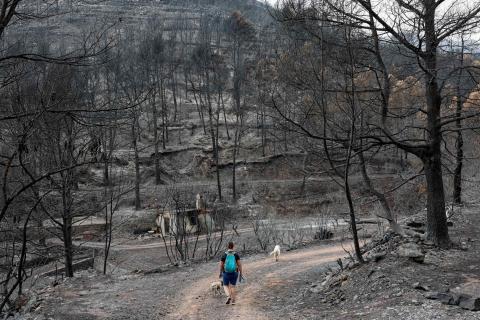
So far this year, up to 20 August, 262,000 hectares have been burnt in Spain, compared with the average of 105,600 hectares burnt between 2015 and 2024. Large-scale wildfires, exacerbated by climate change, are increasing both in frequency and in the area affected. But what happens in the forests after a fire? Can the woodland regenerate on its own? What criteria should be followed? We analyse, with the help of experts, how these ecosystems recover and what measures are taken to protect and restore them.

Every summer, algal blooms are common, from the Cantabrian Sea to the Mediterranean. Most play essential roles in aquatic ecosystems and have a high capacity to absorb CO₂. However, some can also cause problems, as is the case with the invasive alga Rugulopteryx okamurae, which has been spreading along the Spanish coastline for a decade.
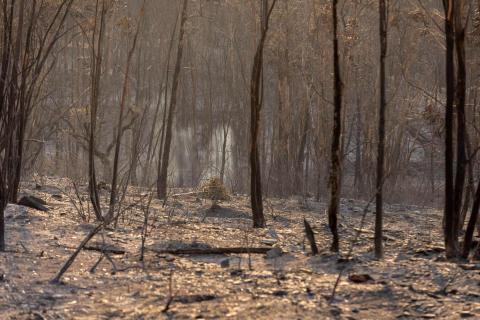
A study published in Science Advances has shown that areas affected by extreme wildfires – characterised by rapid spread and great difficulty in extinguishing them – have lower tree cover and reduced resilience compared to less intense fires, which may lead to long-term changes in vegetation. The team analysed 32.1 million hectares of coniferous forest in Canada and the western United States that were affected by fires between 2012 and 2023. Of this area, more than a third was burnt by extreme fires. In these cases, they observed that the faster the fire front advances, the greater the size and severity of the fire and the greater the distance from seed sources for the surviving trees, paving the way for long-term changes in vegetation.
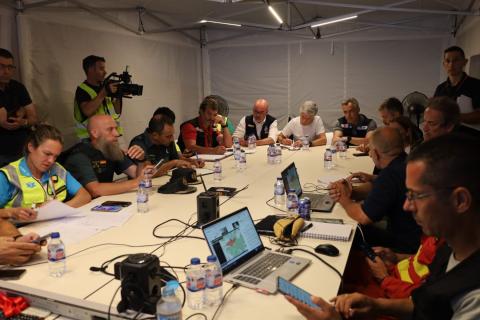
Early this morning, the Minister of Interior, Fernando Grande-Marlaska, declared a state of emergency of national interest in the Community of Madrid and the province of Ávila due to the forest fires in Villa del Prado, San Martín de Valdeiglesias and Burgohondo. According to Carlos Novillo, the Regional Minister for the Environment, Agriculture and the Interior of the Community of Madrid, the fires were beyond the capacity of the fire services to extinguish and posed a serious threat to the population. The Madrid 112 Security and Emergency Agency has reported that, although the night-time firefighting efforts have been effective, the fires have still not been contained or brought under control. More than 10,000 people remain evacuated.
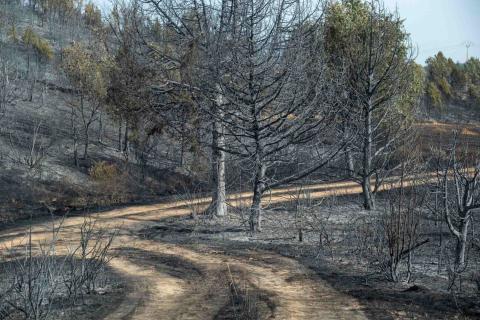
Data from the Copernicus European Forest Fire Information System (EFFIS) show that, as of 22 July, 119,458 hectares have been burnt in Spain. The average number of hectares burnt from 2006 to 2025 up to this date stands at 35,736 hectares. The fire in the Sierra Norte de Guadalajara, which has scorched more than 30,000 hectares and is still active, together with numerous fire fronts in other provinces and the fire in Los Gallardos (Almería), in which 13 people died, have caused the total area burnt to soar.
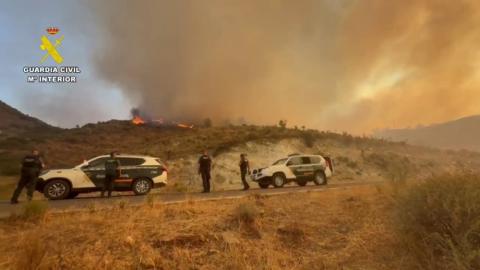
The wildfire in Los Gallardos (Almería), which broke out on Thursday evening, has so far claimed 13 lives. Initial investigations suggest that a fallen power line may have been the cause of the fire. The blaze has burnt more than 3,000 hectares and has left 1,400 people displaced.

An analysis based on Google Trends data collected between 2005 and 2025 showed that the proportion of menopause-related searches referring to commercial products and services increased by between 15 and 20 percentage points in the UK, Australia and the US. These findings suggest that people may increasingly be seeking non-clinical approaches to managing the menopause, not only for symptom relief but also for guidance, monitoring and support outside of clinical consultations. The study is published today in the journal JAMA Network Open.

A team has proposed an indicator known as the plastic particle footprint (PPF) to measure the environmental impact of microplastics and nanoplastics in products. In an article published in Science Advances, the authors apply this calculation to four everyday items and claim that calculating this footprint could “radically change the best material option”. For example, a polyester T-shirt and a cotton one have a similar carbon footprint, but the PPF of the former is higher than that of the cotton garment.
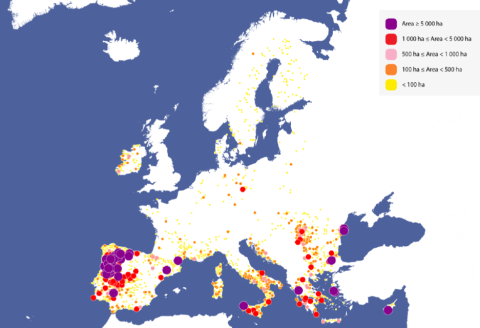
The 2025 wildfire season was the worst the European Union has seen in the last century. According to a report by the European Forest Fire Information System (EFFIS), managed by the European Commission’s Joint Research Centre (JRC), more than one million hectares were burned last year. Some 43% of that figure was burned in the major fires that occurred in Spain and Portugal during the summer. The report also covers the rest of the European continent, the Middle East, and North Africa, resulting in a total of more than two million hectares of burned area.
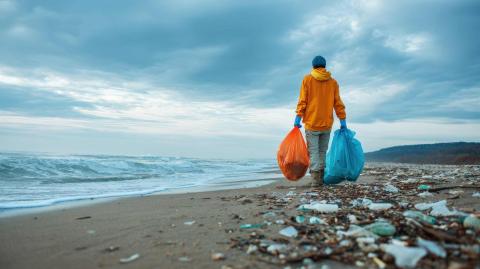
A study based on models and data concludes that adverse health effects related to plastic emissions could more than double by 2040 if current practices do not change. The authors note that their model could not assess the potential impacts associated with many chemicals contained in plastics, nor with the microplastics and nanoplastics that form throughout their life cycle, due to a lack of data and “a serious lack of transparency regarding their composition.” The results are published in The Lancet Planetary Health.