Journalists

Journalists

Covering current events in science, the environment, technology and health requires a context and reliable sources that respond quickly.

¿Qué me ofrece?

When science hits the headlines, we publish reactions, explanations, and in-depth analysis from reliable sources, capturing both the evidence and the debates. Our library of science journalism resources and the briefings may be of use to you. Consult our directory of research centres.

Icono
Cómo trabajamos

We are on the lookout for any controversial information about science (embargoed or not), in order to react with the agility the media needs. Sign up to receive our embargoed contents, all under the Creative Commons licence. Find out more about how we work here.

Título qué me ofrece
What we offer you
Título cómo trabajamos
How we work

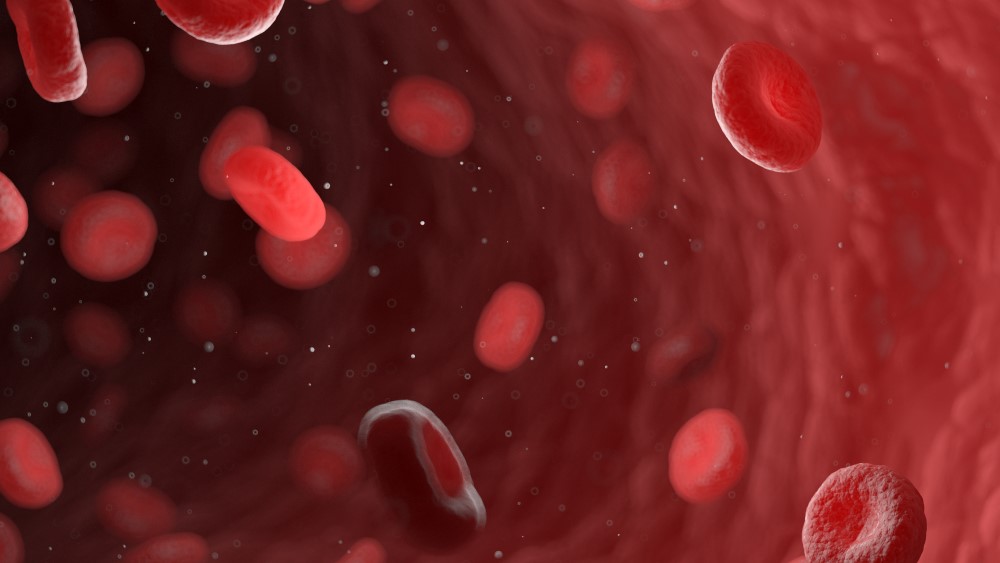
Laboratory embryo models developed that produce blood cells

A team led by the University of Cambridge (UK) has used human stem cells to produce three-dimensional embryo-like structures that replicate certain aspects of early development, including, they say, the production of blood stem cells. They have called these structures “hematoids” and, according to the university press release, “they offer great potential for better understanding blood formation during the earliest stages of human development, for simulating disorders such as leukemia, and for producing long-lived blood stem cells for transplantation.” The results are published in the journal Cell Reports. 

0

A WHO report warns that one in six confirmed bacterial infections in 2023 was resistant to antibiotics

In 2023, one in six laboratory-confirmed bacterial infections were found to be resistant to antimicrobials, according to a report published by the World Health Organisation (WHO). Between 2018 and 2023, resistance increased in more than 40% of monitored antibiotics, which ‘is limiting empirical treatment options and driving a shift from oral to intravenous treatments, including greater reliance on second-line and last-resort antibiotics,’ the report warns. For example, globally, nearly 45% of Escherichia coli bacteria are resistant to third-generation cephalosporins, a proportion that varies from 20% in Europe to more than 70% in Africa.

0

Warm-water coral reefs pass their point of no return

Extensive warm-water coral reefs are facing widespread mortality and, unless global warming is reversed, will be lost, warns the report Global Tipping Points 2025. This is the first tipping point reached by the Earth system, the first in a series of tipping points that will cause ‘catastrophic’ damage—melting ice sheets, death of the Amazon rainforest, and collapse of vital ocean currents—unless humanity takes urgent action. The report also identifies positive tipping points that have been crossed on a global scale, for example in the area of solar energy and the adoption of electric vehicles.

0

Global mortality rates are declining, but are rising among young people in some regions

According to the Global Burden of Disease study, and despite deep inequalities between countries, global life expectancy in 2023 was more than 20 years higher than in 1950. However, deaths among young people increased in some regions such as North America, Latin America—due mainly to suicide and drug use—and sub-Saharan Africa—mainly due to infectious diseases and injuries. Researchers also estimate that almost half of all deaths and disabilities could be prevented by modifying some of the main risk factors. The results are published in The Lancet and will be presented at the World Health Summit, being held in Berlin, Germany, from October 12 to 14.

0

Attitudes influence energy savings at home more than income, according to a study

A team conducted a meta-analysis of 100 studies, including more than 430,000 participants from 42 countries, to understand what factors drive energy-saving habits in homes. Their conclusions are that attitudes and moral sentiments are more influential than socioeconomic factors such as education and income level, which were barely related to energy-saving behaviors. According to the authors, who publish the results in the journal Cell Reports Sustainability, "the research suggests that exploring these deeper psychological factors is a way to get as many people as possible committed to saving energy."

0

New clues to ovarian ageing discovered

The decline in egg quality has been considered the main cause of declining fertility with age. A new study published in Science shows that the cells and tissues surrounding the oocytes within the human ovary also play a crucial role. They identified 11 types of cells in the ovaries, including nervous system cells, that influence follicle development. In addition, they have discovered that oocytes are grouped into “pockets” within the ovary and that the density within these pockets declines over the years. 

0

A modified pig liver was transplanted into a living person for the first time

A team from China has reported the results of the first liver transplant from a pig to a living human. Earlier this year, a procedure that served as a proof of concept was published, but it was performed on a brain-dead person. In this case, after modifying 10 genes in the porcine liver, an auxiliary transplant—not removing the entire organ—was performed on a 71-year-old patient with cirrhosis and liver cancer. It worked well for the first month, but on day 38, the graft had to be removed due to the development of complications, and the patient died on day 171. According to the researchers, who published the case in the Journal of Hepatology, this is "a fundamental step that demonstrates both the promise and the obstacles that remain to be overcome".

0

Peaks in child malnutrition in Gaza coincide with periods of aid blockades by Israel

More than 54,600 children under the age of five in Gaza are in need of medical care for acute malnutrition, according to estimates from a study published in The Lancet, which shows that the prevalence of malnutrition decreases during a ceasefire and increases during Israeli blockades of access to food, water, or medicine. For example, after four months of severe aid restrictions—between September 2024 and January 2025—malnutrition increased from 8.8% to 14.3%, with a higher incidence in Rafah and among children between 24 and 59 months of age. The study, conducted by UNRWA, is based on data from more than 219,000 children between the ages of six and 59 months from various locations in the Gaza Strip, collected between January 2024 and August 2025.

0

Online images and texts portray women as less experienced than men across all occupations

On the internet, professional women are represented as younger—and therefore less experienced—than their male counterparts, even though this age difference does not correspond to actual data in the US, according to an article published in Nature. This study of gender and age stereotypes is based on an analysis of 1.4 million images on five platforms (Google, Wikipedia, IMDb, Flickr and YouTube), as well as nine large language models, such as ChatGPT, trained with texts from Reddit, Google News, Wikipedia and Twitter. 

0

Nobel Prize in Chemistry awarded to Susumu Kitagawa, Richard Robson, and Omar M. Yaghi for creating porous materials with blocks of molecules that capture substances and drive reactions

The Royal Swedish Academy of Sciences has awarded the 2025 Nobel Prize in Chemistry to Susumu Kitagawa, Richard Robson, and Omar M. Yaghi for the development of molecular structures with large spaces through which gases and other chemicals can flow. These structures, called metal-organic frameworks, can be used to extract water from desert air, capture carbon dioxide, store toxic gases, or catalyze chemical reactions.

0