
University of Granada
If you are the contact person for this centre and you wish to make any changes, please contact us.
Doctor of Ethology, research collaborator in the Department of Zoology
Professor in the Department of Theoretical Physics and the Cosmos at the University of Granada.
Professor at the University of Granada (UGR), lecturer in the Master's Program in Research in Physical Activity and Sport at the UGR and director of the research group "Brain and Human Cognition" at the Mind, Brain and Behavior Research Center (CIMCYC)
Vice-director of FiloLab and professor of Bioethics at the University of Granada
Professor in the department of Experimental Psychology and researcher at the Mind, Brain and Behaviour Research Center (CIMCYC) at the University of Granada
Professor of Pharmacology at the University of Granada and coordinator of the Working Group on Basic Sciences in Pain and Analgesia of the Spanish Pain Society
Lecturer in Social Psychology at the University of Granada (UGR) and researcher at the Centre for Research on Mind, Brain and Behaviour (CIMCYC)
Full professor and director of the department of Personality, Evaluation and Psychological Treatment at the faculty of psychology of the University of Granada.
Professor of Zoology at the Department of Zoology and coordinator of the Applied Ecology and Agroecosystems research group at the University of Granada
Professor of AI, Director of the DaSCI (Data Science and Computational Intelligence) Research Institute, University of Granada and member of the Royal Academy of Engineering

A research team in Belgium found perfluoroalkylated and polyfluoroalkylated substances (PFAS) in drinking straws. The research, published in the journal Food Additives & Contaminants, analysed the presence of these persistent and potentially harmful compounds in 39 types of straws purchased from different shops, supermarkets or fast food chains. These substances were most prevalent in paper and bamboo straws, followed by plastic and glass straws. They were not detected in stainless steel straws.

The decline of insects in Central and Western Europe in recent years is mainly due to human activities and the intensification of agriculture, according to a study funded by three companies (Bayer, BASF and Syngenta) that manufacture pesticides. The paper, published in PLoS ONE, summarises an analysis of 82 other published studies and explains the causes of population declines in two groups of insects: carabids (ground beetles) and lepidopterans (including moths and butterflies). The authors estimate that "anthropogenic activities in general" are most responsible for this decline, followed by agricultural intensification (including pesticides) and climate change in third place.

A few weeks ago, the European Food Safety Authority (EFSA) said that exposure to bisphenol A through food is a risk to human health. The agency recommended a much lower tolerable daily intake dose than it had its own previous recommendations. In this explainer, we review key facts and documents to cover this issue--which will continue to make the headlines in months and years to come.
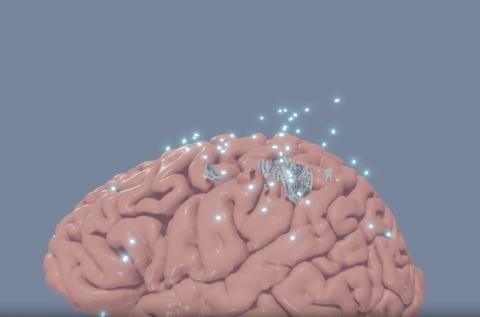
A US team has developed a non-invasive language decoder: a brain-computer interface that aims to reconstruct whole sentences from functional magnetic resonance imaging (fMRI). This is not the first attempt to create such a decoder; some of the existing ones are invasive - requiring neurosurgery; others are non-invasive, but only identify words or short phrases. In this case, as reported in the journal Nature Neuroscience, the team recorded brain responses - captured with fMRI - of three participants as they listened to 16 hours of stories. The authors used this data to train the model, which was then able to decode other fMRI data from the same person listening to new stories. The team argues that the model trained on one person's data does not decode another person's data well, suggesting that cooperation from the subject is required for the model to work properly.
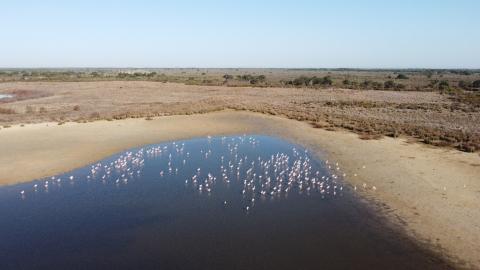
Species of birds common in the marshes of Doñana as the common tern, the brown pochard, the marbled teal, the marsh harrier or the black-bellied sandpiper have recorded a decline in their population for more than a decade, a trend that accelerated since 2019. This is one of the conclusions of the Report on the conservation status of waterfowl in Doñana, published today by SEO/BirdLife.

Scientists at the University of Granada question whether regular exercise has cognitive benefits as previously thought. Their work, published in Nature Human Behaviour, has analysed 24 meta-analyses and 109 primary studies on the subject.

US scientists have found perfluoroalkylated and polyfluoroalkylated substances (PFASs) in sewage sludge from toilet paper waste. The research, published in the journal Environmental Science & Technology Letters, analysed the presence of these persistent and potentially harmful compounds in toilet paper rolls sold in North, South and Central America, Africa and Western Europe. These substances were compared with those detected in samples of sewage sludge from sewage treatment plants in the United States.

Early this morning, an earthquake with a magnitude of 7.8 struck southeastern Turkey and northern Syria. The authorities have reported thousands of deaths and extensive material damage. A second earthquake has occurred further north than the previous one.
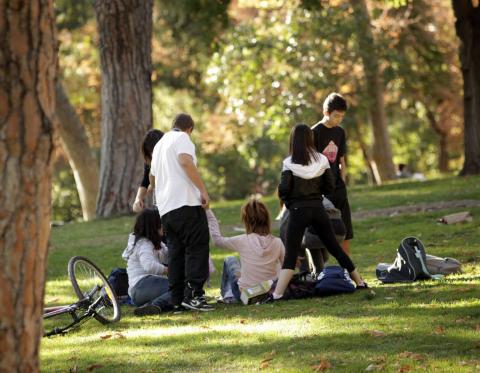
A study in Spanish children, with follow-up from pregnancy to adolescence, has found an association between children's exposure to pesticides and fungicides and earlier breast development in girls and genital development in boys. The work has been carried out by the University of Granada (UGR), the Institute for Biosanitary Research (ibs.GRANADA) and CIBERESP (ISCIII).
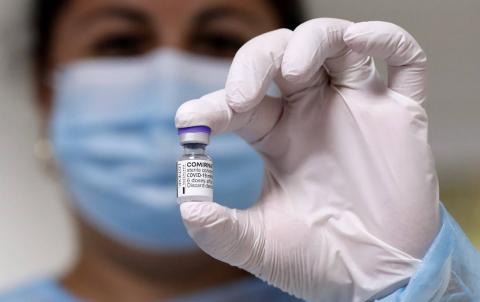
During Pfizer's appearance before the European Parliament this week, a company executive responded to the question of whether "Pfizer's vaccine was tested to stop transmission of the virus (SARS-CoV-2) before going to market" by saying "no".