
University of Granada
If you are the contact person for this centre and you wish to make any changes, please contact us.
Doctor of Ethology, research collaborator in the Department of Zoology
Professor in the Department of Theoretical Physics and the Cosmos at the University of Granada.
Professor at the University of Granada (UGR), lecturer in the Master's Program in Research in Physical Activity and Sport at the UGR and director of the research group "Brain and Human Cognition" at the Mind, Brain and Behavior Research Center (CIMCYC)
Vice-director of FiloLab and professor of Bioethics at the University of Granada
Professor in the department of Experimental Psychology and researcher at the Mind, Brain and Behaviour Research Center (CIMCYC) at the University of Granada
Professor of Pharmacology at the University of Granada and coordinator of the Working Group on Basic Sciences in Pain and Analgesia of the Spanish Pain Society
Lecturer in Social Psychology at the University of Granada (UGR) and researcher at the Centre for Research on Mind, Brain and Behaviour (CIMCYC)
Full professor and director of the department of Personality, Evaluation and Psychological Treatment at the faculty of psychology of the University of Granada.
Professor of Zoology at the Department of Zoology and coordinator of the Applied Ecology and Agroecosystems research group at the University of Granada
Professor of AI, Director of the DaSCI (Data Science and Computational Intelligence) Research Institute, University of Granada and member of the Royal Academy of Engineering

Tramadol is a painkiller prescribed for chronic pain and is considered safer than other opioids. A systematic review with meta-analysis that included 19 clinical trials with more than 6,500 people showed that, although it relieved pain, the effect was small and below what would be considered clinically effective. In addition, the analysis indicated that the drug is likely to increase serious adverse events, particularly cardiac events. Although an increased risk of some types of cancer was also detected, the authors question this effect due to the short follow-up period. ‘Given the limited analgesic benefits and increased risk of harm, the use of tramadol for chronic pain should be reconsidered, with preference given to safer alternatives and additional high-quality trials to clarify its risk-benefit profile,’ the researchers note in the study, published in BMJ Evidence Based Medicine.
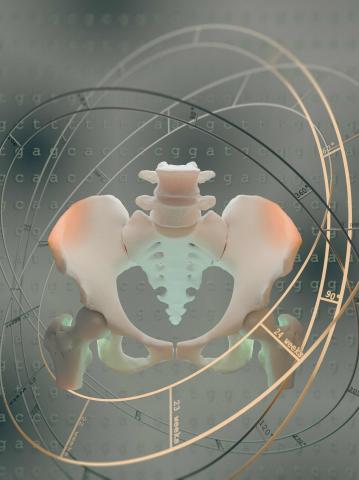
The upper part of the human pelvis, the ilium, underwent two major structural changes during evolution that enabled humans to walk on two legs. One was the formation of cartilage and the second was the process of bone formation. New research identifies differences in the way bone cells are deposited on cartilage in the human ilium, compared to other primates and human long bones. The study, published in Nature, lays the genetic and evolutionary foundations for bipedalism, according to the authors.

A team from the United Kingdom has conducted an umbrella review, or review of reviews, on the risks of vaping among young people. After analysing 56 reviews including 384 studies, their conclusions are that vaping is subsequently associated with increased consumption of tobacco, marijuana and alcohol. It is also associated with an increased risk of asthma, coughing, injuries and mental health problems. The results are published in the journal Tobacco Control.

A team in the United States has analysed how exposure to environmental chemicals in previous generations influences the onset of the first menstruation. The researchers used data from the California Child Health and Development Study (CHDS) and analysed blood samples taken from 250 pairs from the 1960s. The results, presented at the annual meeting of the Endocrine Society in San Francisco (USA), show that although the average age of first menstruation remained stable between grandmothers and their daughters, it decreased by one year between daughters and granddaughters. Certain chemicals present in the blood of the mother and father were linked to the onset of puberty in their descendants, with stronger effects in granddaughters, according to the study, and with greater weight of male exposure.
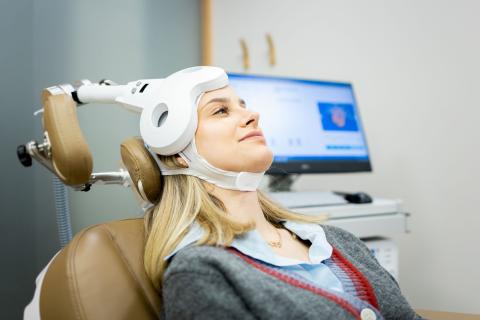
An international study with 72 participants has found that greater connectivity between certain brain areas is associated with greater mathematical computational ability. In addition, weak electrical stimulation in a particular area was associated with improved computational learning in volunteers with lower connectivity. The results are published in the journal Plos Biology.

Lead exposure in children can affect their neurodevelopment. In the United States, the maximum blood concentration limit for this metal was lowered to 3.5 μg/dL (micrograms per decilitre) in 2021, down from 10 μg/dL in 2012. Now, a study has analysed data from more than 300,000 children in Iowa and found an association between higher concentrations and poorer school performance in reading and maths, even below the 3.5 μg/dL limit, prompting the researchers to reconsider this figure. The results are published in the journal JAMA Network Open.

A team has analysed data from a survey of more than 3,000 teenagers aged 11-19 in the UK. Their findings show that those with mental health problems spend an average of 50 minutes more per day on social media than those who do not suffer from them. According to the authors, who publish the results in the journal Nature Human Behaviour, further research is needed to know if this is a causal relationship.
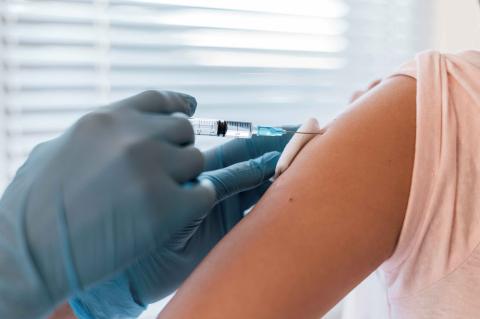
An Australian team has conducted a study involving mice and humans that suggests that vaccine boosters would be more effective if administered in the same arm as the previous dose, at least in the short term. However, other recent research has pointed in the opposite direction. The results are published in the journal Cell.

Two international teams have independently discovered the presence of oxygen in the galaxy JADES-GS-z14-0, the most distant known. The finding, which has been made using the ALMA telescope at the European Southern Observatory (ESO), could mean that galaxies evolved much earlier than previously thought. The results are published in the journals Astronomy & Astrophysics and The Astrophysical Journal.

A fragment of a human face discovered in 2022 at the Sima del Elefante site in the Sierra de Atapuerca (Burgos) and dated to between 1.1 and 1.4 million years ago represents the oldest known face in Western Europe. The fossil, nicknamed ‘Pink’, does not belong to Homo antecessor, but has been provisionally catalogued as Homo affinis erectus. The find, which is published in the journal Nature, could indicate that Western Europe was populated by at least two species of hominids during the Early Pleistocene: Homo affinis erectus and, later, Homo antecessor.