
University of Barcelona
If you are the contact person for this centre and you wish to make any changes, please contact us.
Doctor in Biology and research professor in the Department of Evolutionary Biology, Ecology, and Environmental Sciences at the University of Barcelona.
Ramón y Cajal researcher at the Institute of Neurosciences at the University of Barcelona
PhD candidate in the Department of Social Psychology and Quantitative Psychology at the Faculty of Psychology, University of Barcelona
ICREA Research Professor and Coordinator of the Regenerative Medicine Programme at the Bellvitge Biomedical Research Institute (IDIBELL), member of CIBER-BBN, Director of the Clinical Translation Programme in Regenerative Medicine in Catalonia, and Professor of Physiology at the University of Barcelona.
Professor of Preventive Medicine and Public Health at the University of Barcelona and member of the Spanish Society of Epidemiology
Associate professor at the University of Barcelona, ICREA Academia fellow, and member of the Scientists’ Coalition for an Effective Plastics Treaty.
Senior Consultant at the Department of Preventive Medicine and Epidemiology at Hospital Clínic in Barcelona, Professor of Public Health and Dean of the Faculty of Medicine and Health Sciences at the University of Barcelona
Professor of Microbiology, University of Barcelona
Professor of Cognitive Neuroscience
Brainlab, Department of Clinical Psychology and Psychobiology, University of Barcelona (UB).
UB Institute of Neuroscience
Sant Joan de Déu Research Institute
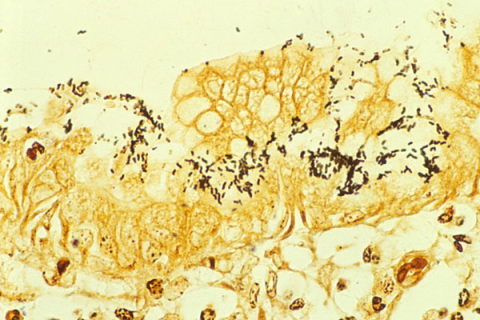
Infection with the bacterium Helicobacter pylori is a known risk factor for stomach cancer. Its link to colorectal cancer, however, remains an unconfirmed hypothesis. An international team has reviewed 43 studies on this subject and found that 22 per cent of colorectal cancer cases could potentially be linked to this infection, although when they selected the 14 most reliable studies, the figure fell to 12 per cent. According to the authors, exposure to Helicobacter pylori could be contributing significantly to the number of cases of colon cancer worldwide, but they point out that their study is only exploratory and that more robust research, such as clinical trials, is needed to establish a causal link. The results have been published in eGastroenterology.

Following the publication of the results of the PISA 2025 report, the question arises as to how to interpret them and explain the possible causes of the decline in reading and maths results, both internationally and in Spain. We have sought the views of experts in education, sociology, inequality, educational technology and pedagogy.

Among the migrants who have been in Ceuta for several weeks, there are confirmed or suspected cases of tuberculosis, chickenpox, scabies and gastroenteritis. Specialists in public health, epidemiology and infectious diseases explain to SMC España the basic recommendations that must be followed when providing care for this population.

A team of researchers in South Korea has analysed the oral and faecal microbiomes of just over 507 volunteers and has concluded that, in patients with gastric and colorectal cancer, there is a greater transfer of microbes from the mouth to the gut. Furthermore, not only does this transfer differ between tumour types, but, according to their findings, an analysis based on oral samples is capable of detecting colorectal cancer with greater sensitivity than the standard faecal occult blood test. However, “before it can be used in practice, clinical trials would need to be carried out in real-world screening populations”, the authors explain. The study is published in the journal Cell Host & Microbe.
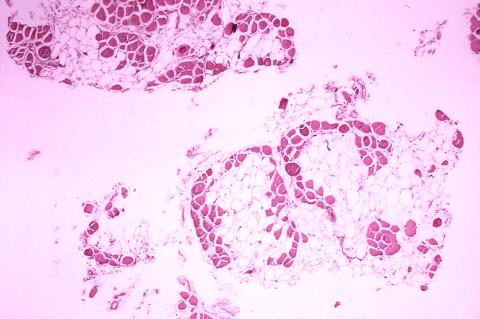
Duchenne muscular dystrophy (DMD) is a serious genetic condition that causes progressive muscle weakness and atrophy, including of the heart. There is currently no cure, and it mainly affects boys and young men. A cell therapy called Deramiocel could slow down muscle weakness in children and young people with advanced-stage DMD, according to a phase III clinical trial published in The Lancet, the first of its kind. The study involved 106 children and young people aged between 10 and 22 with advanced DMD. According to the results, after one year, participants who received the drug lost mobility in their arms 54 per cent more slowly than those in the placebo group, although this did not result in a clear difference in the heart’s ability to pump blood.

In 2025, a six-year-old Chinese girl named Mei (not her real name) became the first person in the world to undergo gene-editing therapy targeting the brain. She had a developmental delay associated with a rare genetic syndrome, Snijders-Blok-Campeau syndrome. According to Science, her parents had raised $860,000 to partially fund the treatment at Xinhua Hospital in Shanghai (China), led by Zilong Qiu, one of the neuroscientists competing to apply base editors — a version of CRISPR — in children with rare diseases. Now, Science and Retraction Watch have exclusively revealed that Mei died from a severe immune reaction seven days after receiving the treatment, a story that had been kept hidden. The entry on clinicaltrials.gov has not been updated since 2025; and when Qiu and his team published animal studies related to the trial in the journal Nature in early 2026, according to the journalistic investigation, they omitted any reference to Mei and her family.
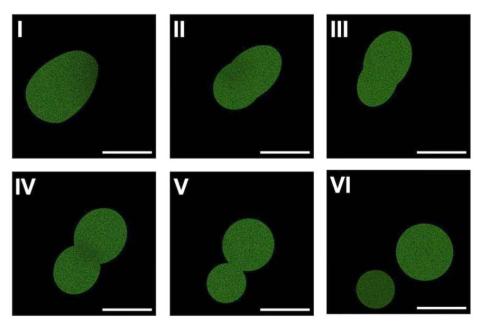
The team led by scientist Kate Adamala of the University of Minnesota has released the news—under an embargo—to several media outlets regarding the creation of a synthetic cell capable of feeding, growing, and replicating, which they have named Spudcell. Their work, which, according to Science News, was rejected by the journal Cell, is published on the team’s website, pending peer review.

Society prefers immigrants who are women, young, highly educated and in skilled employment – even though there is greater demand in the labour market for low-skilled workers – according to a meta-analysis that brings together data on more than 140,000 people from 36 countries. Respondents also expressed a preference for immigrants who do not come from Muslim countries and who migrate to escape violent situations rather than for economic reasons, according to the article published in Science Advances.

Ageing is characterised by the accumulation of cellular damage. Among the biomarkers associated with this process are epigenetic ‘clocks’, which analyse non-genetic modifications of DNA over time. However, these approaches have certain limitations, as they do not reflect the activity of specific genes. Now, a study published in Nature has analysed more than 11,000 transcriptomes from over 25 tissues in mice, rats, macaques and humans, showing that ageing-associated changes are conserved across species and cell types. The findings reveal universal transcriptomic signatures of ageing and mortality in mammals. Using these data, the authors developed their own molecular ‘clocks’, capable of estimating biological age and expected mortality.

In 2023, 1.17 billion people suffered from a mental health disorder, compared to 599 million people in 1990, according to a global study published in The Lancet. Women experienced higher rates of anxiety and depression, while neurodevelopmental and behavioral disorders—such as ADHD or autism—are more common in men. The highest incidence was observed among those aged 15 to 19, which, according to the authors, underscores the need for early prevention and targeted support for this age group.