University of Alcalá
If you are the contact person for this centre and you wish to make any changes, please contact us.
Specialist in Endocrinology and Gender Identity and honorary professor at the University of Alcalá
Professor of Applied Physics and Honorary Research Professor at the University of Alcalá
Professor of Pharmacology at the University of Alcalá
Astrobiologist and lecturer of Biochemistry at the University of Alcalá
Senior Lecturer at the University of Alcalá and Member of the Knowledge and Research Management Committee at Médicos del Mundo
President of the Spanish Glaucoma Society (SEG), head of the ophthalmology department at the Ramón y Cajal Hospital and professor of ophthalmology at the University of Alcalá de Henares (UAH).
Assistant Professor, PhD, Public Health and Epidemiology Research Group, University of Alcalá
Doctor of Health Sciences from the University of Alcalá (UAH), external member of the UAH's Food, Nutrition and Public Health Strategies research group, and lecturer at UNIR and CUNIMAD
Assistant professor of Physical and Sports Education and researcher in Epidemiology and Public Health at the University of Alcalá
Head of International Relations at the Spanish Society of Public Health and Healthcare Administration (SESPAS), organiser of the 2026 European Public Health Conference (EUPHA), Ikerbasque Research Professor at the Basque Centre for Climate Change (BC3) and professor and researcher at the universities of Alcalá and Johns Hopkins

Indicators of human longevity are on an upward trend in five groups of countries around the world, and the gap between women and men is narrowing, according to a study published in PLoS ONE. The gender gap in life expectancy resulting from the harmful effect of men's blue-collar jobs will shrink, but will persist in the future because men have a higher risk of certain diseases, the authors write. The research team, which includes scientists from the universities of Alcalá́, Barcelona, Oxford and London (UK), uses data and projections for 194 countries from 1990 to 2030.

In the year 2023, Science magazine has chosen the development and discovery that GLP-1 medications, agonists of the glucagon-like peptide-1, can mitigate health issues associated with obesity as the most important scientific breakthrough. Similarly, Nature magazine has selected biochemist Svetlana Mojsov, a key figure in the discovery of GLP-1, as one of the top ten scientists of the year.

In Spain, both in the child and adult populations, excess weight and obesity are more prevalent among men. Additionally, lower educational levels, lower income, disability, and the presence of individuals with obesity in the household are factors associated with a higher prevalence of excess weight and obesity. These are some of the conclusions drawn from two scientific articles and two complementary reports prepared by the National Center for Epidemiology of the Carlos III Health Institute and the Spanish Agency for Food Safety and Nutrition (AESAN). The data is derived from the ENE-COVID survey, which investigated the seroprevalence of COVID-19 infection in Spain.

Based on a defense protein of the strawberry anemone, researchers from the Barcelona Supercomputing Center, CSIC and the Complutense University of Madrid have designed, through artificial intelligence and the use of supercomputers, an artificial protein capable of degrading PET micro and nanoplastics, such as those used in bottles. According to the authors, its efficiency is between 5 and 10 times higher than that of the proteins currently used and it works at room temperature. The results are published in the journal Nature Catalysis.

Living as a private renter is associated with faster biological ageing than owning a home, according to a study using a UK database with data available on 1,420 people. The team, whose research is published in the Journal of Epidemiology and Community Health, used DNA methylation data - chemical modifications - to measure people's biological age, and says this correlation is stronger than the association between biological ageing and unemployment, or having been a smoker. Apart from blood samples from the database, the research also used historical data from a national survey.

The heat waves that took place in Europe during the summer of 2022 were associated with more than 61,000 deaths on the continent, more than 11,000 of them in Spain. These are the results of a modelling study published in the journal Nature Medicine and led by ISGlobal researchers.

Living near green spaces over a long period of time is associated with better health, an association more marked in women and white people than in men and black people, according to a study conducted in four US cities. The analysis concludes that exposure to urban green space between 1985 and 2006 is associated with slower epigenetic ageing, and that this association is stronger in disadvantaged neighbourhoods. The international team publishing this paper in Science Advances includes a researcher from ISGlobal in Barcelona.
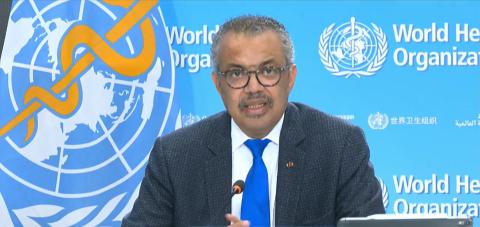
The World Health Organisation (WHO) Emergency Committee met on 4 May to assess whether covid-19 could continue to be considered a health emergency of international concern (PHEIC). The organisation's director general, Tedros Adhanom, has followed its recommendation and ended the emergency declared on 30 January 2020. "It is with great hope that I declare that covid-19 has ended as a global health emergency. However, this does not mean that covid-19 is no longer a threat to global health. Last week, it claimed one life every three minutes, and that's just the deaths we know about," he told a press conference.
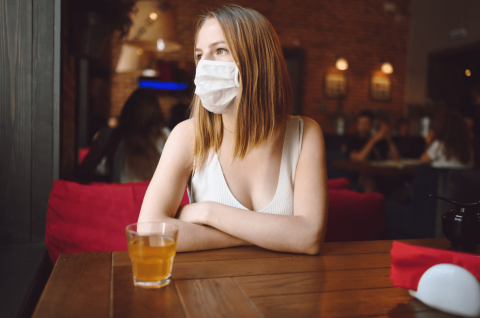
Research published in the journal Frontiers in Public Health has measured the relationship between restrictions in different settings - such as leisure and catering - taken in Spain between September 2020 and May 2021, with covid-19 transmission. The authors conclude that, overall, increased restrictions decreased disease transmission.

A health impact study led by the Barcelona Institute for Global Health (ISGlobal) concludes that implementing green axes throughout the city of Barcelona would lead to a "considerable reduction" in the mental health problems suffered by the adult population and in the direct and indirect costs associated with them. The study is published in the journal Environment International.