National Transplant Organisation
If you are the contact person for this centre and you wish to make any changes, please contact us.
Director of the National Transplant Organisation
Creator and founder of the National Transplant Organisation.
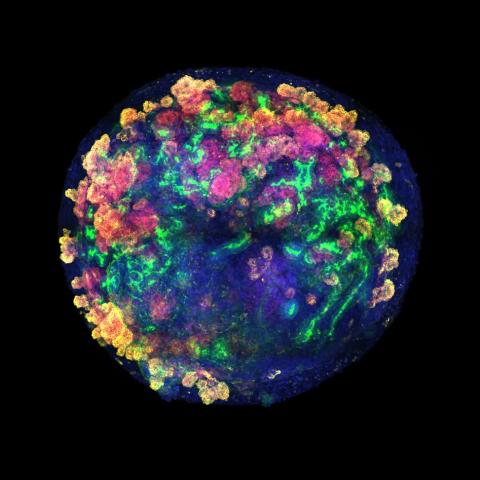
An international team, including several Spanish groups and coordinated by the Institute for Bioengineering of Catalonia (IBEC), has developed a pioneering technology that allows for the creation of multiple human kidney organoids, their combination with pig kidneys outside the body, and their successful transplantation back into the same animal. The method could contribute to improving future research and, according to the authors, allows us to envision a future clinical scenario in which organs destined for transplantation can be treated and conditioned before implantation. The work is published in Nature Biomedical Engineering.

A team from China has reported the results of the first liver transplant from a pig to a living human. Earlier this year, a procedure that served as a proof of concept was published, but it was performed on a brain-dead person. In this case, after modifying 10 genes in the porcine liver, an auxiliary transplant—not removing the entire organ—was performed on a 71-year-old patient with cirrhosis and liver cancer. It worked well for the first month, but on day 38, the graft had to be removed due to the development of complications, and the patient died on day 171. According to the researchers, who published the case in the Journal of Hepatology, this is "a fundamental step that demonstrates both the promise and the obstacles that remain to be overcome".

The Karolinska Institute has awarded the Nobel Prize in Medicine or Physiology to Mary E. Brunkow, Fred Ramsdell and Shimon Sakaguchi for describing how the immune system is regulated so as not to harm us. His groundbreaking discoveries on peripheral immune tolerance have spurred the development of new treatments for cancer and autoimmune diseases.
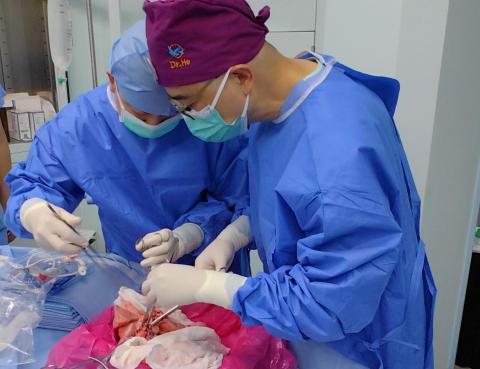
A team in China has transplanted a pig lung, genetically modified using CRISPR, into a brain-dead human. According to the researchers, this is the first time a lung transplant of this kind has been performed. The organ remained viable for the nine days of the study, although it showed some signs of damage and immune rejection. The results are published in the journal Nature Medicine.
In 2024, a team of researchers in China transplanted a pig's liver for the first time, with six genes modified to prevent rejection, into a person who was brain dead. After 10 days, they evaluated the condition of the organ and the recipient. According to the authors, who are now publishing the work in the journal Nature, the results suggest that genetically modified pig livers can survive and function in humans, which could serve as a bridge therapy for patients with liver failure who are waiting for human donors.

Patients receiving organ transplants often need to be treated with long-term immunosuppressants to reduce the likelihood of rejection, which has numerous side effects. An international team has shown in crab macaque monkeys that, in the case of heart transplantation, the use of these drugs could be avoided if combined with a kidney transplant from the same donor. The results are published in the journal Science Translational Medicine.
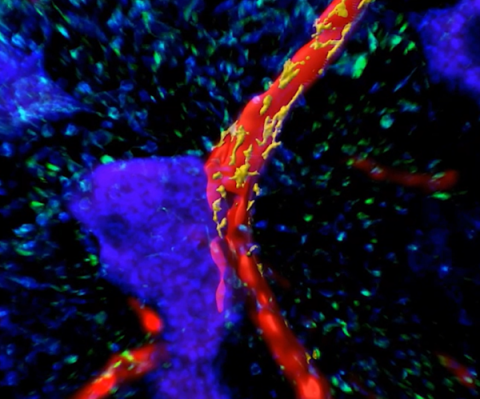
Japanese scientists have developed tiny liver organoids from stem cells that, transplanted into mice, integrate with the original organ and help repair fibrotic lesions. This scar-like tissue damage is common to many liver diseases, such as fatty liver disease and cirrhosis. According to the authors, who publish their results in the journal Science Translational Medicine, such organoids could offer an alternative to liver transplants in the future.

Currently, when an organ transplant is performed, the patient has to take immunosuppressive drugs to prevent his or her system from rejecting the new organ. These drugs must be taken for life and have numerous side effects. In a phase 1 clinical trial, researchers gave patients receiving a liver transplant regulatory dendritic cells derived from the original donor, with the hypothesis that these cells could 'teach' the recipient's immune system to tolerate the new organ. The research, published in Science Translational Medicine, suggests that this treatment could reduce or even eliminate the need for long-term use of immunosuppressants.
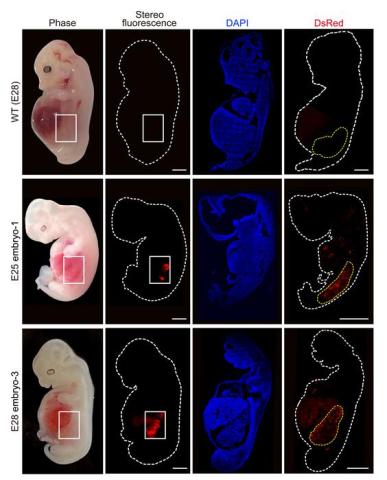
Scientists have successfully developed pig embryos whose kidneys contain 50-60% human cells. Gestation was terminated at 25-28 days, and the organ structure was normal. According to the press release accompanying the article, "this is the first time that a solid humanised organ has been grown inside another species, although previous studies have used similar methods to generate human tissues". The results are published in the journal Cell Stem Cell.
Researchers have developed a system capable of restoring some molecular and cellular functions and preserving tissues in pigs when initiated one hour after death. The study is published today in the journal Nature.