
CSIC Delegation in Andalusia and Extremadura
If you are the contact person for this centre and you wish to make any changes, please contact us.
EMERGIA post-doctoral research in the Sky Quality Office
Research Professor at the Doñana Biological Station (EBD-CSIC)
Senior Scientist at the Institute of Marine Sciences of Andalusia (ICMAN-CSIC)
Ramón y Cajal researcher at the Doñana Biological Station (EBD-CSIC)
Principal investigator of the 3D Genomics group at the Andalusian Centre for Development Biology (CABD)
Professor of Biochemistry and Molecular Biology at the University of Seville, principal investigator at CABIMER (CSIC-US) in the Laboratory of Cellular and Molecular Neuroimmunology
Researcher at the Doñana Biological Station (CSIC)
Researcher in the Department of Soil and Plant Microbiology, Zaidín Experimental Station-CSIC
Head of Section of the Stroke Unit in the Neurology Service of the Hospital Universitario Virgen del Rocio - Institute of Biomedicine of Seville (IBiS)
Ecologist. 'Ramón y Cajal' researcher working at EBD-CSIC (Doñana Biological Station)
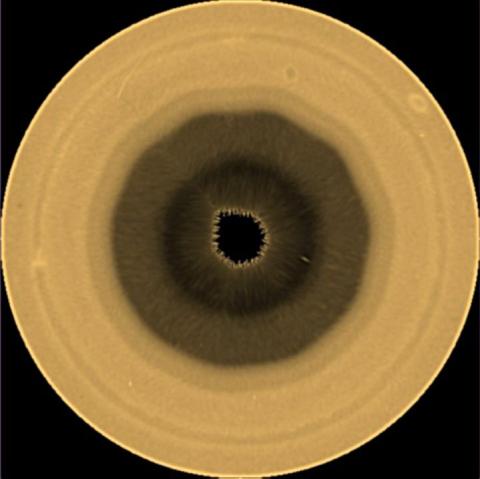
Thanks to the Voyager probe, we know that Saturn has a long-lasting hexagonal wave at its north pole, which is linked to a powerful jet of matter and energy. Now, a team led by the University of the Basque Country has discovered, for the first time, the presence of a decagonal wave at the south pole. The observations, carried out from the ground and using the Hubble Space Telescope, show that the decagon appears to have formed between 2023 and 2025 and may continue to evolve, in contrast to the more than 40 years of stability exhibited by the hexagon. The research is published in Science Advances and suggests that the ten-sided shape could be a meandering wave trapped by the curvature of a dominant atmospheric current.

We hadn’t seen a total solar eclipse on the Iberian Peninsula since 1912, and this Wednesday, just before sunset, the celestial bodies aligned once more. That perfect cosmic dance between the Sun, the Moon and the Earth could be seen from numerous regions across Spain. Among the millions of people who observed the phenomenon in Spain, eclipse experts share their impressions with SMC Spain.

There are just a few days to go until 12 August, when we’ll be able to enjoy the first of the three eclipses we’ll see in Spain. This is a total solar eclipse — the Moon will completely cover the Sun’s disc — something not seen on the Iberian Peninsula since 1912. Experts from different regions of Spain with extensive experience in observing eclipses offer their recommendations. Choosing the right viewing spot, using approved eclipse glasses, coping with the heat and respecting the natural environment are key to observing the eclipse safely and enjoying the experience.
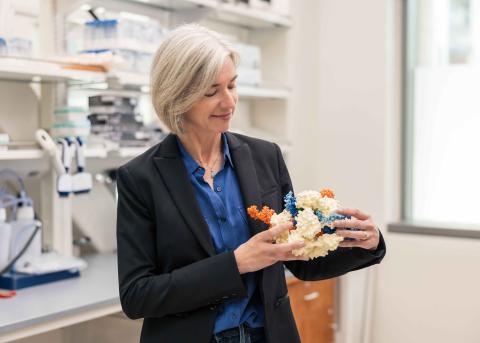
The range of CRISPR tools for genome editing can extend beyond nature-inspired designs thanks to proteins designed using artificial intelligence. A new study by Nobel laureate Jennifer Doudna’s team, published in Science, describes the design of synthetic RNA-guided nucleases, with sequences substantially different from those found in nature, which match or exceed the activity of their natural counterparts whilst offering novel properties.
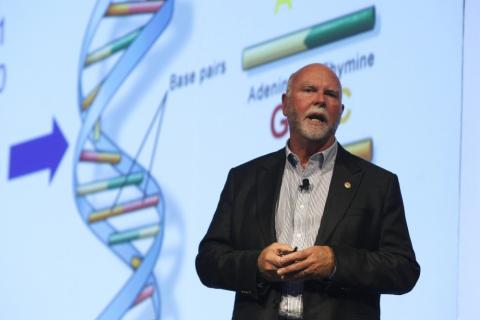
Craig Venter, the American biologist and entrepreneur who founded Celera Genomics to launch his own Human Genome Project in 1999 outside the public consortium, died Wednesday in San Diego at the age of 79, according to a statement from the J. Craig Venter Institute, which he led. Among other achievements, Venter completed the first full sequencing of a living organism’s genetic material and announced that he had succeeded in creating synthetic life.

Restrictions on mobility and activity imposed during the covid-19 pandemic had an impact on the beaks of a species of bird, specifically the dark-eyed junco, which lived in urban areas of Los Angeles (USA). This is shown in a study published in the journal PNAS, which reveals how birds born during these lockdowns had beaks similar to their counterparts in the wild. With the return of human activity, the beak returned to its pre-pandemic shape. The authors argue that this change was mainly due to an adaptation to the food available, as the birds no longer had access to human food waste.
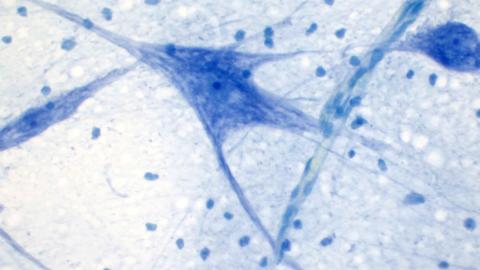
Amyotrophic lateral sclerosis (ALS) is a neurodegenerative disease characterised by progressive loss of motor neurons. An international team has discovered evidence that ALS may have an autoimmune component, meaning that the immune system mistakenly attacks healthy cells, a hypothesis that had been considered by the scientific community. The study shows that inflammatory immune cells—called CD4+ T cells—attack certain proteins that are part of the nervous system in people with ALS. ‘These findings highlight the potential of therapeutic strategies aimed at improving regulatory T cells,’ the authors note in the research, published in Nature.
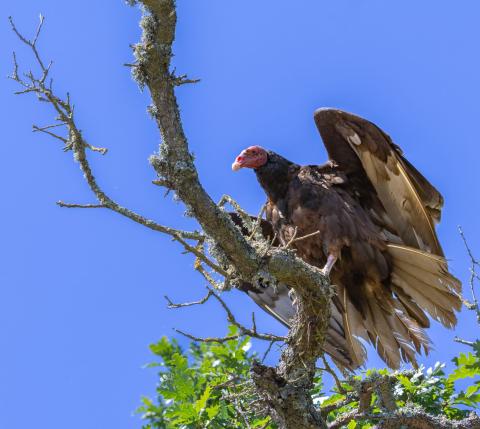
A team from Stanford University (USA) has analysed the conservation status of 1,376 species of scavenger animals. The results, published in the journal PNAS, indicate that 36% of them are threatened or in decline, especially large species and obligate scavengers, which depend exclusively on carrion for food. In contrast, the number of small and facultative scavengers, such as rodents, for which carrion is not their only source of food, is increasing. According to the authors, this ‘could increase the risks of diseases that large scavengers have helped to mitigate’.
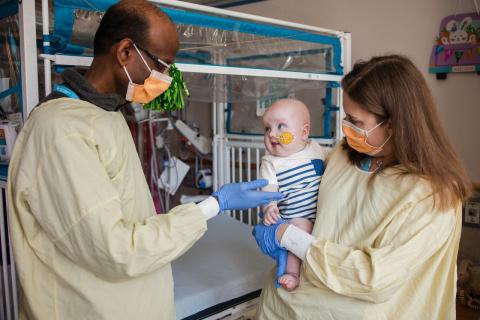
A team from the Children's Hospital of Philadelphia and Penn Medicine (United States) has successfully treated a baby diagnosed with a rare genetic disorder using personalised CRISPR gene editing therapy. The baby, known only by the initials KJ, was born with a rare metabolic disease known as severe carbamoyl phosphate synthetase 1 (CPS1) deficiency. After spending the first months of his life in hospital on a very restrictive diet, KJ received the first dose of his tailored therapy in February 2025, between six and seven months of age. The treatment, which is being used for the first time for this type of disorder, was administered safely, and the baby is now growing well and improving. The case is detailed in a study published by The New England Journal of Medicine (NEJM).
A team from the Centre for Genomic Regulation (CRG) and Pompeu Fabra University (UPF) in Barcelona has developed an artificial intelligence tool capable of designing regulatory sequences for genes that do not exist in nature. When introduced into cells, these enhancers can increase or decrease gene activity in a specific way depending on the type of cell targeted. According to the authors, ‘the potential applications are enormous. It's like writing software, but for biology.’ The results are published in the journal Cell.