BC3 Basque Centre for Climate Change
If you are the contact person for this centre and you wish to make any changes, please contact us.
Research proffesor at Ikerbasque, the Basque Centre for Climate Change (BC3)
Head of International Relations at the Spanish Society of Public Health and Healthcare Administration (SESPAS), organiser of the 2026 European Public Health Conference (EUPHA), Ikerbasque Research Professor at the Basque Centre for Climate Change (BC3) and professor and researcher at the universities of Alcalá and Johns Hopkins
Scientific Director of the BC3 Basque Centre for Climate Change
Head of the Climate Change Adaptation Research Group at the Basque Centre for Climate Change (BC3) and expert in urban climate governance
Researcher at BC3 (Basque Center for Climate Change).
Ikerbasque Research Fellow at the Basque Centre for Climate Change
Ikerbasque research professor at the Department of Plant Biology and Ecology of the University of the Basque Country (UPV/EHU), Leioa, Spain and research associate at BC3. His research interests include ecology, evolution, conservation biology and biogeography. He is currently leading a research group in molecular ecology
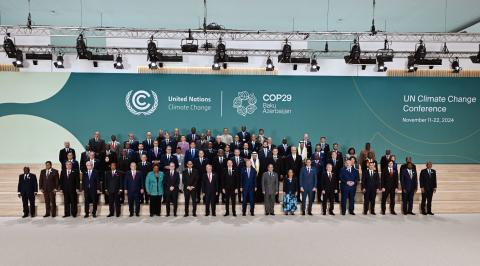
The largest carbon balance report shows that carbon dioxide emissions have not yet peaked and are projected to reach 37.4 billion tonnes by 2024. In a briefing organised by SMC Spain, Pep Canadell, one of the people in charge of the Global Carbon Budget 2024, analysed these data and what Donald Trump's return as US president means for climate action in the framework of COP29 in Baku.
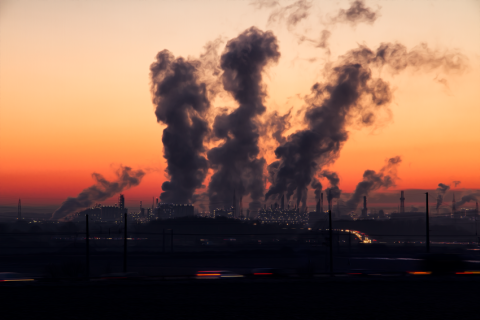
There are still no clear signs that global fossil carbon dioxide (CO2) emissions have peaked, according to the 2024 Global Carbon Budget. The report - which is published in the journal Earth System Science Data in preprint format and will be launched at COP29 in Baku - estimates that these emissions will grow by 0.8% this year compared to 2023, to 37.4 billion tonnes of CO2. If this rate continues, there is a 50% chance that global warming will exceed the 1.5°C limit in six years.

Private flights are used by approximately 0.003 % of the world's population, but the CO2 emissions they released in 2023 were equivalent to 1.8 % of those of all commercial aviation. These are the conclusions of a study published in the journal Communications Earth & Environment, which estimates that emissions from private flights increased by 46 % between 2019 and 2023. Almost half of them covered a distance of less than 500 kilometers.
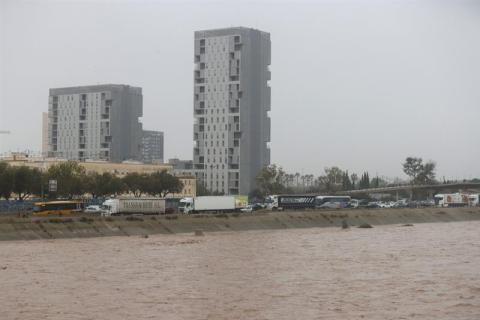
The devastating effects caused by the DANA over the peninsula and the Balearic Islands in large parts of the Mediterranean area, especially in the Valencian Community and some regions of Andalusia, are a wake-up call on the relationship between these extreme events and climate change.
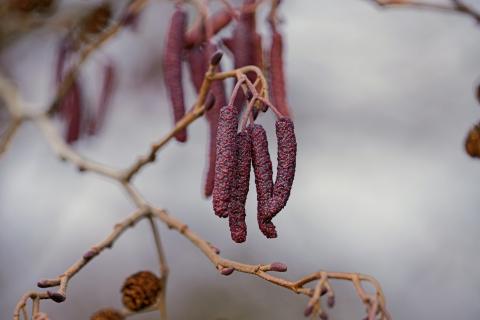
An international team of researchers has reconstructed the first European seed dispersal network based on a literature review. The data indicate that extinction threats and demographic changes in the animals that disperse them have resulted in 30% of plant species having their dispersers listed as 'high concern.' The lack of seed dispersal could hinder the recovery of declining plant populations. The authors publish their results in the journal Science.

Research published in Nature analyses future scenarios in which the 1.5°C temperature limit set in the Paris Agreement would be temporarily exceeded, assuming that temperatures could be lowered in the long term by reducing carbon dioxide emissions using different techniques. The authors stress that exceeding this threshold would have irreversible consequences for the Earth system in key areas such as biodiversity, sea level and carbon stocks. ‘Only rapid, short-term emission reductions are effective in reducing climate risks,’ they stress in the paper.
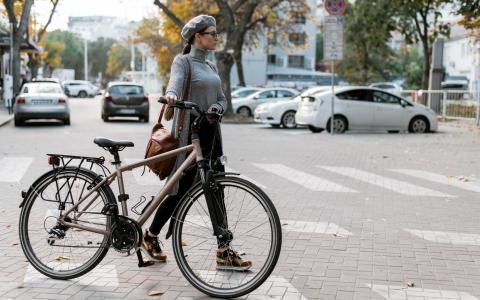
Analysis of 1,500 climate policies implemented in 41 countries over the last two decades - between 1998 and 2022 - shows that a small proportion - 63 of them - achieved a significant reduction in carbon dioxide emissions. The study, published in Science, indicates that a significant decrease in these emissions was recorded in the transport sector in Spain. According to the authors, the combination of several policy instruments is often more effective than the use of single measures.
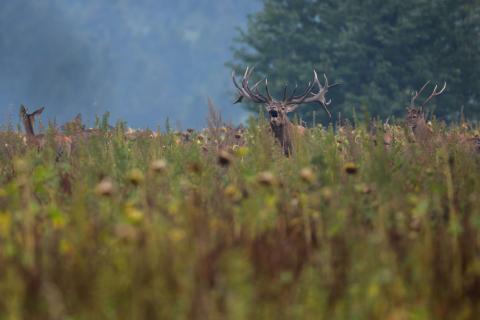
Abandoned farmlands in Europe could find new life through rewilding, a movement aimed at restoring devastated landscapes to their wild state before human intervention. A quarter of the European continent, 117 million hectares, is ready for rewilding, according to a study published today in the journal Current Biology.
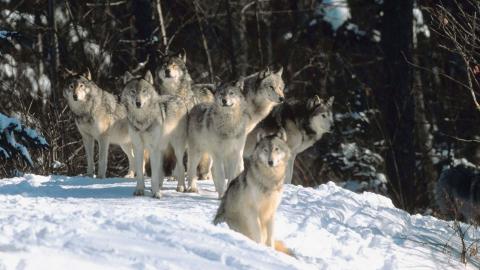
In a recent publication, we discovered that efforts to monitor genetic diversity in Europe are incomplete and need to be extended to account for potential climate change impacts on species of conservation interest.

After an intense night of negotiations in Dubai (United Arab Emirates), the countries participating in COP28 reached a historic agreement by mentioning for the first time "moving away from fossil fuels" in the Global Stocktake document - the assessment of progress made towards achieving the climate goals set out in the Paris Agreement. The agreement comes after the first draft presented by the presidency did not make this mention - it referred only to "reducing consumption and production" of these fuels - which was described as "unacceptable" by countries such as Spain.