childhood

childhood

childhood

Gene therapy is effective long-term in children with a serious rare disease

Severe combined immunodeficiency due to ADA enzyme deficiency is a rare disease that, without treatment, usually causes death within the first two years of life. These "bubble children" are currently treated with a bone marrow transplant or with injections that aim to restore, to the extent possible, the function of this enzyme. Now, an international team presents the results of a gene therapy administered to 62 children with the disease between 2012 and 2019. The therapy was effective in 95% of cases and did not cause serious complications, according to the authors, whose work is published in the journal NEJM

0

The temporary nature of teaching staff in Spain remains above the OECD average

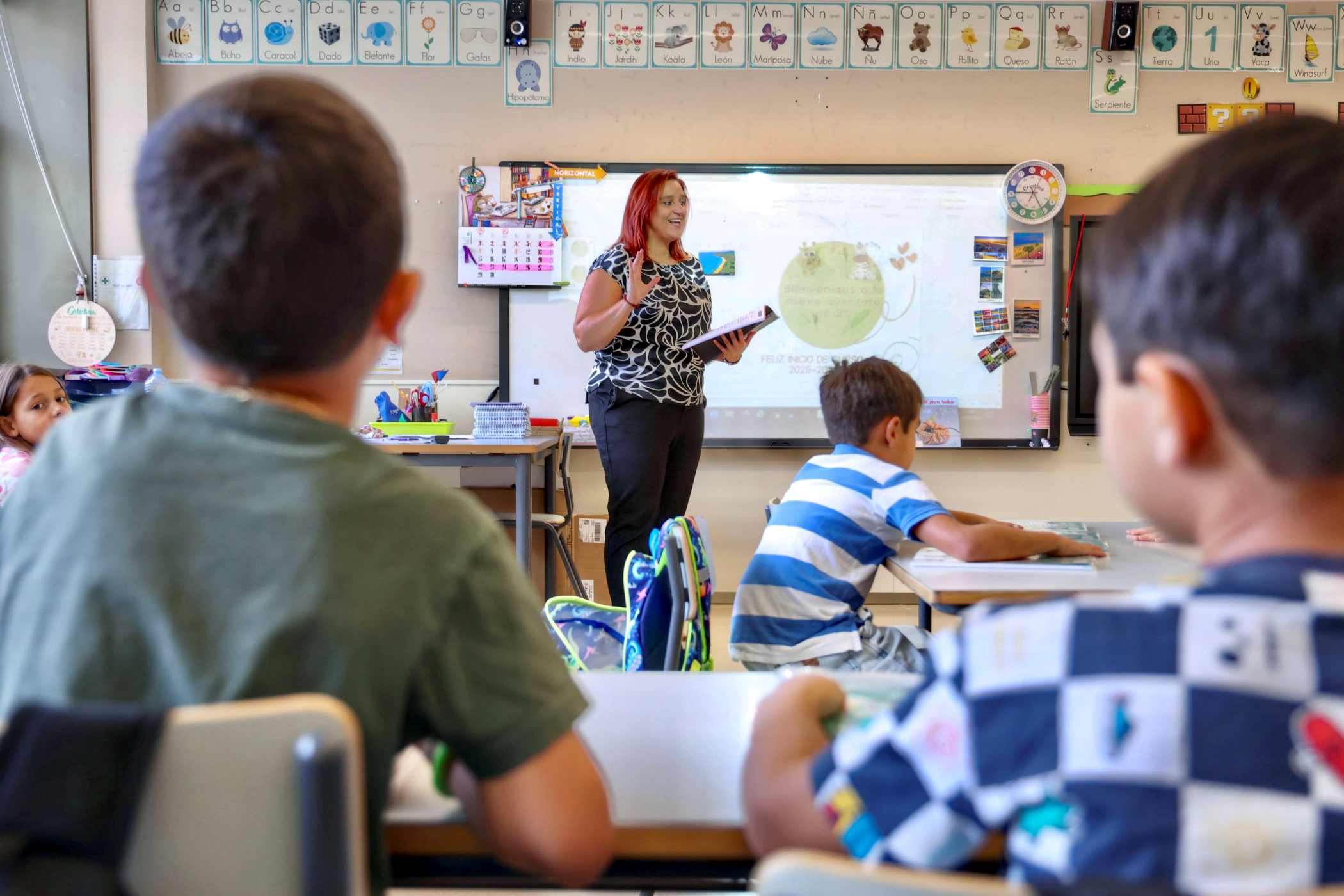
The temporary employment rate for teaching staff in Spain is 31%, above the OECD average of 19% and the EU average of 17%. This is one of the results of the latest edition of TALIS, the Teaching and Learning International Study, promoted by the OECD and involving more than 50 participating countries. In its previous edition, in 2018, 33% of Spanish teachers had temporary contracts. The study also shows that teacher job satisfaction is among the highest, at 95%—compared to 89% in the OECD and 90% in the EU. As a new feature, TALIS analyzes four new areas: the impact of artificial intelligence on learning and teaching, managing diversity in the classroom, socio-emotional learning, and education for sustainability.

0

Different autism profiles identified according to age of diagnosis

People with autism have different genetic and developmental profiles depending on the age at which they were diagnosed, according to a study published in Nature. The authors distinguish two groups: the first receive a diagnosis of autism in early childhood, with lower social and communication skills and a moderate correlation with attention deficit hyperactivity disorder (ADHD) and mental health disorders. The other group of people receive their diagnosis in adolescence, with increased socio-emotional and behavioural difficulties, and higher genetic correlations with ADHD and mental health disorders. 

0

Pollution and going back to school: how air quality affects children's health

A new school year has begun, and pollution, which exceeds recommended limits in many urban centres, will once again affect children and their families. What consequences could this have on health? How does climate change affect it? What solutions can be implemented? SMC Spain organised an informative session with Julio Díaz and Cristina Linares to answer these questions.


0

Programs focused on parents are insufficient to prevent childhood obesity, according to a meta-analysis

An international team has analyzed data from 17 studies in 10 countries involving more than 9,000 participants and concluded that childhood obesity prevention programs focused on mothers and fathers do not appear to have an impact on young children. According to the authors, who published their findings in The Lancet, broader, coordinated, and well-resourced public health actions are needed.


0

A diet rich in omega-3 fatty acids may help prevent myopia in children

A diet rich in omega-3 fatty acids, found mainly in fish oils, may help prevent the development of myopia in children, while high consumption of saturated fats, found in foods such as butter, palm oil and red meat, may increase the risk of developing this condition, according to research published in the British Journal of Ophthalmology. The study was conducted on a thousand children in Hong Kong aged between six and eight.

0

The gender gap in mathematics appears in the first year of primary school

A study evaluating the mathematical and linguistic performance of first- and second-year primary school students in France—more than 2.6 million children between 2018 and 2022—shows that the gender gap in mathematics appears within a few months of starting primary school. This gap increases with years of schooling, not with age, adds the research published in Nature.

0

Call to extend the use of precision oncology to minors

So-called precision oncology involves the use of drugs that target specific molecular alterations in the tumour. These therapies are usually tested in clinical trials in adults and most have not been approved for use in children. An opinion article calls for these trials to be extended to children as well, given the difficulty of conducting such trials in children due to the small number of cases. According to the authors, who publish the text in the journal Trends in Cancer, given that children and adolescents tend to tolerate therapy better than older adults, ‘the time has come to consider age-agnostic approvals, i.e. approvals that include children and adults of any age’.

0

Children and heat: how rising temperatures affect them and how to adapt their environment to climate change

Children will suffer more from the climate crisis than their grandparents. Fifty-two per cent of people born in 2020 will experience unprecedented heat waves throughout their lives, compared to 16 per cent of those born in 1960. This was calculated by a study published in Nature last month, assuming that temperatures rise 1.5 °C above pre-industrial levels. In this article, we analyse the profile of children who already suffer from heat in our country and explain how to adapt their environments to extreme temperatures. 

0