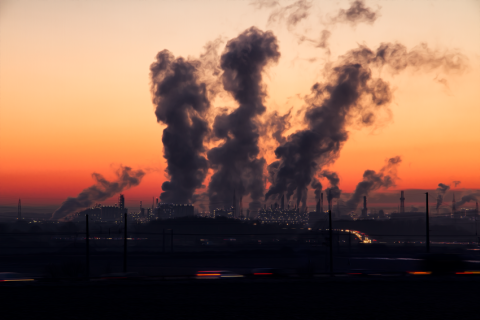
The decline of European forests in their role in combating climate change is analyzed
Forests cover approximately 40% of Europe's land area. Between 1990 and 2022, they absorbed around 10% of the continent's emissions from human activity, but this process is slowing down. An international team, including CREAF and CSIC, analyzes this decline and its causes in an article and proposes possible solutions. The work is published in the journal Nature.
Sanz - bosques declive (EN)
María José Sanz
Scientific Director of the BC3 Basque Centre for Climate Change
It was important to reflect on the role of forests in mitigating climate change. For a long time, they have been considered the panacea that could sequester carbon to offset rising emissions. The importance of this reflection lies in the fact that, for the first time, it provides clear evidence of a downward trend in the carbon sinks represented by European forests, contrary to the compensation expectations envisaged by European policies. We must therefore be cautious in estimating their potential as carbon sinks and place greater emphasis on adaptation and resilience measures in the management and protection of European forests.
This has important implications for the need to internalize the risk factors to which they are increasingly exposed as a result of human activity, both direct and indirect. This implies the integration of information and data from very different sources and acquired with new and old technologies, all of which are necessary. Their limitations lie precisely in the lack of the interoperability needed to integrate all available data and knowledge to produce more robust, more consistent, and less uncertain estimates. The article also highlights this need. Let us hope that this message sinks in among European researchers.
Agustín - bosques declive (EN)
Agustín Rubio Sánchez
Professor of Ecology and Soil Science at the Polytechnic University of Madrid (UPM)
The work is a review of the recent "state of the art" in assessing the carbon storage capacity of European forests. It is of very high quality and contains high-quality information. It will very likely become a bibliographic reference that scientists will draw on in future studies.
The work shows that the confidence that policymakers place in the belief that a significant portion of greenhouse gas emissions do not need to be reduced thanks to the free service provided by forests may remain a wishful thinking that cannot be relied upon. It shows that in recent decades, European forests, for various reasons, are not absorbing as much carbon as previously thought. This issue has already been questioned by various researchers since the question was first raised, while more traditional sectors of forest management saw in this possibility an opportunity to draw attention to the work being done to maintain these forest stands. It is not a question of deciding before having the data whether one approach or another is correct. Precisely what this work is saying is that over time these issues can evolve in one direction or another.
Forests allowing carbon to be stored in their biomass or in their forest soils can never be the solution, in and of themselves. They can serve to "buy time" while technological solutions are found. The problem has arisen (and continues to arise) from the technological development that has created the most recent society (a society of well-being, at least for some). It therefore seems reasonable that the solution must also come from a new carbon capture technology that reduces the intensity of greenhouse gas concentrations in the atmosphere. Since this will not happen within 24 hours, 30 years, or 50 years, it also seems reasonable that while the real emissions emitted by current technologies are urgently reduced, the management of natural sinks (forests, soils, etc.) will help prevent current society from collapsing. I want to point out that this last paragraph is a reflection not included in the article, but it seems to me a logical consequence of the paper's conclusions.
Placing expectations of achieving the long-awaited climate neutrality on the work done by European forests is nothing short of fallacious. Forests can help, but they shouldn't be assigned amounts to compile carbon balances; they're used to buy time. Not for anything else.
[Regarding possible limitations] From my perspective, there is a very important limitation that is mentioned in the paper, but I believe it has little relevance. Forest ownership, at least in Spain, mostly falls into private hands. The well-identified shortcomings in forest management will not be resolved by the owners without economic benefits.
Another important issue is that most of the proposals arise from the Central European forestry context, where issues such as the importance of elements for observing forest resources or forest carbon sink models are given priority. I will not fail to recognize this importance, but in the Mediterranean world—conditions toward which much of Central Europe, which still enjoys quite favorable conditions, is moving—there is still a lack of basic information regarding the growth of different species, the role of biodiversity in these forest systems, and, especially, the impact on soil carbon produced by changes derived from forest management.
Resco- Bosques declive (EN)
Víctor Resco de Dios
Lecturer of Forestry Engineering and Global Change, University of Lleida and researcher at Agrotecnio
A large part of our emissions come "for free" thanks to forests, which transform CO2 into organic matter and, therefore, eliminate the atmospheric CO2 that is behind climate change. On a global scale, forests absorb around 30% of all emissions, which is known as the terrestrial carbon sink. On a European scale, their contribution is much more modest, barely reaching 8% of the nearly 4.8 billion tons we emit annually. This publication does not provide new data, but rather compiles some of the published literature on this topic and indicates how the current European carbon sink has decreased to 6% of emissions during 2020-2022. This decrease in the terrestrial sink is well known and is due, in part, to phenomena such as heat waves or drought.
What is most striking about this article is not the information it provides, but what it omits. The article attributes part of the decline in the carbon sink to an alleged increase in tree felling. It is based on a study published by this same group in 2020 that contained significant methodological errors. In fact, subsequent studies showed how these supposed fellings actually corresponded to areas affected, for example, by the processionary caterpillar, but the authors do not cite these subsequent studies. Nor do they include recent studies that quantify how one of the main carbon stores is found, precisely, in felled wood and in "non-living" sinks. That is, felled wood does not disappear, but is transformed into another product that contributes to mitigating climate change.
The authors also overlook how the main factor behind the decline in water resources in forests lies in forest growth itself. The absence of forestry activity, therefore, is one of the factors that increases water scarcity and, consequently, worsens climate change-induced drought and reduces the capacity to store carbon.
The article's information on forest fires includes recommendations such as reforestation with a diversity of species, a practice linked to the increase in the virulence of forest fires.
Beyond these and other omissions, the article makes it clear how our forests' capacity to mitigate climate change is important, but insufficient, and that forestry is our main tool to ensure both their carbon sink capacity and the survival of forests in a scenario of global warming.
Eduardo Rojas - bosques europeos
Eduardo Rojas Briales
Lecturer at the Polytechnic University of Valencia and former Deputy Director-General of the FAO
Without a doubt, the article addresses a relevant and pressing issue regarding the foreseeable contribution of European forests to carbon sequestration, which will enable the goal of climate neutrality to be achieved by 2025. However, analysing such a complex issue in an article of less than 500 lines is risky, as it does not consider the many variables that may influence this issue.
The article continues the line of argument of Abrupt increase in harvested Forest area over Europe in Nature, which also featured four of the authors of the current article, including its lead author (Ceccherini, G). This article proved to be highly controversial and was refuted by the European Forest Institute, which represents forestry research and training centres across Europe, in a response article also published in Nature in 2021 and signed by 33 authors.
To summarise the issue, the original 2020 article sought to demonstrate that logging in Europe had increased since 2015 to such an extent that biomass stocks in forests had decreased significantly, including forest area.
In response to this interpretation, the rebuttal identified a number of technical limitations to this interpretation, in addition to those relating to the forest inventories regularly carried out by national governments under the harmonisation of the FAO, which were published a few months later at the Ministerial Conference on Forests held in Bratislava in the same year. It should also be noted that in order to identify underlying trends, including with regard to forest fires, short series of less than ten years should be avoided, whereas here only five years were used.
On this occasion, in response to the strong reaction received, they resort to imprecise formulations that could lead to misunderstanding of the process we are currently undergoing. European forests have suffered long periods of deforestation with brief periods of recovery coinciding with times of demographic decline (fall of the Roman Empire, second half of the 17th century). It is thanks to the industrial and agricultural revolution, which coincided with the dawn of forestry science, that forests began to increase throughout the 19th century, first through active reforestation in many countries and then through spontaneous expansion by pioneer species in abandoned areas, especially in the mountains. This is a well-studied process referred to in the literature as “forest transition”, particularly in Asia, as defined by Mather. (Mather, Alexander S. (1992). “The forest transition”. Area. 24 (4): 367–379).
According to the logic of forest growth dynamics, their extent first increases until it peaks and then, after a long period of time, capitalisation peaks. In Spain, the Spanish Forest Inventory, whose first measurement was carried out in 1970 (average between provinces) and with the fourth set of data about to be finalised, there has been an increase in the forested area from 11.8 million hectares to approximately 18.4 million hectares today, while the stock has risen from just under 500 million m3 to over 1.2 billion m3. It should be remembered that Sweden, with a better average climate for forest growth, has doubled its stocks in 100 years, while here they have multiplied by 2.5 in just 50 years.
The wording chosen in the article suggests that forests are losing above-ground biomass (below-ground biomass is very difficult to measure), but what is really happening is that once they reach the end of their spontaneous territorial expansion, which always begins in the best seasons, their growth in volume also peaks as they reach their biological limit. This interpretation is confirmed when we look at the regional level and compare the autonomous communities that began their ‘forest transition’ earlier and are also characterised by a better climate (Navarra and the Basque Country), which are the first to have completed their territorial expansion and are now beginning to do so in terms of existing forests.
Another noteworthy aspect is that this article understands forests as mere carbon sinks without paying attention to any of their other vital functions, whether environmental (soil protection, water regulation, soil cooling in summer, soil improvement), social (means of subsistence for populations living in the most remote areas of the planet, green jobs) or economic (the primary source of biomaterials on a global scale). This limited approach contravenes the comprehensive approach of the SDGs.
Even focusing solely on carbon sequestration, it underestimates the contribution of wood in construction as a long-term temporary sink, without supporting this assertion with verifiable sources and contrary to numerous studies that have led the European Commission, within the framework of the Green New Deal, to identify the promotion of wood in construction as one of its priorities (New European Bauhaus). If temporary sequestration receives marginal attention, it completely ignores the environmental benefits of substituting wood, especially in the field of substituting non-renewable and energy-intensive materials.
It repeatedly uses derogatory terms to describe forest management in Europe over the last few decades (the term “salvage logging”), despite the fact that all statistics refute this prejudice (FAO, Ministerial Conference on the Protection of Forests in Europe/Forest Europe, Europstar, European Forest Institute (EFI), IUFRO) and that, at international level, forest management in Europe continues to be a global benchmark. Another example is to classify forest management in Europe as purely production-oriented, which is not the case, at least in recent decades, and in any case, the only income that forests provide to their owners is 60% 16 million owners, mostly small and family-owned, and more than 10,000 communal forests, with the rest belonging to regional and national public administrations.
Another example of prejudicial language is to refer to forest management in the EU as “so-called sustainable forest management” when this concept is enshrined in the forestry legislation of European countries, in international processes such as Forest Europe and the FAO, and is defended by highly prestigious academic organisations such as IUFRO and EFI.
It ignores an aspect that is widely accepted, at least in the European Mediterranean region, which is the fact that the abandonment of forest management, together with extensive livestock farming and agriculture and rural exodus, does not lead to the recovery of forests in equilibrium, but rather exacerbates the intensity of large forest fires due to high fuel loads and their horizontal and vertical continuity.
It ignores the relationship that social research has identified in the tropics between the empowerment of local populations by making them responsible for forest management and conservation in tropical countries where deforestation is very common. Ignoring the importance of local empowerment in developed countries in a context of rapid decline in the rural world is not an approach consistent with social science related to the sustainability of natural resources.
In the case of water, it has been demonstrated that excessive tree densities resulting from a lack of management significantly reduce the flow of water available in rivers, reducing both water for human use and water for the rivers themselves and their biodiversity.
In terms of biodiversity, the most biodiverse non-humid terrestrial ecosystems in Europe are the woodlands and scrublands of south-western Europe, which are not exactly characterised by high carbon stocks, but are additionally characterised by their high resilience to fire.
In the preface, just as reasonably accurate figures are given for annual carbon sequestration by forests, the area of forest should be indicated in detail, at least in terms of percentage (43% instead of approximately 40%).
There is a tendency to refer lightly to monospecific forests, probably with the intention of classifying European forests as intensive forestry crops as they are known in some tropical countries, when in fact large areas of the EU are naturally very species-poor due to difficult soil and climatic conditions (inland moors: junipers, sandy areas: pine forests) or in other more favourable conditions such as temperate climates, where beech is rapidly gaining ground, creating large monospecific areas that no one criticises for this reason.
It is also criticised that only 27% of forests are irregular, i.e. that they combine trees of different ages on a small scale (stand). This is reasonable in mountains with steep slopes in a Mediterranean climate, but it generates a lot of vertical continuity and an absence of horizontal discontinuities, and therefore a greater risk of mega-fires.
The entire argument focuses on the fact that if the current trend continues, there will be a 2% shortfall in achieving climate balance by 2050. Firstly, there are many factors that would have an even greater impact on this (the advance of renewable energies, climate-responsible behaviour by society, progress in off-road freight transport, insulation and materials in construction, advances in batteries). However, it is not right to make a very large but economically relatively weak sector bear the entire cost of the climate transition without any compensation and without addressing social and territorial considerations, as this would undermine fundamental rights and exacerbate territorial polarisation between metropolitan areas and peripheral areas of the EU, where most European forests are located. A policy that ignores its social and territorial effects is ethically unacceptable.
Given the complexity and scope of this issue, the authors of this article use secondary sources without conducting direct research.
Migliavacca et al.
- Review
- Peer reviewed