Journalists

Journalists

Covering current events in science, the environment, technology and health requires a context and reliable sources that respond quickly.

¿Qué me ofrece?

When science hits the headlines, we publish reactions, explanations, and in-depth analysis from reliable sources, capturing both the evidence and the debates. Our library of science journalism resources and the briefings may be of use to you. Consult our directory of research centres.

Icono
Cómo trabajamos

We are on the lookout for any controversial information about science (embargoed or not), in order to react with the agility the media needs. Sign up to receive our embargoed contents, all under the Creative Commons licence. Find out more about how we work here.

Título qué me ofrece
What we offer you
Título cómo trabajamos
How we work

First pig-to-human lung transplant performed

A team in China has transplanted a pig lung, genetically modified using CRISPR, into a brain-dead human. According to the researchers, this is the first time a lung transplant of this kind has been performed. The organ remained viable for the nine days of the study, although it showed some signs of damage and immune rejection. The results are published in the journal Nature Medicine.

0

A WHO-WMO report warns that extreme heat increases the risk of neurological disorders and other illnesses among workers

The frequency and intensity of extreme heat events have increased in recent years, heightening the risks for those who work outdoors and indoors. Health risks include heatstroke, dehydration, kidney dysfunction and neurological disorders. These are some of the conclusions of a joint report by the World Health Organisation (WHO) and the World Meteorological Organisation (WMO), which estimates that worker productivity falls by between 2% and 3% for every degree above 20°C. The document proposes measures for governments, businesses and health authorities to mitigate the risks of extreme heat for these people.

0

Birds sing longer in areas with light pollution

Light pollution is causing birds to sing more, prolonging their vocalisations by an average of 50 minutes, according to a study published in Science. The study, which analyses more than 580 species of diurnal birds, shows that those most exposed to light, either because they have large eyes or open nests, are the most affected by this phenomenon. The authors analysed more than 60 million vocalisations from the BirdWeather citizen science project. ‘The machine learning algorithm allows us to analyse audio recordings 24 hours a day, seven days a week, which would otherwise take a lifetime to listen to,’ says Breant Pease, one of the authors.

0

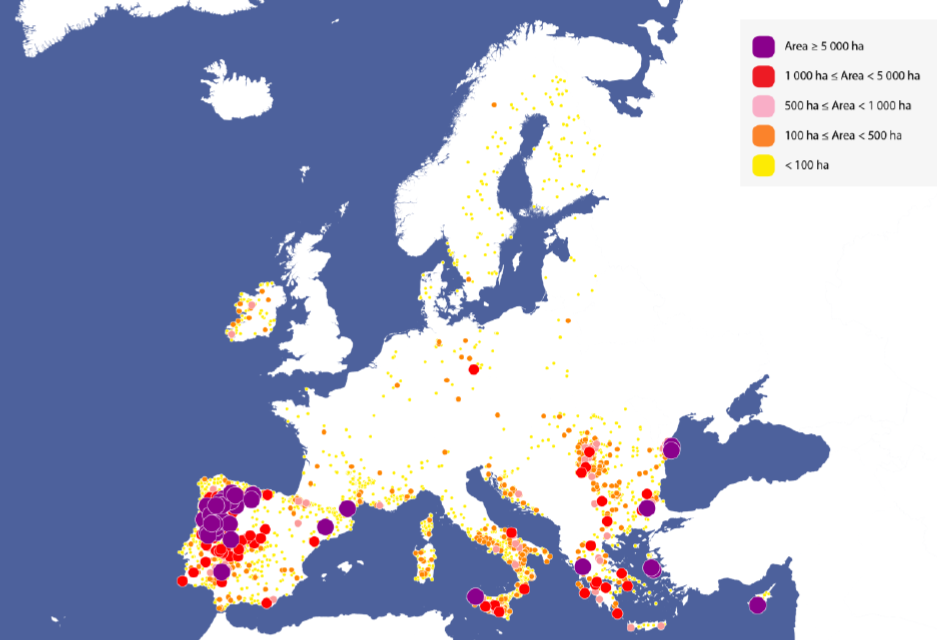
The global population exposed to fires has increased by 40% in twenty years

A US team has analyzed the evolution of the global population exposed to forest fires between 2002 and 2021. The study indicates that the number of people exposed has increased by 40%, despite a 26% reduction in the area burned. This is mainly due to the increase in the population living in urban-forest interfaces. 85% of exposures occurred in Africa, even though forest fire disasters in North America, Europe, and Oceania have received most of the attention, notes the study, which is published in the journal Science.  

0

Solar panels in space could help Europe achieve its net-zero emissions target

Space-based solar power could provide electricity to support Europe's net-zero emissions target if its cost of supply is reduced sufficiently. This is one of the conclusions of an article published in the journal Joule, by the Cell Press group. Space solar panels would allow continuous capture of solar energy, rather than only when light reaches Earth, reducing the need for wind and solar energy on Earth by 80% in Europe. The researchers estimate that by 2050, space-based solar power could reduce the costs of the European electricity system, although this depends on the development of two NASA space-based solar power designs they have used for their research: the Innovative Heliostat Swarm and the Mature Planar Array.

0

The “body map” integrated into the brain does not change even if a limb is amputated, despite previous belief to the contrary

Various studies claimed that the loss of a limb caused a reorganisation of the “body map” integrated in the brain: neighbouring regions invaded and reused the brain area that previously represented the amputated limb. But a new study refutes this theory. Cortical representation remains stable even when the body suffers the loss of a limb. The team, which published its study in Nature Neuroscience, analysed three people who were about to undergo amputation of one of their hands, studying for the first time the maps of the hand and face before and after amputation, with follow-up for up to five years. Even without the hand, the corresponding brain region was activated in an almost identical way.

0

Forests managed by industry are more prone to mega-fires, according to research in the United States

Between 2019 and 2021, five major fires burned nearly 500,000 hectares in Sierra Nevada (California). Now, a team from the United States has analysed the relationship between the structure and type of ownership of these forests and the development of a severe fire. Their conclusions are that this probability is 45% higher on private land used for the timber industry than in public forests. The results are published in the journal Global Change Biology.

0

Vaping among young people is associated with higher subsequent consumption of tobacco, marijuana or alcohol

A team from the United Kingdom has conducted an umbrella review, or review of reviews, on the risks of vaping among young people. After analysing 56 reviews including 384 studies, their conclusions are that vaping is subsequently associated with increased consumption of tobacco, marijuana and alcohol. It is also associated with an increased risk of asthma, coughing, injuries and mental health problems. The results are published in the journal Tobacco Control.

0

A diet rich in omega-3 fatty acids may help prevent myopia in children

A diet rich in omega-3 fatty acids, found mainly in fish oils, may help prevent the development of myopia in children, while high consumption of saturated fats, found in foods such as butter, palm oil and red meat, may increase the risk of developing this condition, according to research published in the British Journal of Ophthalmology. The study was conducted on a thousand children in Hong Kong aged between six and eight.

0

Oropouche fever: how concerned should we be about the spread of this disease?

The Pan American Health Organisation has maintained its epidemiological alert for Oropouche fever since it was first issued in February 2024. Although the virus only circulates endemically in the Americas, the importation of cases to Europe following international travel is keeping health agencies and authorities on alert.

0