Journalists

Journalists

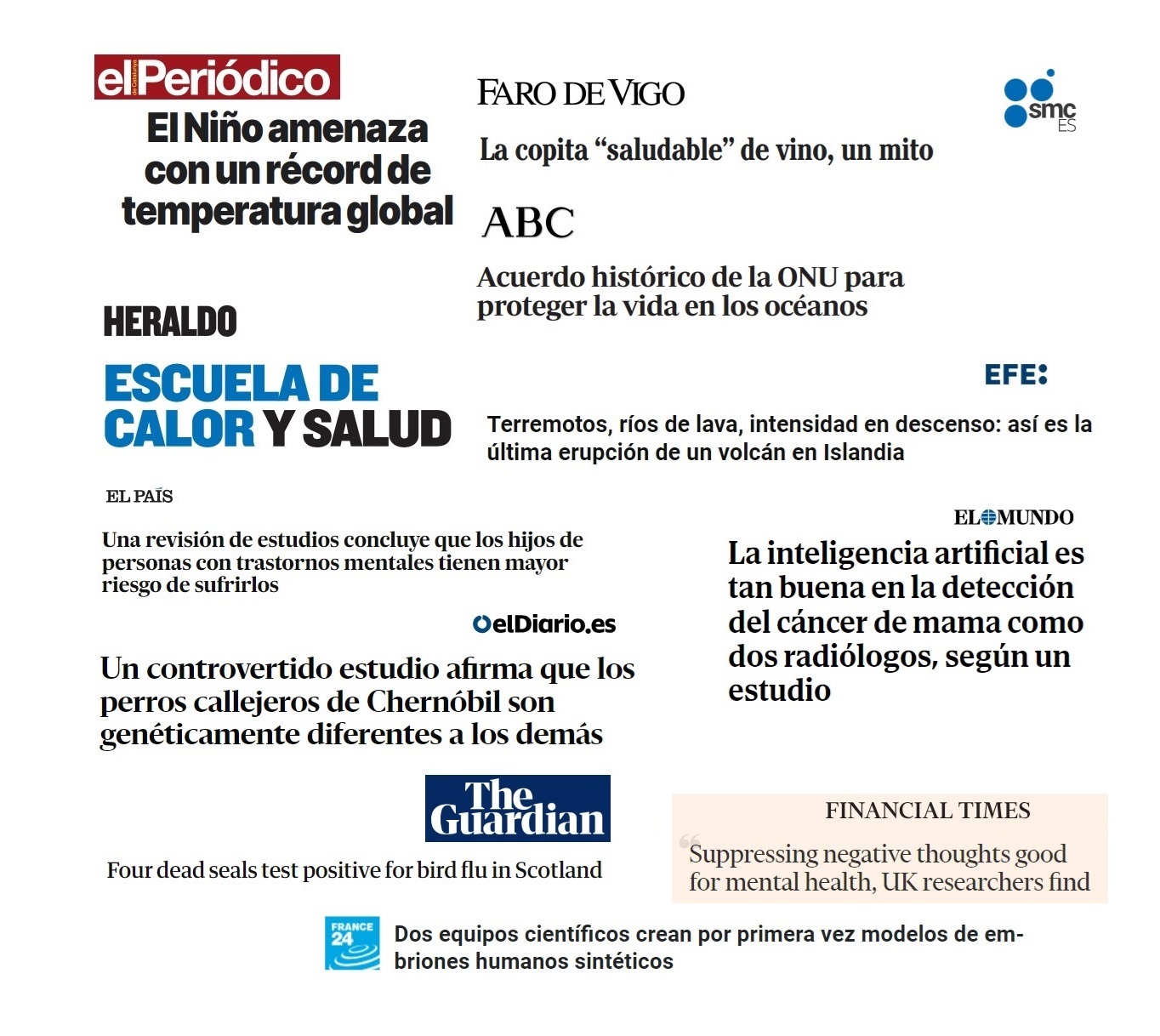
Covering current events in science, the environment, technology and health requires a context and reliable sources that respond quickly.

¿Qué me ofrece?

When science hits the headlines, we publish reactions, explanations, and in-depth analysis from reliable sources, capturing both the evidence and the debates. Our library of science journalism resources and the briefings may be of use to you. Consult our directory of research centres.

Icono
Cómo trabajamos

We are on the lookout for any controversial information about science (embargoed or not), in order to react with the agility the media needs. Sign up to receive our embargoed contents, all under the Creative Commons licence. Find out more about how we work here.

Título qué me ofrece
What we offer you
Título cómo trabajamos
How we work

Reaction: Ukrainian refugees are perceived more positively by European citizens than Syrians or Somalis

Research carried out with almost 300 participants from the United Kingdom and Malta revealed that they had more positive emotions, a willingness to help and less prejudice towards Ukrainian asylum seekers compared to Syrian or Somali refugees. According to the author, whose study is published in PLOS ONE, this is explained because “the perceived threat and negative emotions led to greater prejudice, which in turn led to a lower predisposition toward help.”

0

Invasive species: a $400 billion threat

Invasive species cause great damage to ecosystems, the economy and human health, but their impacts are underestimated. These are the main conclusions of a report published by the Intergovernmental Science-Policy Platform on Biological Diversity and Ecosystem Services (IPBES). Three researchers who participated in the document explained their results in an informative session organized by the Science Media Center Spain.

0

Reactions: the fire ant, one of the most invasive species, is already in Europe and may arrive in Spain

One of the world's most invasive species is Solenopsis invicta, an ant native to South America with a painful sting. In an article published in Current Biology, experts confirm the first official sighting of this species in Europe: 88 nests spread over five hectares near Syracuse in Sicily, Italy. The ants could soon spread across the continent, causing serious environmental, health and economic problems. The study is led by the Institute of Evolutionary Biology (IBE) of the CSIC and the UPF.

0

Reaction: humanised kidneys developed in pig embryos up to 28 days old

Scientists have successfully developed pig embryos whose kidneys contain 50-60% human cells. Gestation was terminated at 25-28 days, and the organ structure was normal. According to the press release accompanying the article, "this is the first time that a solid humanised organ has been grown inside another species, although previous studies have used similar methods to generate human tissues". The results are published in the journal Cell Stem Cell. 

0

Reactions: review highlights lack of menopause studies 

A review published in the journal Cell highlights the "urgent need" for more studies on the menopause - and at an international level, so that the results can be applied to all countries. The article, published by a research team in Australia, the US and Italy, summarises the available evidence on the biology of the menopause, its consequences for women and therapeutic options. It highlights the lack of studies in certain areas, for example on the efficacy of non-oral oestradiol, or on the efficacy and safety of hormone therapies during the perimenopause.

0

"We need to refine weather forecasts": science against mistrust

Meteorological models have improved significantly in recent decades, but they will never be one hundred percent accurate. Knowing how to communicate uncertainty and not fueling citizens' mistrust in the reliability of predictions is important to avoid sowing doubts about alert systems for upcoming emergencies, such as the DANA that affected Spain in recent days.

1

Reactions: Invasive alien species an underestimated threat, says most comprehensive international report on them

According to a new report from the Intergovernmental Science-Policy Platform on Biodiversity and Ecosystem Services (IPBES), human activities have introduced over 37,000 exotic species to regions around the world. The document highlights that more than 3,500 of these are harmful invasive exotic species that are often overlooked until it's too late.

0