
University of Oviedo
If you are the contact person for this centre and you wish to make any changes, please contact us.
Ramón y Cajal researcher in the Department of Biochemistry and Molecular Biology of the University of Oviedo.
Senior Lecturer in the Department of Zoology at the University of Oviedo
Researcher at the Mixed Institute for Biodiversity Research (IMIB), CSIC-University of Oviedo-Principality of Asturias
Assistant Professor in the Department of Philosophy at the University of Oviedo
Permanent lecturer in the Department of Philosophy, University of Oviedo
Senior scientist at the CSIC and head of the Department of Biodiversity and Global Change of the Joint Institute for Biodiversity Research (University of Oviedo-CSIC)
Full Professor at the University of Oviedo in the area of “Computer Languages and Systems”
Researcher in the Department of Biochemistry and Molecular Biology
Member of the Department of Neurology, Stroke Unit of the Central University Hospital of Asturias (HUCA) and Associate Professor of Health Sciences, University of Oviedo
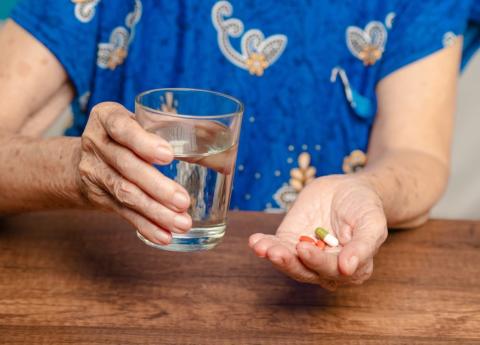
A clinical trial (COSMOS) involving 958 healthy adults with an average age of 70 tested the ability of a multivitamin supplement, together with cocoa extract, to slow ageing. The results, published in Nature Medicine, show that the supplement slightly slowed two of the five biological markers of ageing measured after two years of daily use. The two markers affected were PCPhenoAge and PCGrimAge, whose rate of increase was reduced by 2.6 months and 1.4 months respectively. The slowing effect was greater among participants who initially showed more accelerated ageing. Cocoa showed no effect.

How much homework do teachers assign? If children spend more time doing homework, do they get better grades? What should homework be like in order to be useful? There are conflicting opinions on this subject, as well as a great deal of academic research. In this article, we present evidence to unravel some of the controversies –with a focus on primary education, which is usually completed between the ages of six and twelve.
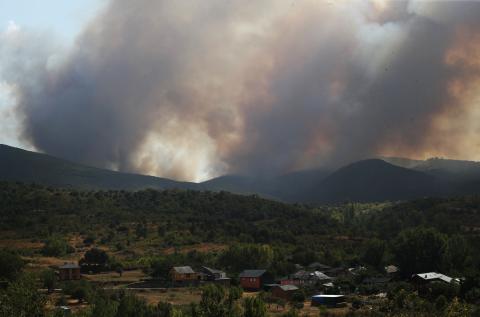
Forest disturbances in Europe—including fires, insect pest outbreaks, and windstorms—could double by the end of the 21st century compared with the 2001–2020 period if emissions are not reduced. In the case of wildfires, the annual area burned could nearly triple. The Mediterranean region ranks among the most vulnerable, and almost 90% of Mediterranean forests could be affected by increased fires and pest outbreaks under higher warming scenarios. The findings are published in a study in the journal Science involving Spanish research centers such as CREAF, the CTFC and the University of Girona.

On social network X (formerly Twitter), when users select the ‘for you’ option, the algorithm tends to steer them towards more conservative political options, according to research conducted with nearly 5,000 participants in the United States in 2023. The authors randomly assigned users to either an algorithmic or chronological feed for seven weeks. The switch from chronological to algorithmic feed increased engagement and shifted political opinion towards more conservative positions, especially on political priorities, perceptions of criminal investigations into Donald Trump, and opinions on the war in Ukraine. Conversely, switching from the algorithmic feed to the chronological feed had no comparable effects. ‘Initial exposure to X's algorithm has persistent effects on users' current political attitudes,’ say the authors of the study, published in Nature.

The inclusion of transgender women in women's sports categories is a controversial decision. To compare body composition and physical fitness between transgender and cisgender women, a team from Brazil has conducted a meta-analysis encompassing 52 studies and 6,485 individuals, analysing these values before and after gender-affirming hormone therapy. Although trans women showed greater lean mass—an indicator of muscle mass—there were no significant differences in upper or lower body strength, nor in maximum oxygen consumption, compared to cis women one to three years after hormone therapy. ‘The current evidence is, for the most part, of low certainty and heterogeneous quality, but it does not support theories about the inherent athletic advantages of trans women over cis women,’ say the authors of the study, published in the British Journal of Sports Medicine.

The collision between two high-speed trains in Adamuz (Córdoba) on Sunday afternoon has left at least 39 people dead and more than a hundred injured. The emotional impact of the accident affects the families of the victims, as well as the crash survivors and other train users.

An international report led by the University of Cambridge (United Kingdom) warns that there is a serious risk of a ‘lost’ generation emerging in Gaza, due to the combination of educational, physical and psychological impacts after more than two years of the Israeli invasion. As of 1 October 2025, the UN Office for the Coordination of Humanitarian Affairs (OCHA) reported the deaths of 18,069 students and 780 education personnel in Gaza, with 26,391 students and 3,211 teachers injured. The study estimates that children in Gaza will have lost the equivalent of five years of education due to repeated school closures since 2020, first due to COVID-19 and then due to the Israeli invasion.

Two research teams, with some authors in common, have shown in two separate studies that interaction with chatbots using artificial intelligence (AI) can significantly change a voter's opinion about a presidential candidate or a policy proposal. One of the studies, published in Nature, was conducted in three countries (the US, Canada, and Poland), while the other, developed in the UK, is published in Science. Both studies reach the same conclusion: the persuasive power of these tools stems less from psychological manipulation than from the accumulation of fact-based claims that support their position. However, this information is not always accurate, and the greater the persuasive power, the greater the inaccuracy and fabrication.

A US research team has devised a method that uses a browser extension to alter the algorithm of X (formerly Twitter) to study its impact on user behaviour. In a 10-day experiment with 1,256 volunteers during the 2024 US presidential campaign, they used the method to vary the content expressing anti-democratic attitudes and partisan hostility. According to the authors, the results—published in Science—provide causal evidence that greater or lesser exposure to this type of content alters polarisation in the same way. Their conclusions contradict previous research published in the same journal, which found no such relationship on Facebook or Instagram. In that case, the study was conducted in collaboration with and funded by Meta.

Consuming up to four cups of coffee a day is associated with an increase in telomere length in people with severe mental disorders, such as schizophrenia or bipolar disorder. Telomere length is an indicator of cellular ageing and is shorter in people with these disorders, although the causes are not clearly understood. According to the study, published in BMJ Mental Health, the effect shown is comparable to ‘a biological age five years younger’ in coffee drinkers.