University of Navarra
If you are the contact person for this centre and you wish to make any changes, please contact us.
PhD in Pharmacy, Professor of Human Physiology at the University of Navarra, member of the CIBER Physiopathology of Obesity, Carlos III Health Institute and IDISNA (Navarra)
Senior lecturer at the School of Architecture and member of the SAVIArquitectura research group (Environmental Sustainability, Housing, Industrialisation and Architecture) at the University of Navarra
Researcher in the Gene Therapy and Regulation of Gene Expression Programme and Director of Innovation and Transfer at Cima University of Navarra
Professor of Nutrition and Food Science and Director of the Nutrition Research Centre at the University of Navarra
Professor of Immunology at the University of Navarra, CIMA researcher and co-director of the Department of Immunology and Immunotherapy at the Clínica Universidad de Navarra.
Assistant Professor at the Department of Physics and Applied Mathematics of the Faculty of Science.
Researcher in the Mind-Brain Group of the Institute for Culture and Society (ICS) at the University of Navarra
Scientific director of the International Center for Neuroscience and Ethics (CINET), Tatiana Foundation
Senior Researcher of the Gene Therapy in Neurodegenerative Diseases Programme at the Centre for Applied Medical Research (CIMA), University of Navarra
Co-coordinator of the working group on Nutrition of the Spanish Society of Epidemiology (SEE), Professor of Preventive Medicine and Public Health at the University of Navarra, and member of CIBERobn

Pancreatic ductal adenocarcinoma (PDAC), the most common form of pancreatic cancer, is an aggressive tumor that is often diagnosed at advanced stages. Some people are at high risk of developing it due to a hereditary predisposition (10% of cases) or an injury. A new Phase 1 clinical trial has tested, in high-risk patients, a vaccine targeting several mutations in the KRAS gene responsible for more than 90% of these tumors. The vaccine has been shown to be safe and has stimulated specific immune responses, detectable in the blood up to two years later, in 90% of the study participants. The study is published in Cancer Discovery.

Most of what is known about dementia prevention comes from research carried out in wealthy countries. A new study of more than 214,000 people from 14 countries reveals that the most common modifiable risk factors for dementia vary greatly from one country to another, meaning that a one-size-fits-all approach to prevention will not work everywhere. The differences were striking: low educational attainment affected 85.6 % of people in China, but only 12 % in the United States; whilst a high body mass index affected 44.9 % of Americans, compared with just 13.3 % in India. Similar patterns were also observed across all regions, such as cardiovascular risks (high cholesterol and high blood pressure) and risk behaviours (smoking and drinking). The findings, presented today at the 2026 Alzheimer’s Association International Conference (AAIC) in London, are also published in the journal The Lancet Healthy Longevity.
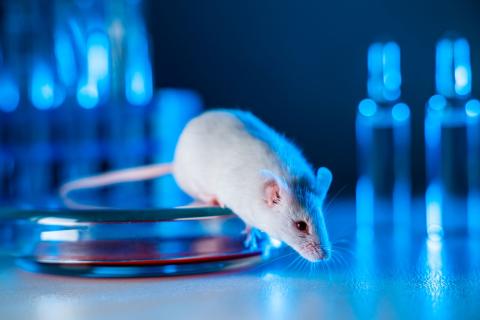
We often see headlines claiming that new research has found a ‘cure’ for diseases. However, what are the real chances of this being true? How does the current stage of the research affect its ultimate outcome? Has it already been tested on humans, or only on laboratory animals? In this article, we explain why animals are used in biomedicine, the reasons why mice are the most commonly used, the steps and timeframes involved from when a treatment appears effective until it can be determined whether it works in people, the characteristics and limitations of various disease models, and how results should be communicated to inform the public without raising false hopes.
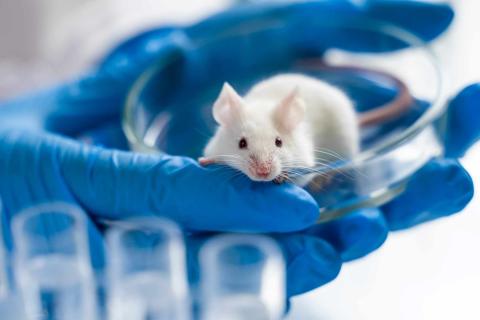
A team from the United States analyzed 611 samples from 341 model mouse strains stored at the Mutant Mouse Resource and Research Centers (MMRRC), a research resource network supported by the National Institutes of Health (NIH). By comparing the identity of each strain with its actual genetic profile, they found that approximately half of the samples showed discrepancies. Although the expected engineered mutation was generally present and many inconsistencies were relatively minor, some had the potential to compromise the validity and reproducibility of the experiments by introducing hidden genetic variables that could alter biological outcomes. The findings are published in Science.

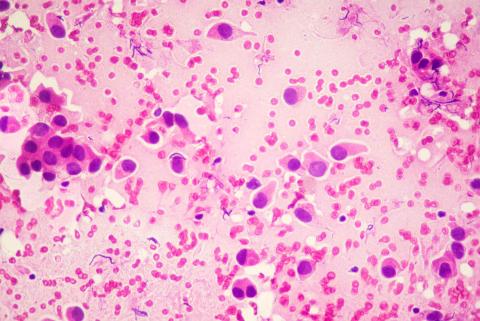
Glutathione is considered an antioxidant due to its ability to repair cellular damage. The body produces it naturally, but it is also sold as an antioxidant supplement. A study in mice and human tissue, published in Nature, shows that cancer cells can break it down and use it as fuel—particularly the cysteine it contains—promoting tumour growth and survival. “Depriving tumours of extracellular glutathione or inhibiting its breakdown is potentially a viable therapeutic strategy for cancer patients,” the authors state.

Physical inactivity driven by rising temperatures due to climate change could result in between 0.47 and 0.70 million additional premature deaths each year by 2050, according to projections from a new study published in The Lancet Global Health. The study analysed data on the relationship between temperature and physical inactivity across 156 countries between 2000 and 2022. Low- and middle-income countries, where access to air conditioning, the availability of shaded public infrastructure, and discretionary leisure time are limited, were the most affected. Spain is among the European countries expected to be most impacted.

On social network X (formerly Twitter), when users select the ‘for you’ option, the algorithm tends to steer them towards more conservative political options, according to research conducted with nearly 5,000 participants in the United States in 2023. The authors randomly assigned users to either an algorithmic or chronological feed for seven weeks. The switch from chronological to algorithmic feed increased engagement and shifted political opinion towards more conservative positions, especially on political priorities, perceptions of criminal investigations into Donald Trump, and opinions on the war in Ukraine. Conversely, switching from the algorithmic feed to the chronological feed had no comparable effects. ‘Initial exposure to X's algorithm has persistent effects on users' current political attitudes,’ say the authors of the study, published in Nature.
[Nature Medicine has retracted this article on 24 June 2026]
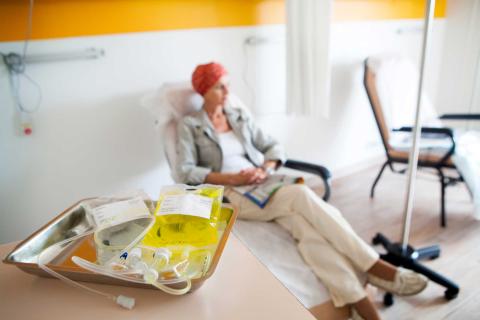
A phase 3 clinical trial conducted in China tested 210 patients with advanced non-small cell lung cancer—the most common type—to see whether the time of day when immunotherapy and chemotherapy were administered influenced their effectiveness. The data indicate that, on average, those who received therapy after 3 p.m. did not see their cancer worsen for 5.4 months. In contrast, those who received it before that time did not see their cancer worsen for an average of 11.7 months, almost twice as long. Overall, response rates were 56.2% and 69.5%, respectively. The results, published in Nature Medicine, suggest that scheduling therapy early in the day may offer a simple and cost-free way to improve treatment efficacy.

A study by the University of Cádiz has identified six factors that drive polarization around health-related issues, for example during crises such as the COVID-19 pandemic: political ideology, misinformation, social media dynamics, trust in institutions and professionals, risk perception, and socioeconomic factors. This review, published in Science Advances, brings together the conclusions of 90 previous studies and analyzes how these determinants exacerbate health inequalities and influence compliance with public health measures.