University of the Basque Country (UPV-EHU)
If you are the contact person for this centre and you wish to make any changes, please contact us.
Researcher at the Department of Sociology and Social Work of the University of the Basque Country (UPV/EHU)
Professor of the Department of Journalism at the University of the Basque Country (UPV/EHU) and principal researcher of the Gureiker group
Paleontologist at the University of the Basque Country UPV/EHU, director of the geology department and member of the former Anthropocene Working Group
Professor of Sociology and principal investigator of the Research Group on Social Determinants of Health and Demographic Change-OPIK at the University of the Basque Country (UPV/EHU)
Researcher in the geology department
Professor of Anatomy and Embryology at the University of the Basque Country, founding scientific director of the Achúcarro Neuroscience Centre in Bilbao and president of the Spanish Society of Neuroscience (SENC)
Researcher in the Department of Social Psychology and lecturer in Criminal Psychology at the University of the Basque Country (UPV/EHU)
Assistant Professor (PhD) in the Department of Didactics and School Organization at the Faculty of Education and Sport of the University of the Basque Country (UPV/EHU)
Geneticist and Ikerbasque and Ramón y Cajal researcher at the University of the Basque Country (UPV/EHU)
Professor of Organic Chemistry at the University of the Basque Country (UPV/EHU)
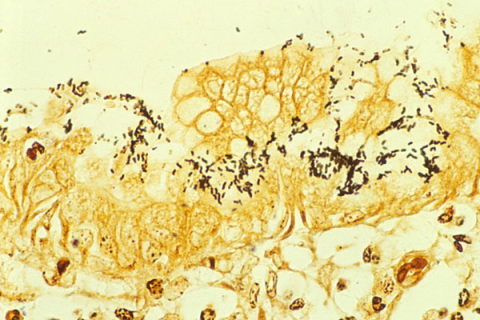
Infection with the bacterium Helicobacter pylori is a known risk factor for stomach cancer. Its link to colorectal cancer, however, remains an unconfirmed hypothesis. An international team has reviewed 43 studies on this subject and found that 22 per cent of colorectal cancer cases could potentially be linked to this infection, although when they selected the 14 most reliable studies, the figure fell to 12 per cent. According to the authors, exposure to Helicobacter pylori could be contributing significantly to the number of cases of colon cancer worldwide, but they point out that their study is only exploratory and that more robust research, such as clinical trials, is needed to establish a causal link. The results have been published in eGastroenterology.
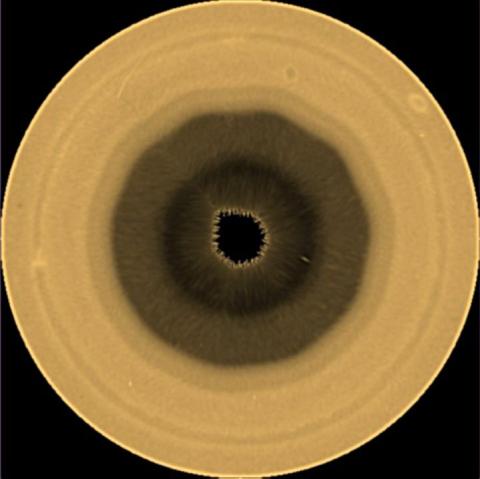
Thanks to the Voyager probe, we know that Saturn has a long-lasting hexagonal wave at its north pole, which is linked to a powerful jet of matter and energy. Now, a team led by the University of the Basque Country has discovered, for the first time, the presence of a decagonal wave at the south pole. The observations, carried out from the ground and using the Hubble Space Telescope, show that the decagon appears to have formed between 2023 and 2025 and may continue to evolve, in contrast to the more than 40 years of stability exhibited by the hexagon. The research is published in Science Advances and suggests that the ten-sided shape could be a meandering wave trapped by the curvature of a dominant atmospheric current.

A study published in Nature estimates that more than 10 million children in countries across East and Southern Africa and Southeast Asia have experienced at least one form of online sexual exploitation and abuse, including harassment, the sharing of images without consent, and blackmail. This means that one in six children who use the internet is affected. The analysis is based on data from nearly 12,000 children aged 12 to 17 in 12 countries across Africa and Asia collected between 2020 and 2021, and warns that the actual number could be higher, as many of these incidents went unreported. When they did report incidents, minors primarily turned to informal channels, especially friends, rather than formal reporting mechanisms such as the police or helplines.
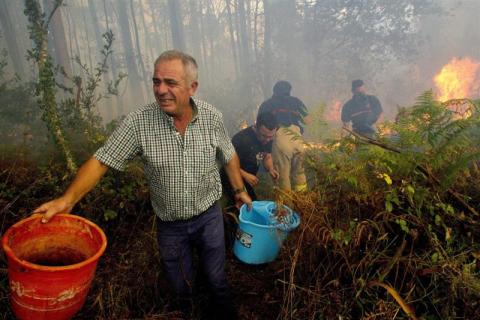
The way people respond to wildfire smoke varies depending on their level of education and only occurs once the smoke begins to pose a health risk. These are the main findings of a study based on geolocation data from 163,000 cell phones belonging to people exposed to air pollution during the 2018 wildfire season in California (United States). According to the authors, whose study is published in the journal PNAS, these gaps in awareness could pose an obstacle to interventions aimed at changing people’s behaviors.
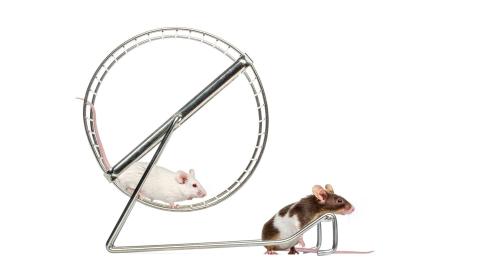
Various studies have shown that exercise benefits the brain. Now, an international team has studied in mice how physical activity affects the brain and how these changes influence the effects of exercise. The research, published in Neuron, has shown that physical activity causes brain changes in a region of the hypothalamus involved in how the body uses energy and in regulating blood sugar. If these neurons were blocked immediately after exercise, the animals showed no improvement in endurance or metabolism with training. The authors suggest that activating these neurons may help the body recover faster, allowing other parts, such as the muscles, lungs, and heart, to adapt more quickly to more intense workouts.

Genetics accounts for approximately 55% of the variability of human lifespan, which is more than double previous estimates, according to research published in the journal Science. The analysis is based on mathematical models and data from twin registries in Denmark, Sweden, and the United States. According to the authors, this high heritability is similar to that of most other complex human traits and to the influence of genetics on the life expectancy of other species.

Several recent studies had concluded that the risk of gastric cancer doubled with the use of drugs such as omeprazole – proton pump inhibitors. A new study published in The BMJ states that there is no association between prolonged use of these drugs and the risk of gastric adenocarcinoma. The research used prospective data from registries in Denmark, Finland, Iceland, Norway, and Sweden between 1994 and 2020. The study included more than 17,000 patients with gastric adenocarcinoma (other than cardia cancer) who had been exposed to these drugs for more than one year.
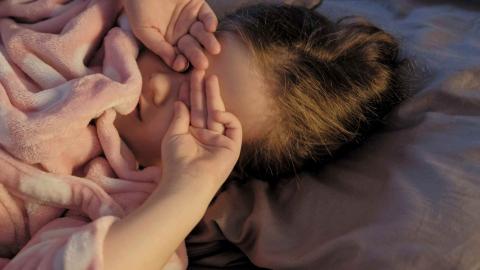
A team from the United States has analyzed nearly twenty studies on melatonin use in children between the ages of 0 and 6 in different countries. Although it appears that melatonin can help improve sleep onset in children with neurological conditions such as autism spectrum disorders, the data indicate that in recent years there has been an increase in sales of these products without a clear understanding of their actual effectiveness and potential long-term consequences for typically developing young children. The results are published in JAMA Network Open.

According to a study published in the journal JAMA Health Forum, the use of the benzodiazepine lorazepam by the character Victoria Ratliff in the series The White Lotus was associated in the United States with an increase in Google searches for this medication, including queries about how to obtain it online. The series generated 1.6 million more searches than usual over a 12-week period. Although the study reflects searches for information and not actual consumption, the abuse of anti-anxiety drugs is a fact: illegal sales of benzodiazepines have increased in the United States, and Spain leads the rankings in terms of consumption.

A team at Google DeepMind has developed AlphaProof, an artificial intelligence system that learns to find formal proofs by training on millions of self-formulated problems. According to the authors, the system “substantially improves upon previous-generation results on historical problems from mathematical competitions.” Specifically, in the 2024 International Mathematical Olympiad (IMO) for secondary school students, “this performance, achieved after several days of computation, resulted in a score equivalent to that of a silver medalist, marking the first time an AI system has achieved medal-level performance.” The results are published in the journal Nature.