
Rovira i Virgili University
If you are the contact person for this centre and you wish to make any changes, please contact us.
Researcher at the Catalan Institute of Human Paleoecology and Social Evolution (IPHES-CERCA), associate professor at Rovira i Virgili University, and co-director of the Atapuerca project
Researcher in the Food, Nutrition, Development, and Mental Health group, Department of Biochemistry and Biotechnology, Rovira i Virgili University
Researcher at the Centre for Environmental Food and Toxicological Technology (TecnATox) at Rovira i Virgili University
Researcher and lecturer in nutrition and public health, Rovira i Virgili University (URV) and the Southern Catalonia Biomedical Research Institute (IRBCatSud), CIBERobn
Researcher at IPHES-CERCA in Tarragona, associate professor at the Universitat Rovira i Virgili and associate researcher at the Muséum National d 'Histoire Naturelle (Paris, France)
Researcher at IPHES-CERCA and associate professor at the Rovira i Virgili University of Tarragona (URV)
Researcher at Tecnatox, a research centre of the Rovira i Virgili University in Reus
Researcher at the Laboratory of Toxicology and Environmental Health, Department of Basic Medical Sciences, Universitat Rovira i Virgili.
Associate Professor of Public International Law and International Relations at Rovira i Virgili University, coordinator of the Master's Degree in Environmental Law and researcher at the Tarragona Centre for Environmental Law Studies (CEDAT)

Following the agreement reached a few months ago between the European Parliament and Council, in today’s plenary session the European Parliament has approved a provisional political agreement with EU countries that includes new requirements to improve air quality by 2030. The agreement sets stricter targets and limits for several pollutants that have a serious impact on health, including particulate matter (PM2.5, PM10), NO2 (nitrogen dioxide) and SO2 (sulfur dioxide). Before being published in the Official Journal of the European Union, the law now must be adopted by the Council. EU countries will have two years to implement the new standards

Researchers have developed a new method to produce a heat-resistant plastic from renewable plant materials. They also claim that it is easily recyclable, decomposing into methanol, which would allow it to enter the circular economy. The research is published in the journal Science.
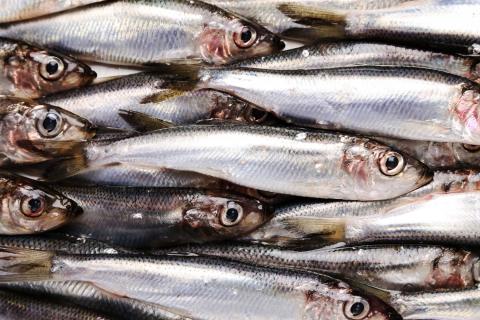
Switching some of the world's red meat consumption to forage fish - such as sardines, herring or anchovies - would reduce the number of deaths by between 500,000 and 750,000 by 2050, according to a study published in BMJ Global Health. The authors used data projections for that year for both red meat consumption and forage fish catches in 137 countries, substituting one for the other without exceeding the supply limit for the latter. The research estimates that sardines, herring and anchovies could replace 8% of the world's red meat, which would also serve to reduce the prevalence of diet-related diseases.

A study based on data from the Environmental Justice Atlas says that 81 women were murdered worldwide for their environmental activism: one of them in Spain, 7 in Colombia, 5 in Honduras and 4 in Peru, among other countries. The study, published in Nature Sustainability, says that violence against women defenders is concentrated in conflicts around mining, agribusiness and industrial projects in the Global South. The first author of the study is Dalena Tran, a researcher at the Institute of Environmental Science and Technology of the Autonomous University of Barcelona.
A few weeks ago, the European Food Safety Authority (EFSA) said that exposure to bisphenol A through food is a risk to human health. The agency recommended a much lower tolerable daily intake dose than it had its own previous recommendations. In this explainer, we review key facts and documents to cover this issue--which will continue to make the headlines in months and years to come.
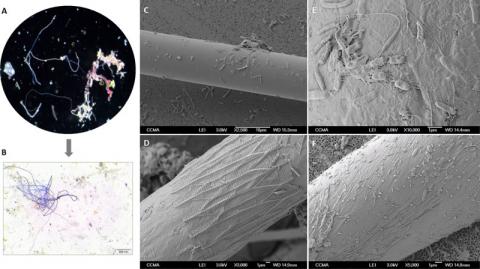
A study published in PLOS ONE reveals that more than 2,600 bacteria live on average on each floating microfibre in the Mediterranean Sea, belonging to 195 bacterial species. This waste from plastic pollution, textiles and fishing activities, once colonised, smells like food and is consumed by marine animals. Among them, pathogenic Vibrio species have been found, a bacterium that can be a threat to bathing and seafood consumption.
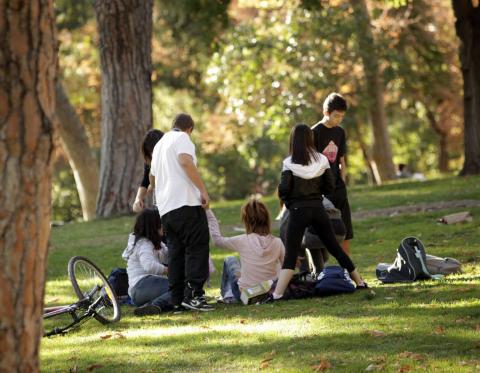
A study in Spanish children, with follow-up from pregnancy to adolescence, has found an association between children's exposure to pesticides and fungicides and earlier breast development in girls and genital development in boys. The work has been carried out by the University of Granada (UGR), the Institute for Biosanitary Research (ibs.GRANADA) and CIBERESP (ISCIII).