
Pompeu Fabra University
If you are the contact person for this centre and you wish to make any changes, please contact us.
Professor of Endocrinology in the Department of Medicine and Life Sciences at Pompeu Fabra University, Emeritus Head of the Endocrinology and Nutrition Service at Hospital del Mar in Barcelona and President of the Advisory Council on Diabetes in Catalonia of the Generalitat de Catalunya
ICREA research professor senior and researcher in Bioengineering Systems-MELIS at Pompeu Fabra University
Postdoctoral researcher at the Institut de Biologia Evolutiva (CSIC- Universitat Pompeu Fabra).
Lecturer in Art Theory and History in the Department of Humanities at Pompeu Fabra University
Ramón y Cajal Researcher at the Law & Philosophy Group of the Universitat Pompeu Fabra (UPF) and member of the scientific council of the Center for Animal Ethics of the UPF
Professor of Public Health in the Department of Medicine and Life Sciences (MELIS) at Pompeu Fabra University, researcher at the Centre for Occupational Health Research (CISAL) at IMIM-PSMar, and scientific director of the Ibero-American Observatory on Occupational Safety and Health
Author of a PhD thesis on rhythm cognition in humans and rats, research support technician in the Language & Comparative Cognition group, Centre for Brain and Cognition
Director of the Master's in Scientific, Medical, and Environmental Communication, and of the Center for Studies in Science, Communication, and Society at UPF Barcelona School of Management
Principal investigator at the Institute of Evolutionary Biology (CSIC-UPF)
Emeritus Professor of Biology at Pompeu Fabra University (Barcelona)
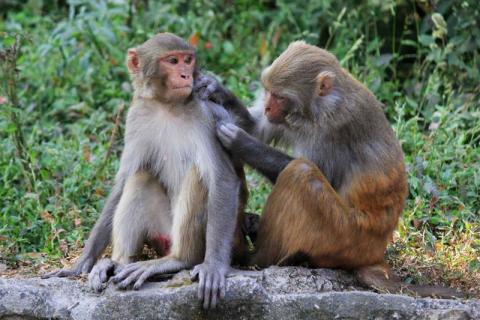
Gilberto and Tomás are two macaques trained to synchronise their movements with the rhythm of a metronome, who were also able to tap to a musical beat, according to a study published in Science. This result contradicts the vocal learning hypothesis, according to which only species capable of complex vocalisations can perceive and follow a musical rhythm.

The frequency and intensity of extreme heat events have increased in recent years, heightening the risks for those who work outdoors and indoors. Health risks include heatstroke, dehydration, kidney dysfunction and neurological disorders. These are some of the conclusions of a joint report by the World Health Organisation (WHO) and the World Meteorological Organisation (WMO), which estimates that worker productivity falls by between 2% and 3% for every degree above 20°C. The document proposes measures for governments, businesses and health authorities to mitigate the risks of extreme heat for these people.
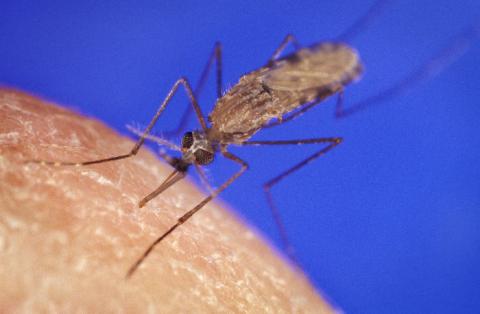
New gene editing technologies, such as gene drive tools, open the door to deliberately extinguishing species. An analysis article published in Science examines the ethical implications of this possibility based on three specific examples: the eradication of rats, the cattle barren worm, and the Anopheles gambiae mosquito, which transmits malaria. The analysis attempts to answer the question: ‘When and under what circumstances could the intentional eradication of a species be justified?".
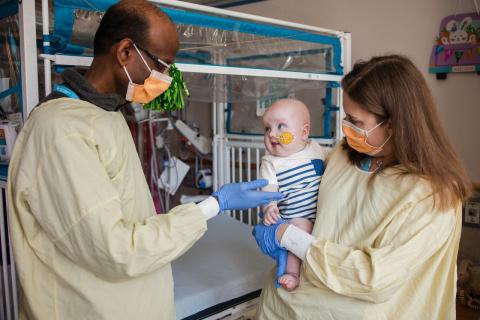
A team from the Children's Hospital of Philadelphia and Penn Medicine (United States) has successfully treated a baby diagnosed with a rare genetic disorder using personalised CRISPR gene editing therapy. The baby, known only by the initials KJ, was born with a rare metabolic disease known as severe carbamoyl phosphate synthetase 1 (CPS1) deficiency. After spending the first months of his life in hospital on a very restrictive diet, KJ received the first dose of his tailored therapy in February 2025, between six and seven months of age. The treatment, which is being used for the first time for this type of disorder, was administered safely, and the baby is now growing well and improving. The case is detailed in a study published by The New England Journal of Medicine (NEJM).
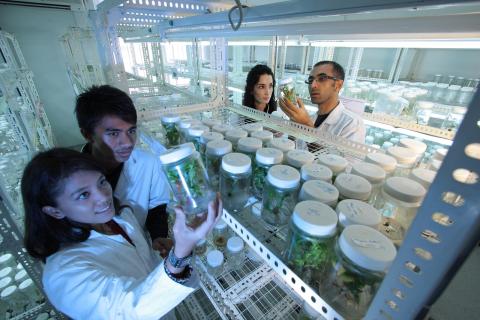
An international study on public trust in science conducted in 68 countries, including Spain, has found that most people trust scientists and believe that they should be more involved in society and in policy-making. In addition, a majority of survey participants believe that researchers should play a more active role in society and in political decision-making. The Spanish population's confidence in science ranks seventh out of the 68 countries analysed. The research, which surveyed 71,922 people, provides the largest global data set on trust in scientists since the covid-19 pandemic. The study is published in the journal Nature Human Behaviour and has Spanish participation, led by FECYT.
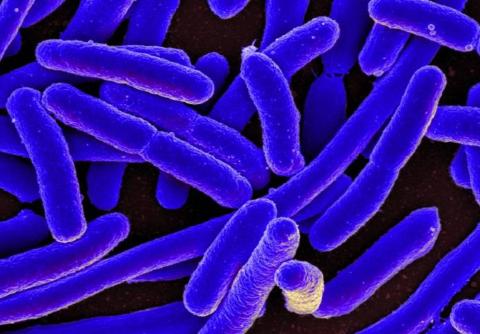
Thirty eight scientists from different specialties, including Craig Venter, a pioneer in the creation of artificial synthetic life, have written an article in the journal Science in which they assess the possibilities of synthesizing mirror organisms, but also warn of the risks they pose. This type of microorganisms, which would present a mirror structure to that currently found in nature, would have potential applications due to their resistance to biological degradation. However, they would also pose a danger because they would not be recognized by our defenses and could spread in ecosystems. Scientists call for more research and a broad debate, and warn that until more is known, this type of organism should not be created.
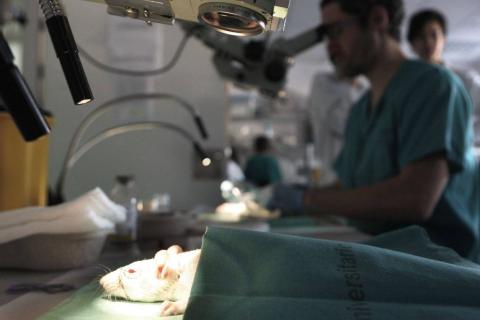
The seventh Annual Report of the COSCE Transparency Agreement, prepared by the European Animal Research Association, which analyses transparency in the use of animals for scientific experimentation in Spain in 2023, was presented today. According to the document, transparency is consolidated among the signatory institutions -168 in 2024- and all of them publish a statement on their websites on the use of animals. Public mention of the number and species used stands at 47%, compared to 38% the previous year.

Men often struggle with the transition to fatherhood due to a lack of information and emotional support targeted to their needs, suggests a review of the available qualitative evidence, published in the open access journal BMJ Open. The researchers say there needs to be a greater focus on clinical practice, antenatal services and research into men's unique experiences during the perinatal period, which encompasses pregnancy and the first 12 months after birth.

A team of researchers has analysed the evolution of 4,550 people aged 25 to 65 diagnosed with type 2 diabetes who had been studied for 30 years in the UK. They found that those diagnosed before the age of 40 had a risk of dying almost four times higher than in the general population. If diagnosed later, the risk was 1.5 times higher. The authors publish their findings in the journal The Lancet Diabetes & Endocrinology.
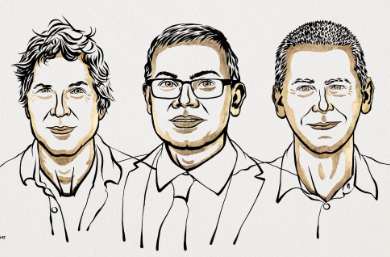
The Royal Swedish Academy of Sciences has awarded the Nobel Prize in Chemistry 2024 on the one hand to David Baker for computational protein design, which makes it possible to construct proteins with functions not present in nature. On the other hand, jointly to Demis Hassabis and John M. Jumper of Google DeepMind, for the development of AlphaFold2, which allows the structure of the 200 million known proteins to be predicted at high speed.