
Pompeu Fabra University
If you are the contact person for this centre and you wish to make any changes, please contact us.
Professor of Endocrinology in the Department of Medicine and Life Sciences at Pompeu Fabra University, Emeritus Head of the Endocrinology and Nutrition Service at Hospital del Mar in Barcelona and President of the Advisory Council on Diabetes in Catalonia of the Generalitat de Catalunya
ICREA research professor senior and researcher in Bioengineering Systems-MELIS at Pompeu Fabra University
Postdoctoral researcher at the Institut de Biologia Evolutiva (CSIC- Universitat Pompeu Fabra).
Lecturer in Art Theory and History in the Department of Humanities at Pompeu Fabra University
Ramón y Cajal Researcher at the Law & Philosophy Group of the Universitat Pompeu Fabra (UPF) and member of the scientific council of the Center for Animal Ethics of the UPF
Professor of Public Health in the Department of Medicine and Life Sciences (MELIS) at Pompeu Fabra University, researcher at the Centre for Occupational Health Research (CISAL) at IMIM-PSMar, and scientific director of the Ibero-American Observatory on Occupational Safety and Health
Author of a PhD thesis on rhythm cognition in humans and rats, research support technician in the Language & Comparative Cognition group, Centre for Brain and Cognition
Director of the Master's in Scientific, Medical, and Environmental Communication, and of the Center for Studies in Science, Communication, and Society at UPF Barcelona School of Management
Principal investigator at the Institute of Evolutionary Biology (CSIC-UPF)
Emeritus Professor of Biology at Pompeu Fabra University (Barcelona)

The Karolinska Institute has awarded the Nobel Prize in Medicine or Physiology to Victor Ambros and Gary Ruvkun for the discovery of microRNAs, small RNA fragments that do not contain instructions for making proteins but instead participate in the regulation of gene expression. Their role is fundamental in processes such as cell differentiation, and their alteration can influence diseases like cancer.
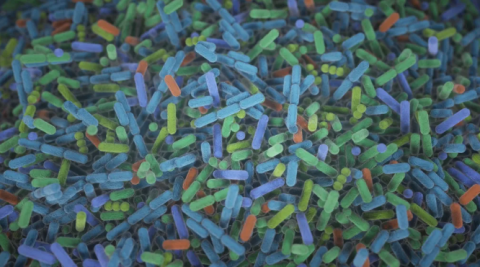
Research has identified 31 biomarkers in the gut microbiota of children that are associated with autism spectrum disorder (ASD) and could have diagnostic value. The gut microbiota includes bacteria, viruses, fungi and archaea. The team replicated the results, published in Nature Microbiology, in three cohorts and analysed faecal samples from more than 1,600 children and children in total, with and without ASD, in China.

A study in England has found a link between increased exposure to air pollution during early life and the risk of developing psychotic disorders and depression during youth. In addition, greater exposure to noise during childhood and adolescence was associated with an increased risk of anxiety. The results of the study, which collected data from more than 9,000 people, are published in the journal JAMA Network Open.
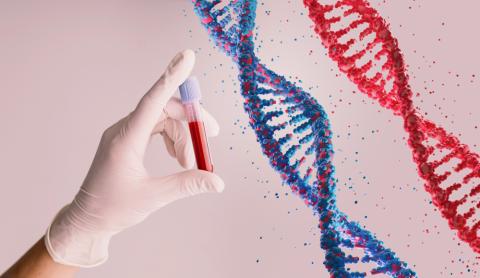
Epigenetic editing is a technique that aims to alter gene expression without the need to modify the DNA sequence, as gene editing techniques do. In this way, Italian researchers have succeeded in silencing the PCSK9 gene in mice, thereby reducing cholesterol levels by half for at least a year. According to the authors, and assuming further evaluation is needed, their platform "could lay the foundations for the development of this type of therapy". The results are published in the journal Nature.
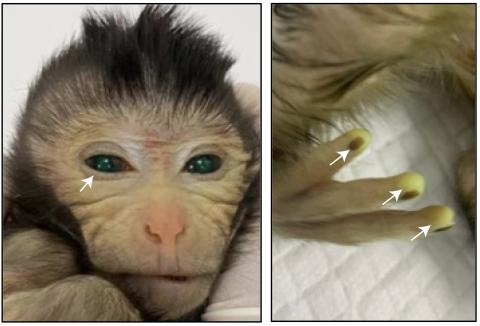
A Chinese research team has reported the birth of a crab-eating macaque that is a chimera: an animal generated from the mixing of embryonic cells from two different individuals; in this case, from the same species, according to the journal Cell. Until now, this type of chimera had only been developed with rodents. This is the first time it has been achieved in non-human primates.
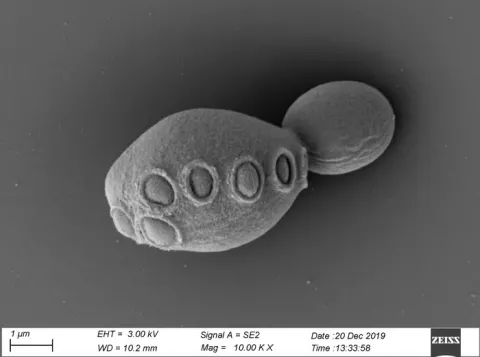
A team of researchers has managed to combine more than seven synthetic chromosomes made in the laboratory in a single yeast cell. This involves developing for the first time a eukaryotic cell with more than 50% synthetic DNA, which survives and replicates in a similar way to wild yeast strains. The results, which are part of the Synthetic Yeast Genome Project (Sc2.0), are published in the journal Cell.
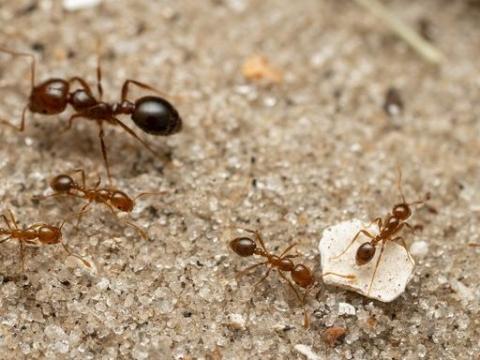
One of the world's most invasive species is Solenopsis invicta, an ant native to South America with a painful sting. In an article published in Current Biology, experts confirm the first official sighting of this species in Europe: 88 nests spread over five hectares near Syracuse in Sicily, Italy. The ants could soon spread across the continent, causing serious environmental, health and economic problems. The study is led by the Institute of Evolutionary Biology (IBE) of the CSIC and the UPF.
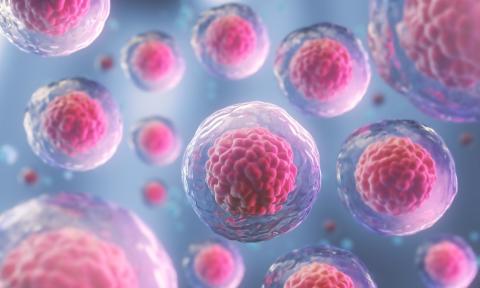
The Guardian newspaper reported on Wednesday that Magdalena Zernicka-Goetz's team had announced the generation of synthetic human embryos from stem cells at the annual meeting of the International Society for Stem Cell Research in Boston. The author later denied on Twitter that they were synthetic human embryos and spoke only of models, warning that it was pending publication in a scientific journal. The day after the publication in The Guardian, and as reported in El País, Jacob Hanna and his team published a preprint - a publication that has not been peer-reviewed - in bioRxiv on models of human embryos generated from stem cells without genetic editing. A few hours later, Zernicka-Goetz's team posted their preprint on bioRxiv.
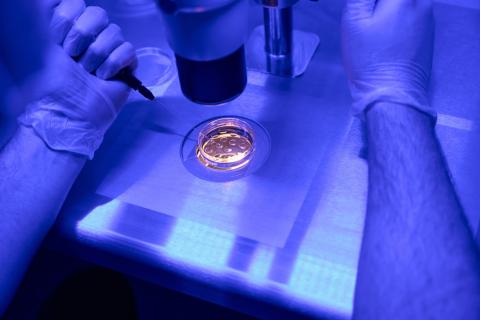
A scientific team has generated synthetic human embryos using stem cells, reports the British newspaper The Guardian. The authors, who announced the breakthrough at the annual meeting of the International Society for Stem Cell Research in Boston (USA), say the model embryos, similar to those found in the early stages of human development, could be crucial for research into genetic disorders and the causes of miscarriages, according to the newspaper. However, the work also raises ethical and legal issues.
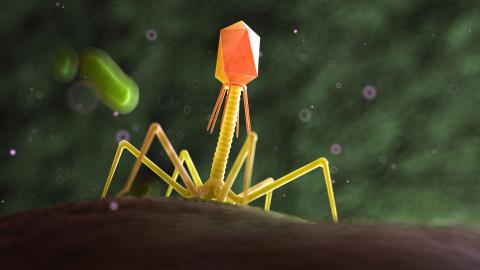
A team of scientists led by the Catholic University of America in Washington has designed new artificial vectors based on viruses to improve gene therapy processes. The main novelty is that they are constructed from viruses that infect bacteria. Among other advantages, this would make it possible to avoid the possible memory of our defences against them and have a greater capacity. According to the authors, who publish their results in the journal Nature Communications, these nanoparticles "have the potential to transform gene therapies and personalised medicine".