
National Museum of Natural Sciences (MNCN, CSIC)
If you are the contact person for this centre and you wish to make any changes, please contact us.
Doctor in Ecology and postdoctoral researcher at the National Museum of Natural Sciences (CSIC) in Madrid
Research professor in the Department of Paleobiology at the National Museum of Natural Sciences, CSIC
Researcher at the National Museum of Natural Sciences of the Spanish National Research Council (CSIC)
Research Professor in the Department of Biodiversity and Evolutionary Biology at the National Museum of Natural Sciences (MNCN-CSIC)
Researcher in the Department of Biogeography and Global Change at the National Museum of Natural Sciences (MNCN-CSIC)
CSIC researcher at the National Museum of Natural Sciences (MNCN) specialised in hydrological risks in the context of global change and member of the Risk Commission of the Geosciences Connection
Senior Scientist in the Paleobiology Department of the National Museum of Natural Sciences (Madrid)
CSIC research professor in the Department of Biogeography and Global Change at the National Museum of Natural Sciences and coordinator of the PTI-Agriambio platform
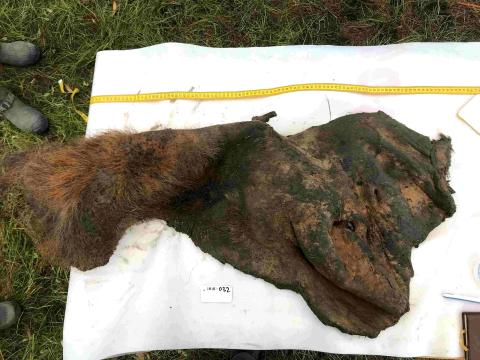
An international team of scientists, including researchers from the CRG and the CNAG (Barcelona), have managed to recover DNA remains from a female woolly mammoth that died in Siberia 52,000 years ago. The novelty is that, for the first time, the remains conserve the three-dimensional structure in the form of chromosomes, which makes it possible to investigate the genes that were active. According to one of the authors of the study, the results of which are published in the journal Cell, this type of discovery "changes the rules of the game, because knowing the shape of the chromosomes of an organism allows us to assemble the entire DNA sequence of extinct creatures and obtain information that was not possible before".
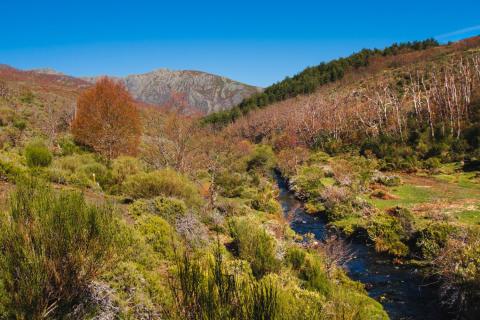
Two-thirds of biological conservation actions improve biodiversity or slow its decline, a meta-analysis claims. The study highlights the effectiveness of interventions focused on invasive species control, habitat loss reduction and restoration, and protected areas. The article, published in the journal Science, brings together the findings of 186 previous studies.
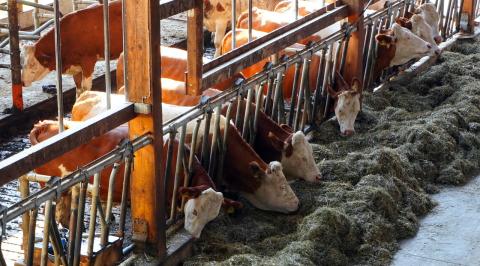
Eighty-two percent of EU farm subsidies articulated through the Common Agricultural Policy (CAP) financed high-emission livestock production in 2013, according to a study published in Nature Food. The analysis, which is based on data from 1986 to 2013 - the latest year for which records are available - highlights that 82% went to animal products in the following proportions: 38% directly and 44% for feed production. The authors note that food of animal origin is associated with 84 % of the greenhouse gases emitted by EU food production.

The decline of insects in Central and Western Europe in recent years is mainly due to human activities and the intensification of agriculture, according to a study funded by three companies (Bayer, BASF and Syngenta) that manufacture pesticides. The paper, published in PLoS ONE, summarises an analysis of 82 other published studies and explains the causes of population declines in two groups of insects: carabids (ground beetles) and lepidopterans (including moths and butterflies). The authors estimate that "anthropogenic activities in general" are most responsible for this decline, followed by agricultural intensification (including pesticides) and climate change in third place.
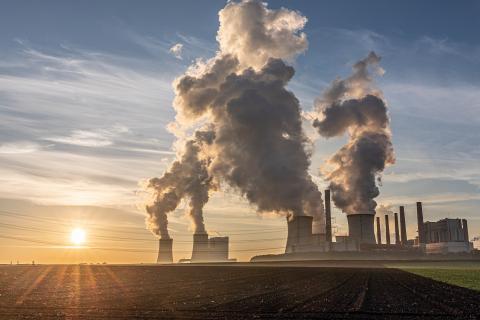
The Global Carbon Project (GCP) today releases its Global Carbon Budget 2022 report. The main conclusion is that there is no sign of a decrease in global CO2 emissions and, at current levels, there is a 50 % chance of exceeding 1.5°C warming in nine years. The results will be published in the journal Earth System Science Data.
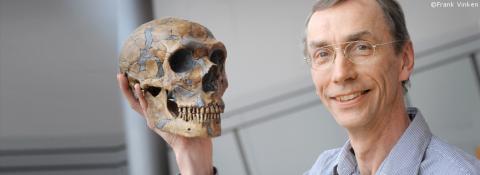
The Karolinska Institute has awarded the Nobel Prize in Medicine or Physiology to Swedish biologist Svante Pääbo, a specialist in evolutionary genetics, for his discoveries on the genomes of extinct hominids and human evolution.