
Autonomous University of Madrid
If you are the contact person for this centre and you wish to make any changes, please contact us.
Researcher at the Department of Biochemistry of the UAM, specialist in the role of microRNAs in tumor immunology.
Lecturer in the Department of Chemistry and researcher specialising in attosecond science, ultrafast processes in laser-matter interaction, atomic and molecular physics at the Autonomous University of Madrid
President of the Spanish Primatology Association (APE), coordinator of the Primatology Research Group and co-director of the Master’s Degree in Applied Ethology and Animal-Assisted Interventions at the Autonomous University of Madrid
Researcher at the Institute for Advanced Research in Chemical Sciences (IAdChem) and in the Department of Organic Chemistry at the Autonomous University of Madrid (UAM), director of the Biohybrid Materials and Systems Chemistry research group.
Professor of Biochemistry and Molecular Biology at the Autonomous University of Madrid and deputy director of the Centre for Molecular Disease Diagnosis at the Centre for Molecular Biology (CBM-UAM-CSIC).
Senior Lecturer Department of Theoretical Physics UAM Madrid
Senior Scientist at the CSIC and researcher at the Centro de Biología Molecular Severo Ochoa
Professor of Research Methods in Education at the Autonomous University of Madrid
Predoctoral researcher at the UAM-CSIC Institute of Theoretical Physics and in the Department of Theoretical Physics at the Autonomous University of Madrid
Senior Lecturer in the Department of Biology at the Autonomous University of Madrid
The artificial intelligence (AI) company OpenAI has unveiled GPT-6 Astra, “the world’s smartest and best-aligned model”, according to the company. The new model will use a technique known as ‘opaque recurrence’, which allows it to operate outside the sequential thinking of most reasoning models and which is causing concern amongst AI safety experts due to the possibility that the model’s thought process may be more difficult to monitor.
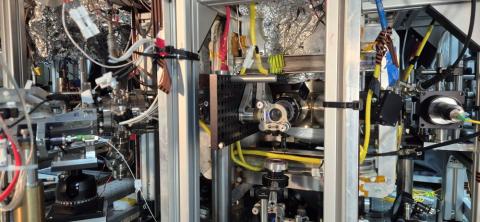
A team of researchers, including Nobel Laureate in Physics Roger Penrose, has observed for the first time an effect of gravity on a falling quantum object that had long been predicted. The result demonstrates that a fundamental principle underpinning Einstein’s theory of gravity remains consistent with the behaviour of matter in the quantum world. The study, published in the journal Science Advances, does not unify quantum mechanics and gravity, nor does it prove that gravity itself is quantum.
A team in the United States conducted a clinical trial to study the effectiveness of three types of diets in people with obesity, prediabetes, and fatty liver disease. For approximately five months, 42 people followed a low-carbohydrate, high-fat ketogenic diet, a Mediterranean diet, or a low-fat plant-based diet (14 in each group). Weight loss was similar in all three cases, but those who completed the high-fat diet showed a better response in markers associated with diabetes and liver metabolic function. The results are published in Cell Metabolism.

OpenAI has stated in a press release that the internal version of its Astra AI model has found solutions to ten research problems in mathematics and computing, in areas such as geometry, group theory, operator algebras, quantum complexity, cryptography and combinatorics, amongst others. According to the company, the total number of tokens — basic units of information — required to solve these problems would cost around $2,000. OpenAI expresses “deep respect and understanding” for those concerned about the impact of AI on these disciplines, including the signatories of the Leiden Declaration on AI and Mathematics; and states that the attribution of results must honestly reflect how each one was obtained, whilst encouraging the mathematical community to review them. The company is publishing these results openly in a paper, accompanied by the model’s account of its reasoning process.

Numerous sources, including the new dietary guidelines from the United States, recommend increasing protein intake. Now, a review of more than 350 studies —primarily in laboratory animals— carried out by two researchers suggests, on the contrary, that consuming less protein could have greater health benefits. According to the authors, “it is clear that protein provides benefits for muscle growth and the response to exercise in active people, but, given that most people are relatively sedentary, it is likely that many consume more protein than they actually need, which is likely to have negative health consequences”. The study is published in Cell Press Blue, a journal of the Cell group.
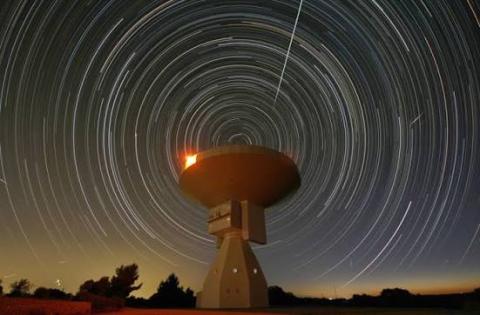
A team led by a Spanish researcher has identified, near the centre of the Milky Way, a type of sugar composed of four carbon atoms, known as erythrulose, which on Earth is found in raspberries and self-tanning products. This would suggest that complex and biologically relevant molecules can form in space. Ribose and glucose had previously been discovered in samples from meteorites and asteroids, but until now no sugar had been directly detected in the interstellar medium. The finding is published in Nature Astronomy.
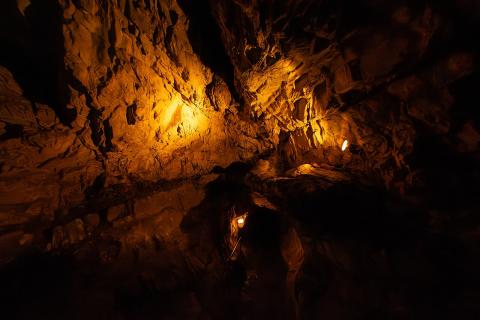
An article published in Nature shows that the last Neanderthals in northwestern Europe exhibited greater genetic variability than previously thought, which, according to the authors, could call into question the idea that this was one of the causes of their extinction. The study included genetic data from 27 Neanderthals dating back about 52,500 years, found at ten sites in France and Belgium. The genome of a 45,000-year-old Neanderthal found in Belgium was also sequenced. According to the results, these Neanderthals lived in large, well-connected groups, as they showed no signs of inbreeding. Although they temporarily coexisted with early modern humans in that region, the study found no evidence of interbreeding with them.
An international team has developed a 98-qubit quantum computer—quantum bits—that operates with high precision in a way that classical computers cannot replicate. The demonstration is published in Nature and, according to its authors, highlights the scalability potential of this type of quantum computer, based on trapped ions. However, the researchers note that challenges remain to determine whether this technology can be applied to even larger quantum systems.

A new United Nations (UN) report assesses the annual environmental costs of artificial intelligence (AI). According to the report, by 2030, if data centers were a country, their electricity consumption would be on par with that of France. As for carbon dioxide emissions, these could reach 400 million tons of CO₂ equivalent, comparable to the total emissions of the United Kingdom. The 9.3 trillion liters of water they use would cover the drinking water needs of the planet’s 8.1 billion people for 1.6 years. The report notes that the generation of high-resolution videos is at the top of AI’s energy consumption. Furthermore, it highlights the growing digital divide and environmental injustice between the nations that control AI systems and those that bear their environmental costs, particularly in the Global South.
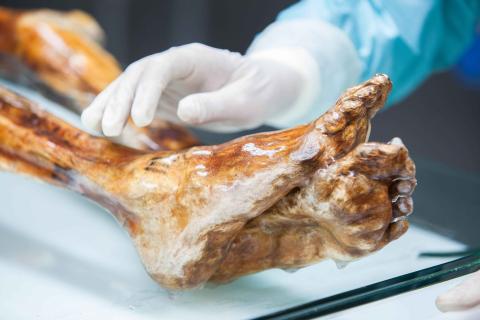
The so-called ‘Iceman’, Ötzi, who lived approximately 5,300 years ago, was discovered in 1991 in the Ötztal Alps, on the border between Austria and Italy. His mummified remains were preserved at -6°C in a museum to replicate the conditions in which they were found. Now, a team from Italy has discovered that he contains communities of both ancient and modern microorganisms, some of which may be metabolically active or capable of replicating under the current preservation conditions, although, for the moment, no damage has been detected. According to the researchers, this demonstrates that “the ‘Iceman’ is not a static relic, but a dynamic biological interface.” The results are published in Microbiome.