
Autonomous University of Madrid
If you are the contact person for this centre and you wish to make any changes, please contact us.
Researcher at the Department of Biochemistry of the UAM, specialist in the role of microRNAs in tumor immunology.
Lecturer in the Department of Chemistry and researcher specialising in attosecond science, ultrafast processes in laser-matter interaction, atomic and molecular physics at the Autonomous University of Madrid
President of the Spanish Primatology Association (APE), coordinator of the Primatology Research Group and co-director of the Master’s Degree in Applied Ethology and Animal-Assisted Interventions at the Autonomous University of Madrid
Researcher at the Institute for Advanced Research in Chemical Sciences (IAdChem) and in the Department of Organic Chemistry at the Autonomous University of Madrid (UAM), director of the Biohybrid Materials and Systems Chemistry research group.
Professor of Biochemistry and Molecular Biology at the Autonomous University of Madrid and deputy director of the Centre for Molecular Disease Diagnosis at the Centre for Molecular Biology (CBM-UAM-CSIC).
Senior Lecturer Department of Theoretical Physics UAM Madrid
Senior Scientist at the CSIC and researcher at the Centro de Biología Molecular Severo Ochoa
Professor of Research Methods in Education at the Autonomous University of Madrid
Predoctoral researcher at the UAM-CSIC Institute of Theoretical Physics and in the Department of Theoretical Physics at the Autonomous University of Madrid
Senior Lecturer in the Department of Biology at the Autonomous University of Madrid

Moderate-intensity physical activity, such as walking at an average speed of 5 km/h for an additional five minutes per day, is associated with a 10% reduction in all-cause mortality among most adults, according to a study published in The Lancet. The research also found that reducing sedentary time by 30 minutes per day was associated with an estimated 7% reduction in all-cause mortality if adopted by most adults. The study analyzed data from more than 135,000 adults from Norway, Sweden, the United States, and the United Kingdom, with an average follow-up of eight years.
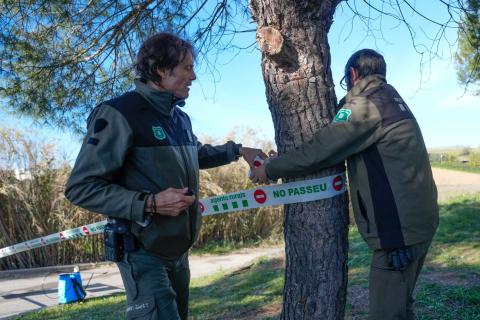
The sequencing of the DNA of the virus found in wild boars infected with African swine fever in Catalonia and its comparison with the DNA of 17 of the 19 samples being investigated at the Animal Health Research Centre (IRTA-CReSA) has revealed that they do not match, according to a press conference held this morning by representatives of the scientific team in charge of the study and the Catalan Regional Ministry of Agriculture, Livestock and Fisheries. They consider the leak from the laboratory to be ‘highly unlikely’, although further studies are still ongoing. The research, led by the IRB, suggests that it could belong to a new strain not described in the scientific literature.

A study published in the journal Scientific Reports reveals an increase in simplicity, negativity, and stress-related words in pop song lyrics in the United States over the last few decades. The authors also conclude that this phenomenon was attenuated in times of social crisis, such as the COVID-19 pandemic, which ‘highlights the role of music in both shaping and reflecting moods.’ The data included more than 20,000 songs from the US charts between 1973 and 2023.
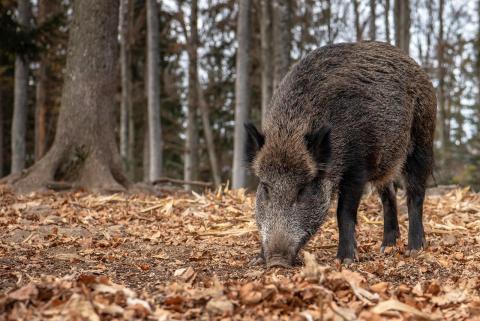
The veterinary services of the Catalan Regional Government have notified the Ministry of Agriculture, Fisheries, and Food of the detection of two wild boars positive for African swine fever virus in Bellaterra (Barcelona), where they were found dead on November 26. These cases represent the first detection of the disease in Spain since November 1994, according to the ministry in a press release. African swine fever is considered a Category A disease by the European Union, which means that member states must take measures to control and eradicate it as soon as possible. It is a non-zoonotic disease, meaning that humans are not susceptible to infection either through contact with animals or through the consumption of animal products.

A study published in Scientific Reports concludes that adults who use Instagram very frequently overestimate their ‘addictive’ use, which complicates self-control and increases feelings of guilt. According to the research, excessive use, in most cases, is not an addiction but a habit. The study was conducted on more than 1,000 Americans and suggests that the fact that many think they have an ‘addiction’ may be related to the media's frequent use of this term when talking about social media.
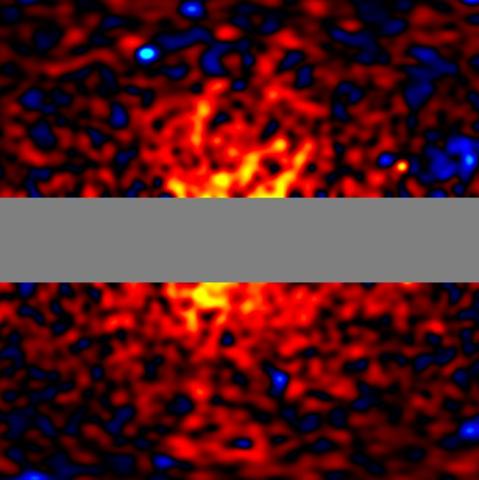
A century ago, astronomer Fritz Zwicky observed that galaxies were moving faster than their mass should allow, leading him to infer the presence of an invisible structure, dark matter. Since the particles that make up dark matter do not interact with electromagnetic force, they cannot be observed directly, as they do not absorb, reflect, or emit light. Now, NASA's Fermi space telescope has found specific gamma rays in the center of the Milky Way that are consistent with the decay of theoretical dark matter particles, although they could also come from other sources. “If this is correct, to my knowledge, it would be the first time that humanity has ‘seen’ dark matter,” said study author Tomonori Totani in a press release. The article is published in the Journal of Cosmology and Astroparticle Physics.

Three articles with Spanish participation, published in The Lancet, review the evidence that ultra-processed foods are worsening diet quality and displacing the consumption of fresh and minimally processed foods. Furthermore, they warn that their consumption is linked to a higher risk of multiple chronic diseases. According to the authors, who also review the associated policies and commercial factors, only a coordinated global response can combat the strategy of the companies that market these products.
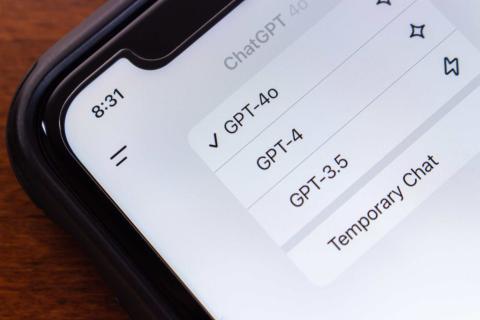
Large language models (LLMs) do not reliably identify people's false beliefs, according to research published in Nature Machine Intelligence. The study asked 24 such models – including DeepSeek and GPT-4o, which uses ChatGPT – to respond to a series of facts and personal beliefs through 13,000 questions. The most recent LLMs were more than 90% reliable when comparing whether data was true or false, but they found it difficult to distinguish between true and false beliefs when responding to a sentence beginning with ‘I believe that’.

On the internet, professional women are represented as younger—and therefore less experienced—than their male counterparts, even though this age difference does not correspond to actual data in the US, according to an article published in Nature. This study of gender and age stereotypes is based on an analysis of 1.4 million images on five platforms (Google, Wikipedia, IMDb, Flickr and YouTube), as well as nine large language models, such as ChatGPT, trained with texts from Reddit, Google News, Wikipedia and Twitter.
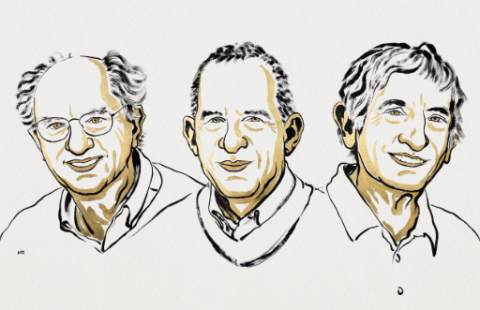
The Royal Swedish Academy of Sciences has awarded the 2025 Nobel Prize in Physics to John Clarke, Michel H. Devoret, and John M. Martinis, who demonstrated both the quantum tunnelling effect and quantised energy levels in a system small enough to fit in the palm of your hand. These advances have served to develop the next generation of quantum technology, including quantum cryptography, quantum computers and quantum sensors.