
Autonomous University of Barcelona
If you are the contact person for this centre and you wish to make any changes, please contact us.
Member of the Water and Global Change Research Group at the Centre for Research in Ecology and Forestry Applications (CREAF), at the Autonomous University of Barcelona
PhD in Psychology in the Department of Psychiatry and Legal Medicine at the Universitat Autònoma de Barcelona and coordinator of the GRETA group (Research Group on Evaluation and Treatment of Self-harm)
Associate Professor (Professor Agregat Serra Hunter) at the Department of Applied Economics of the Universidad Autónoma de Barcelona (UAB)
Head of Adult Mental Health at Fundació Hospitalàries Barcelona, assistant psychiatrist at the Vall d'Hebron University Hospital psychiatry department, and associate professor in the Department of Psychiatry and Legal Medicine at the Autonomous University of Barcelona (UAB)
Professor of Ecology at the Autonomous University of Barcelona and CREAF researcher
Senior researcher at the Institute of Environmental Science and Technology (ICTA-UAB) of the Autonomous University of Barcelona
Professor Emeritus of Psychobiology at the Autonomous University of Barcelona (UAB) and full member of the Spanish Academy of Psychology
Coordinator of the Neuro-oncology Unit of the Bellvitge Biomedical Research Institute (IDIBELL) and researcher of the Neuroplasticity and Regeneration Group of the Autonomous University of Barcelona
Juan de la Cierva researcher in the Department of Geology at the Autonomous University of Barcelona

A study published in Science Advances suggests that the use of betel nut as a drug has older origins than previously thought. Bone remains from two pre-agricultural hunter-gatherers — dated between 25,000 and 16,000 years ago — from Sulawesi (Indonesia) show dental pathology associated with the consumption of these whole nuts. Considered one of the world’s oldest known drugs, when consumed, this nut releases arecoline, the plant’s main neuroactive alkaloid. According to the research, it is possible that the hunters-gatherers’ sole motivation for using it was not merely as a drug, but also for its analgesic and digestive properties.
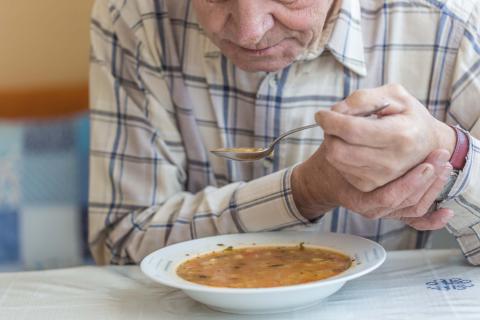
Various studies have shown that smokers have a lower risk of developing Parkinson’s disease, but the causes remain unknown. A study has analysed the role played by carbon monoxide — a toxic gas produced by the combustion of tobacco — in this association. To this end, the team conducted a twelve-year follow-up study of more than half a million adults in China. The results show that regular smoking was associated with an increased risk of lung cancer, ischaemic heart disease, stroke and all-cause mortality, but with a lower risk of Parkinson’s disease. Most strikingly, amongst people who had never smoked, higher levels of exhaled carbon monoxide—which the authors measured—were associated with a lower risk of Parkinson’s disease. According to the study, published in JAMA Neurology, these findings demonstrate a possible protective role of carbon monoxide in the disease, rather than smoking itself.

A team from the UK and the Netherlands has estimated the environmental cost attributed to the actions of the top 10% of spenders—generally the wealthiest—both globally and in the richest country on each continent. Globally, they are responsible for damages worth between US$1.7 trillion and US$5.7 trillion. These figures exceed the funding needed to meet the 2035 climate finance target agreed upon at COP30—US$993 billion—and to cover the funding needed to halt biodiversity loss by 2030—US$657 billion. The study is published in Communications Sustainability, a journal of the Nature group.

An article published in Brain Health proposes using the concept of the ‘criticome’ to refer to the sensory, motor, social, cultural and environmental information recorded from pregnancy up to the age of 25, which is the period of greatest brain plasticity. According to the authors, this concept reframes autism, schizophrenia and depression as developmental disorders rather than purely synaptic disorders. Besides, they say this approach would have implications for educational policy, mental health care and screen use, amongst other issues.
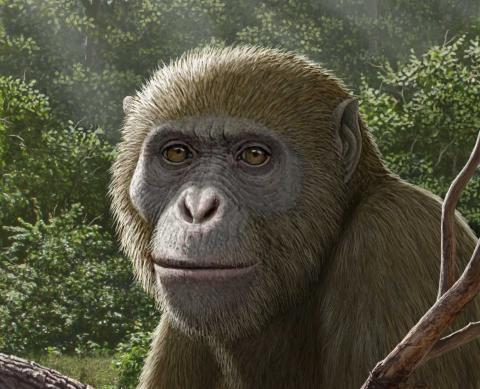
A newly discovered ape fossil in northern Egypt suggests that the closest ancestors of modern apes may have originated in North Africa, outside the East African regions that have traditionally been studied. Dating back between 17 and 18 million years, the new species —Masripithecus moghraensis — represents the closest known hominid relative to the lineage that ultimately gave rise to all living apes, including humans. The study is published today in the journal Science.
The economic costs of CO₂ emissions can be calculated in three ways: through the historical damages resulting from past emissions; through the expected future damages caused by those past emissions; and through the expected future damages from current or future emissions. A study published in Nature concludes that the future economic costs associated with past emissions could be at least ten times higher than the costs already incurred from those same emissions. The authors estimate that one tonne of CO₂ emitted in 1990 caused $180 (around €155) in global damages up to 2020, but will generate an additional $1,840 (nearly €1,590) by 2100. The analysis covers countries, high-net-worth individuals and major companies, as well as behavioural patterns, including taking an additional long-haul flight each year or choosing a non-vegetarian diet.
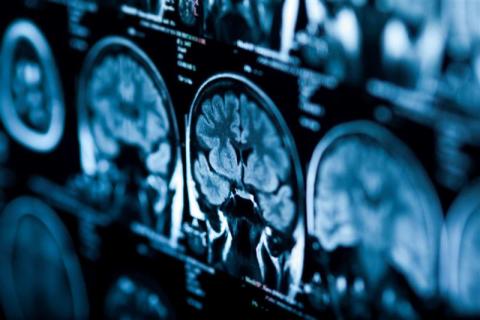
A study published in Nature suggests that a brain network that controls the execution of actions (SCAN), which was described in 2023, plays an important role in Parkinson's disease. Focusing treatments—such as transcranial stimulation—on the SCAN rather than other brain regions associated with movement could improve their effectiveness, according to the research.

The American Psychiatric Association has unveiled the new features of the forthcoming Diagnostic and Statistical Manual of Mental Disorders (DSM) in five articles published in The American Journal of Psychiatry. Among the highlights are the proposed change of name — it will become the Diagnostic and Scientific Manual — and the intention for it to be more dynamic, incorporating biomarkers for diagnosis and integrating the socioeconomic, cultural and environmental determinants of health. According to the authors, the aim is to enable a more personalised and inclusive clinical practice, aligned with scientific rigour. The most recent update was published in 2022 with the DSM-5-TR, and specialists are currently unaware of the date of the next edition, as they reported during a briefing with journalists.

Avoiding social media for a week can reduce symptoms of anxiety, depression, and insomnia, according to a study published in JAMA Network Open. The study measured the mental health of a group of 373 people aged 18 to 24 in the US before and after a week without using Facebook, Instagram, Snapchat, TikTok, or X. The authors caution that the durability of these results and their associations with behaviour require further research.

According to a study published in the journal JAMA Health Forum, the use of the benzodiazepine lorazepam by the character Victoria Ratliff in the series The White Lotus was associated in the United States with an increase in Google searches for this medication, including queries about how to obtain it online. The series generated 1.6 million more searches than usual over a 12-week period. Although the study reflects searches for information and not actual consumption, the abuse of anti-anxiety drugs is a fact: illegal sales of benzodiazepines have increased in the United States, and Spain leads the rankings in terms of consumption.