Untreated sleep apnoea is associated with an increased risk of Parkinson's disease, according to data from US war veterans
An investigation published in JAMA Neurology concludes that obstructive sleep apnoea is associated with an increased risk of Parkinson's disease, according to the medical records of more than 11 million American war veterans, mainly men. The article also indicates that this risk can be reduced by early treatment with continuous positive airway pressure, suggesting intervention in sleep-disordered breathing as a strategy for preventing neurological diseases.
2025 11 25 Michele Matarazzo apnea EN
Michele Matarazzo
Neurologist specialising in Parkinson's disease at the Comprehensive Neuroscience Centre HM Cinac, editor-in-chief of MDS Podcast and coordinator of the Ad Hoc Committee on Neurotechnology, Innovation and Entrepreneurship of the Spanish Society of Neurology.
This is a very interesting article. These results had already been presented in at least one conference paper, but now we can evaluate them more comprehensively as the article provides all the methodological details.
It is a very solid study from a methodological point of view, although with the obvious limitation of being a retrospective population study in a cohort of US war veterans, mostly men and with a high burden of comorbidity. This type of design allows for the detection of associations that are difficult to study in small samples, thanks to the large number of subjects and the large amount of data available, but the main problem is always inferring causality. In other words, this well-conducted study confirms an association between sleep apnoea and Parkinson's disease, already described in previous studies, and adds a very suggestive finding: people with apnoea who start CPAP (continuous positive airway pressure) treatment earlier have a slightly lower risk of developing the disease. Although the authors have made a considerable statistical effort to minimise bias, we cannot be sure that this reduction in risk is directly due to the treatment; it remains a fascinating hypothesis, which adds to another study with similar characteristics that suggests a reduction in risk in patients with apnoea treated with airway surgery. Ideally, these results should be confirmed in prospective, controlled studies.
From a clinical point of view, and taking into account the low invasiveness and side effect profile of CPAP, as well as its proven positive impact on other complications of sleep apnoea, this study provides further evidence in favour of early diagnosis and treatment, even while we await definitive confirmation of its possible protective effect against Parkinson's disease.
In terms of mechanisms, these results open the door to speculation about how sleep apnoea treatment could reduce the risk of Parkinson's disease. Among the most plausible hypotheses are the impact of nocturnal respiratory disturbances on oxygen and carbon dioxide concentrations and their haemodynamic and metabolic consequences, as well as the role of sleep in the functioning of the glymphatic system, which is responsible for facilitating the removal of potentially harmful substances from the brain and is particularly active during sleep. All of this reinforces an important overall message: sleep disorders, and apnoea in particular, are not simply a problem of “sleeping poorly”, but can have significant repercussions on long-term brain health.
2025 11 25 Guglielmo Foffani apnea EN
Guglielmo Foffani
Principal investigator and head of Neurophysiology and Neuromodulation at the CIEN Foundation and head of the Functional Neuroscience Group at the Integral Neurosciences Centre HM CINAC.
This study, based on millions of medical records of US veterans, shows that people with untreated obstructive sleep apnoea have a higher risk of being diagnosed with Parkinson's disease in subsequent years, and that this risk appears to be lower in those receiving continuous positive airway pressure (CPAP) treatment. For an observational study, the methodological quality is very high: the sample size is enormous, the follow-up is relatively long, and the authors adjust for many factors that could distort the association. Overall, it is an important piece of work that reinforces the idea that sleep-disordered breathing can have long-term consequences for brain health. At the same time, we must be cautious when generalising the results: these are US veterans, mostly men, with very specific characteristics (more head injuries, more exposure to toxins, more psychiatric disorders) that could increase the risk of both sleep apnoea and Parkinson's disease. Although the statistical analysis takes many of these comorbidities into account, there may still be some residual confusion, which is why it is important for other studies, in populations more similar to the general population, to confirm these findings. The authors are well aware of this.
What I find most critical when disseminating these results is to correctly interpret what it means to “increase” or “decrease” the risk of Parkinson's disease in the following years. It is not a question of whether or not the disease will ever develop, but rather of whether the onset of the disease is brought forward or delayed. In other words, untreated sleep apnoea could cause the disease to appear earlier in people who were already vulnerable — or who already had the disease in its prodromal phase — and CPAP could delay that moment slightly. That “little” (one to two years, according to the figures in the article) can undoubtedly be very important for the individual and for healthcare systems, but unfortunately it does not mean avoiding the disease altogether. In any case, the underlying message is clear: sleeping well is not a luxury, but a basic pillar of long-term brain health.
2025 11 25 José López-Barneo apnea EN
José López Barneo
Professor of Physiology at the University of Seville and head of the Cellular Neurobiology and Biophysics team at the Institute of Biomedicine of Seville (IBiS)
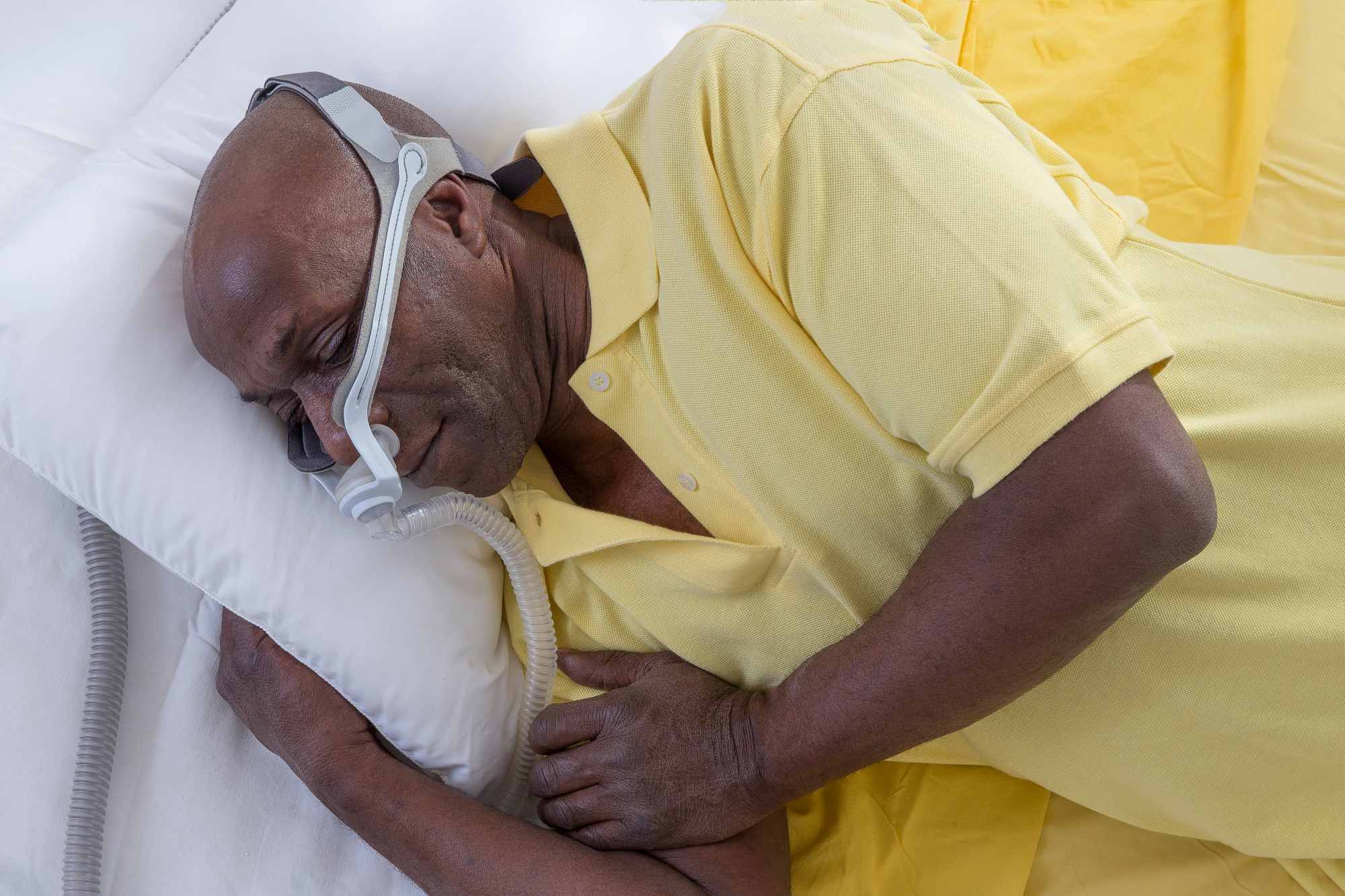
Sleep apnoea or obstructive sleep apnoea (OSA) is a condition caused by the relaxation of the muscles of the tongue and pharynx during sleep, which ends up obstructing the airways. The mechanical obstruction results in respiratory arrest (apnoea) lasting several tens of seconds (most commonly between 10 and 40 seconds), leading to a decrease in blood oxygen and an increase in carbon dioxide (CO₂). This occurs up to 30 times per hour in severe cases and, in addition to fragmenting sleep, increases the risk of high blood pressure and heart disease and the incidence of cognitive disorders. This condition can be improved if patients sleep with a mask that delivers positive pressure air to the mouth and nose to overcome the obstruction. This treatment is called CPAP, Continuous Positive Air Pressure. Many patients adapt well to the mask, but others cannot tolerate it and stop using it. Naturally, adherence to treatment is essential for its beneficial effect.
The study is an epidemiological study (descriptive without going into mechanisms) on the relationship between the incidence of Parkinson's disease (PD) in patients with OSA in a large population (more than 11 million) of US military veterans over the age of 40 (about 10% are women). The patients were studied between 1999 and 2022, with an average follow-up of five years. The study had two main objectives: i) To determine whether the incidence of PD is higher in patients suffering from OSA; ii) To see whether CPAP treatment reduces the incidence of PD. There were previous data on the relationship between OSA and PD, but with fewer patients and inconclusive results. The pathogenesis of the association between OSA and PD is unknown, but hypoxaemia (lack of oxygen in the blood), excess CO₂, together with the inflammatory and cardiovascular alterations caused by OSA, can damage nerve cells and facilitate the onset of PD.
The study's answer is clearly positive in both cases. The risk of developing PD is clearly higher in patients with OSA, and this risk is even more evident in women. The use of CPAP prevents the onset of PD in patients with OSA, especially if it is applied in the early stages of PD. In other words, the study clearly shows an association suggested by previous studies but not proven. From now on, OSA will have to be treated seriously if the risk of PD (and other neurological disorders) is to be reduced.
I believe that a very important limitation (which the authors point out) is that there is no objective record of patient adherence to CPAP treatment. I believe that the data are applicable to other populations, but this will naturally have to be demonstrated.
There are several previous studies associating OSA and PD, but the data were inconclusive. I believe that the current study is technically well done (patient classification, data management and statistical analysis), the number of patients is very high, and the analysis has taken into account possible confounding factors (obesity and cardiovascular or psychiatric comorbidities, among others).
As for the influence of sleep disorders on our health, sleep is a factor in overall health and must be taken care of at all ages.
Neilson et al.
- Research article
- Peer reviewed
- Observational study
- People