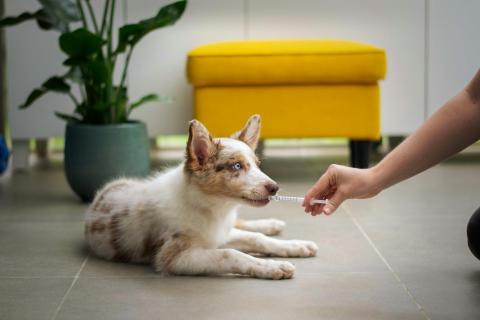
Traumatised puppies more likely to be fearful or aggressive in adulthood
Puppies that suffer traumatic experiences are more likely to be fearful or aggressive in adulthood, according to a study published in Scientific Reports. The analysis is based on data from nearly 4,500 dogs whose owners completed a canine behaviour assessment questionnaire. The authors analysed correlations between behaviours, such as biting or retreating, and early experiences of abuse or neglect, and found that some breeds are more resilient and others more vulnerable.

251002 cachorros rosana EN
Rosana Álvarez Bueno
Veterinarian at Etolia, Veterinary Ethology (Málaga)
This new study, conducted by Espinosa and colleagues, confirms with robust data something that many of us, veterinary professionals, observe in clinical practice: puppies that suffer adverse experiences during their first six months of life are more likely to develop aggression and fear problems in adulthood. The research, which analyses data from more than 4,400 dogs of 211 breeds, shows that these early experiences—such as abandonment, abuse, or traumatic separation—have an impact comparable to that of sex or age on the animal's later behaviour, providing solid evidence for something that until now was based mainly on clinical observations.
A particularly relevant finding is that not all dogs respond equally to these early adversities: some breeds, such as the American Eskimo Dog, show greater sensitivity to early stress, while others, such as the Labrador Retriever, appear to be more resilient, suggesting that genetic factors modulate individual vulnerability. The methodology used is robust, employing the internationally validated C-BARQ questionnaire and predefining the study hypotheses. Although the use of owner reports is an inherent limitation, the authors have carefully controlled for ambiguous responses and found consistent effects across multiple subtypes of aggression and fear.
The practical implications are clear: we must prioritise the prevention of negative experiences during the critical socialisation period, pay special attention to an adopted puppy's history, and tailor therapeutic interventions to the dog's history and breed. This work reinforces the importance of responsible care in kennels, shelters, and foster homes, as well as the need for a preventive and personalised approach in veterinary clinics and canine welfare.
Julia Espinosa et al.
- Research article
- Peer reviewed
- Observational study
- Animals