Scientists

Scientists

For science to make the news in a rigorous and attractive way, good sources are needed. Because access to scientific knowledge is a citizen's right.

¿Qué me ofrece?

Help science make headlines with rigour and context. We’ll ask you for feedback on current events in your field and you can participate in the briefings we’ll organise. Need to prepare for an interview? Use our resources on science communication.

Icono
Cómo trabajamos

We’re on the lookout for controversial information about science and we will contact you for your analysis in your area. Do you want to be part of our sources? Contact us. We will not pass your contact details on to anyone else. You can find out more about how we work here.   

Título qué me ofrece
What we offer you
Título cómo trabajamos
How we work

Nobel Prize in Medicine or Physiology awarded to Ambros and Ruvkun for the discovery of microRNAs and their role in gene regulation

The Karolinska Institute has awarded the Nobel Prize in Medicine or Physiology to Victor Ambros and Gary Ruvkun for the discovery of microRNAs, small RNA fragments that do not contain instructions for making proteins but instead participate in the regulation of gene expression. Their role is fundamental in processes such as cell differentiation, and their alteration can influence diseases like cancer.

0

More than 1,300 bird species will become extinct in the next 200 years

International research in which CREAF is participating estimates that more than 1,300 bird species will disappear over the next two centuries, which is more than double the number of extinctions recorded to date - 610 species have disappeared in the last 130,000 years. The study, published in the journal Science, shows that, for island endemics, the proportional losses have been and will be even greater. The authors warn that when a species becomes extinct, its role in the ecosystem may disappear with it.


0

Questions and answers on the Marburg virus outbreak in Rwanda

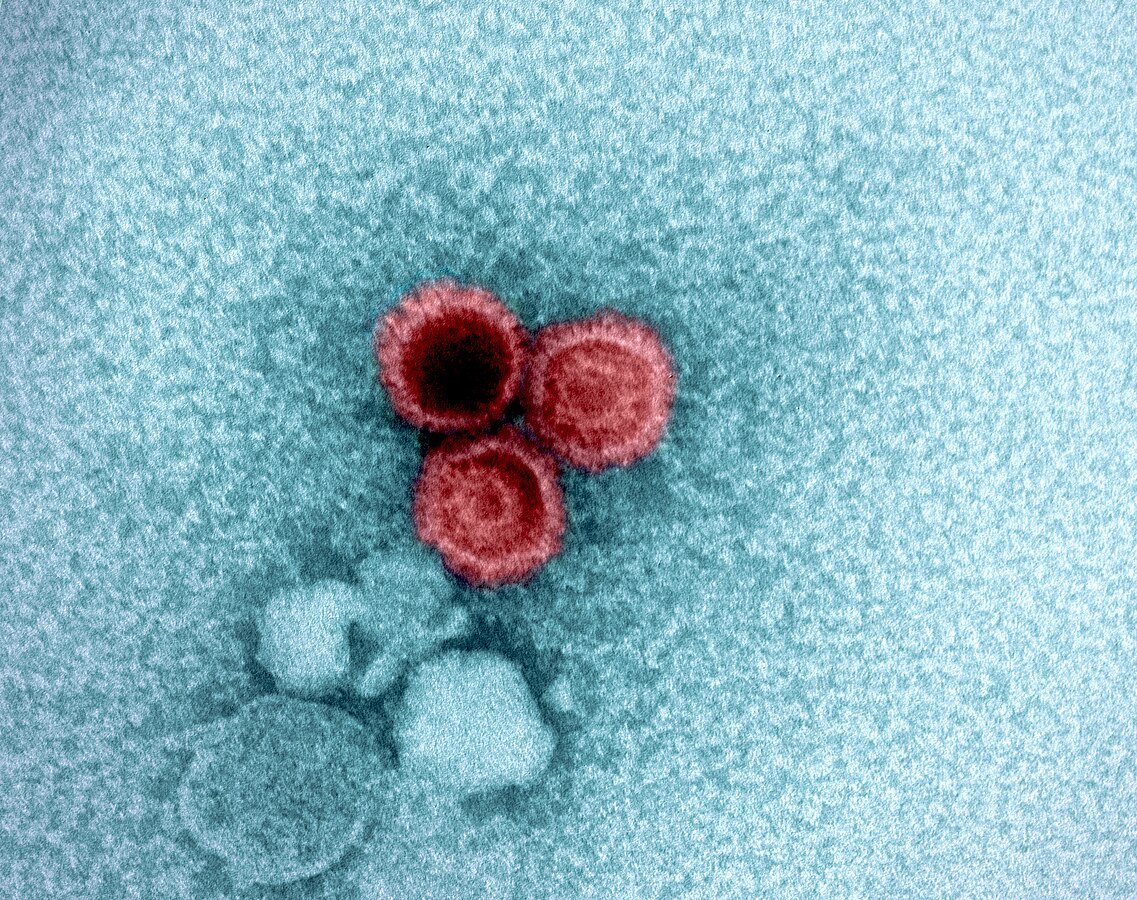
In Rwanda, according to the latest ECDC data, 25 cases and 11 deaths have been detected in what is already the third largest outbreak of the Marburg virus to date. The WHO considers the overall risk to be low and possible imported cases from Belgium and Germany - reported only yesterday in Hamburg - have proved to be false alarms. What is of concern is the national and regional spread of a virus for which mortality can be as high as 88% and for which there is no treatment or vaccine. In this article we answer the main questions.

0

Banning tobacco among young people would prevent more than a million deaths from lung cancer

If lifetime tobacco consumption were banned among young people currently aged 14 to 18, 1,200,000 lung cancer deaths worldwide could be prevented in the future, according to a study with Spanish involvement published in the journal The Lancet Public Health. The greatest impact would occur in low- and middle-income countries, but in higher-income regions, more than 60% of lung cancer deaths in that age group would also be avoided.

0

Babies born through assisted reproduction have increased risk of serious heart defects, study finds

The relative risk of being born with a major heart defect is 36% in babies conceived using assisted reproductive techniques, such as in vitro fertilisation, compared to newborns not using these techniques, according to a study published in the European Heart Journal. The absolute risk was 1.84% versus 1.15%. The research, which included more than seven million babies born in Denmark, Finland, Norway and Sweden, also shows that the increased risk is especially associated with multiple births, which are more common in assisted reproduction.


0

Two low-pollution alternatives proposed to extract lithium from diluted brines like seawater

Lithium, a material widely used for battery production, is typically extracted from rocks and concentrated brines, but these reserves are expected to run out by 2080. The alternative is to evaporate more diluted brines (such as seawater), but the traditional process is inefficient, polluting, and consumes large amounts of water. Two new studies published in Science propose two more viable and environmentally friendly alternative methods: the first uses a membrane that filters lithium through a transpiration system similar to that of plants, requiring only solar energy. The second combines electrodes to mimic a battery and move lithium from the brine (cathode) to fresh water (anode).

0

Burying wood in vaults proposed as carbon storage method

Burying woody biomass in wooden vaults would allow carbon to be extracted and stored from the atmosphere, according to a study published in Science. The authors were inspired by an eastern red cedar log preserved underground for more than 3,700 years in Canada. The team proposes burying wood from sustainable sources in a domed wooden structure designed to extend the duration of carbon storage. The authors estimate that up to 10 gigatonnes of CO2 could be sequestered annually using this technique.

0

Clinical trial examines efficacy of prostate cancer screening with MRI to reduce overdiagnosis

Prostate cancer screening tests using PSA (Prostate Specific Antigen) are associated with overdiagnosis, which calls into question their use. A clinical trial in men aged 50-60 years published in the journal NEJM has studied the possibility of adding an MRI test in those with an elevated PSA level and dispensing with biopsy if imaging finds no suspicious lesions. The results indicate that the procedure avoids more than half of clinically irrelevant cancer diagnoses that would not need treatment and only slightly increases the risk of failing to identify those that may become incurable. The authors recommend, on the basis of the study, to review the recommendations for such screening.

0