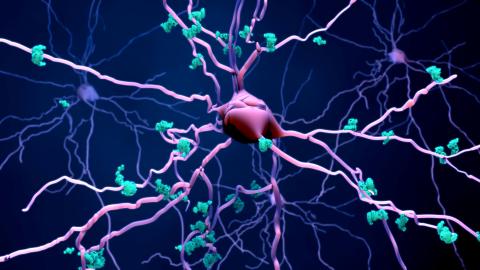
Researchers investigate how to reverse Alzheimer's disease in mice using lithium compounds
Researchers at Harvard Medical School have published new findings in Nature on the role of reduced lithium levels in Alzheimer's disease, based on experiments with mice and analysis of brain tissue and blood samples from humans. The team claims to have achieved improvements in memory in mouse models with lithium orotate. They caution that they have not proven that lithium is safe or effective in protecting against neurodegeneration in patients, and that their findings must be confirmed in humans through clinical trials.
Marc Suárez Calvet - litio alzheimer
Marc Suárez-Calvet
Researcher at the Barcelonabeta Brain Research Center and the Neurology Service of the Hospital del Mar (Barcelona)
This elegant study proposes a novel mechanism that could integrate multiple pieces of previous evidence on the role of lithium in Alzheimer's disease. It identifies lithium loss as a key early event in the pathological process and suggests that addressing this deficiency could reverse brain damage in animal models. Although the results are promising, caution is essential: controlled clinical trials in people with Alzheimer's disease are needed to evaluate the efficacy and safety of lithium before considering its therapeutic use.
Jordi Pérez-Tur - litio alzheimer
Jordi Pérez-Tur
Research scientist at the Public Research Organisation (PRO) at the Institute of Biomedicine of Valencia of the Spanish National Research Council (CSIC) and principal investigator at CIBERNED
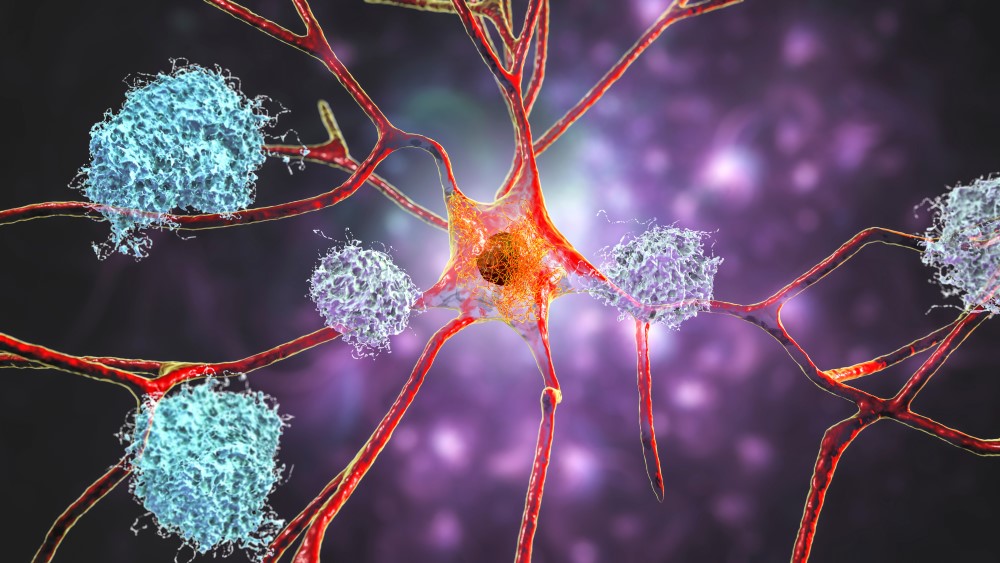
Alzheimer's disease, the most common form of dementia in elderly populations, is a mystery in terms of its molecular causes. In general, we know that the problems are associated with the presence of certain abnormalities found outside neurons, senile plaques formed mainly by the Aβ peptide, and others inside neurons, formed mainly by the tau protein chemically modified in the cell by the addition of phosphate groups. These two lesions, the second of which appears after the first, cause enough damage at the neural level for cell death to spread throughout the brain and eventually lead to the visible manifestations of the disease.
But why does this process begin? Despite intensive research in laboratories around the world for many years, the starting point of the process, the event that triggers the cascade leading to the onset of the disease, is unknown.
In the study led by Bruce Yankner, they propose that lithium metabolism may be the holy grail they are looking for. Studying animal models created to develop characteristics similar to Alzheimer's disease, they observe that there is a decrease in lithium in the brains of people diagnosed with mild cognitive impairment, a diagnosis with clinical aspects that have relatively little impact on daily life and often precedes Alzheimer's disease. They also identify that the Aβ peptide may contribute to reducing the availability of lithium in the brain. With this information, they decided to reduce the amount of lithium in the brains of mice prone to developing Alzheimer's disease characteristics by simply adjusting their diet, and found that the number of lesions in these mice increased. In addition, they found that the use of a lithium salt had a positive effect, not only in relation to Alzheimer's disease (the mice had fewer memory problems and brain lesions) but also in healthy mice of a certain age.
This is very important work because it focuses on what may be the early stages of the disease and suggests that minimal dietary intervention could be effective in at least halting the progression of the disease. The authors observe how the addition of lithium to animals that did not previously have it may alter the course of the disease, something that until now has only been achieved by some treatments and for relatively short periods of time.
On the other hand, it is also interesting to note that this intervention with lithium salt not only seems to delay or prevent the appearance of Alzheimer's-type lesions in the brains of mice, but may even contribute to eliminating existing lesions. When the authors provide lithium to animals of a certain age, they have fewer lesions than those of the same age but not given lithium.
All this seems to indicate that we are facing a very interesting proposal that needs to be confirmed by the scientific community. However, it should be noted that there are known precedents that speak of protection against Alzheimer's disease related to the medicinal use of lithium. Specifically, lithium is commonly used in the treatment of the affective disorder commonly known as bipolar disorder. And there are studies showing that Alzheimer's disease is less common among patients with this disorder who are treated with lithium.
This body of evidence opens up an interesting avenue of research to confirm that lithium has the effect described in this study and that the use of a specific lithium salt may have a significant impact on the progression of the disease.
In any case, we must not be overly optimistic and incorporate lithium into the diet indiscriminately and uncontrollably. This study is a first step on a path that must be approached rigorously with the best scientific tools that we as human beings are capable of developing. It must be confirmed that the same thing happens in humans as has been seen in animal models, which, let us remember, are imperfect because these animals do not develop the same disease as humans. If this is confirmed, it will be necessary to establish the necessary and safe doses to achieve an effect, as well as to determine whether there may be significant side effects. The use of this metal in the treatment of a neurological condition, however, gives hope that this last part will be relatively quick. We must therefore wait for further confirmation and details of the findings published in this article by Aron and colleagues.
Liviu Aron et al.
- Research article
- Peer reviewed
- Experimental study
- Observational study
- People
- Animals