People can barely tell the difference between AI-generated political messages on social media and those written by humans
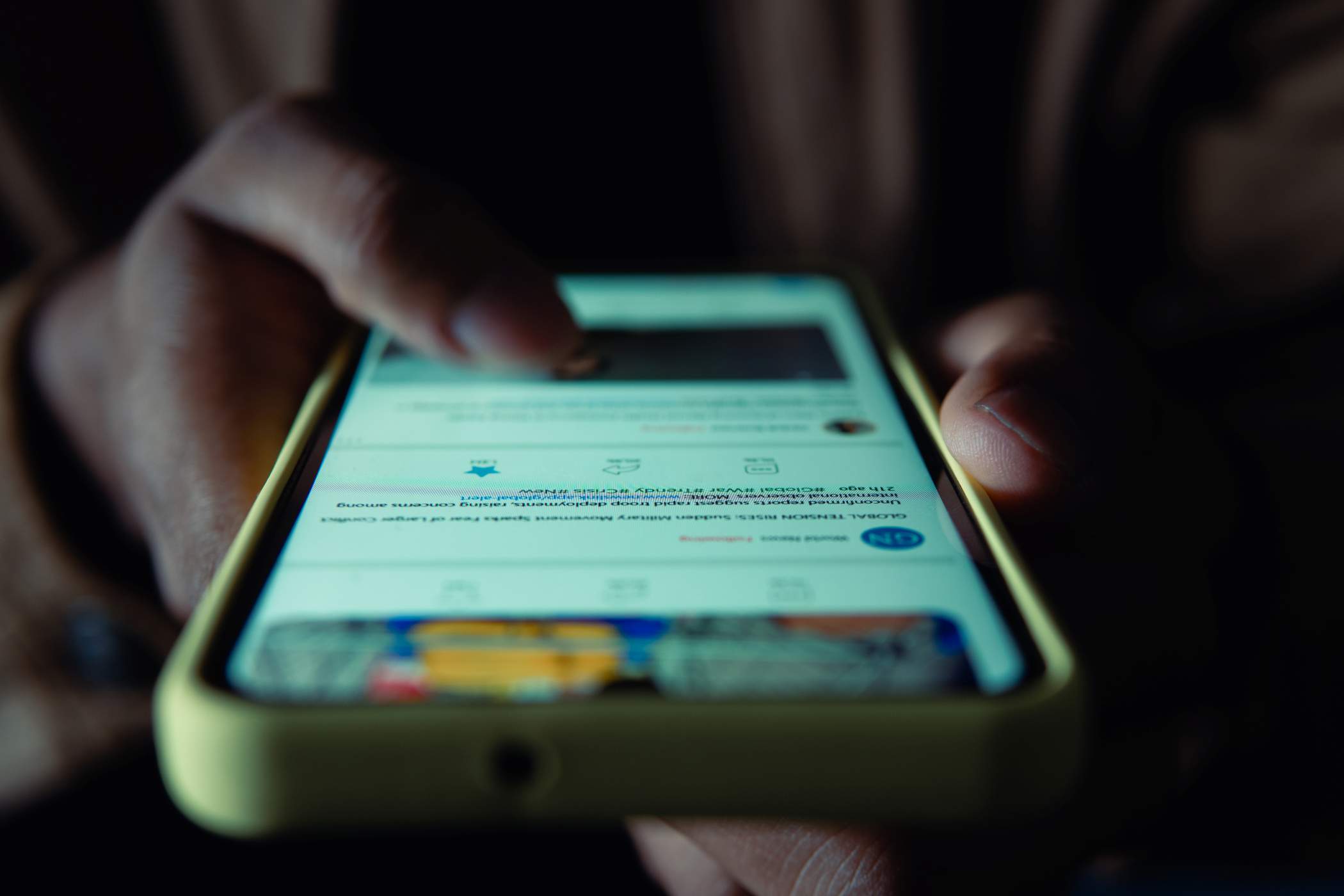
Artificial intelligence (AI) makes it possible to generate political messages on social media that mimic those written by humans, making it difficult to identify their source. A study published in PNAS, involving 1,122 participants, analysed their ability to distinguish genuine posts from those generated by AI regarding the 2024 US presidential debate. Participants correctly identified AI-generated messages in 58.6 per cent of comparisons, only slightly above chance. The ability to distinguish them was higher on TikTok and lower on X. Furthermore, they tended to regard messages with a negative tone as having been written by people, whilst those with a positive tone were more frequently associated with AI.
Daniel Gayo Avello - contenido político IA
Daniel Gayo Avello
Full Professor at the University of Oviedo in the area of “Computer Languages and Systems”
Is the study of good quality? Are the conclusions supported by sound data?
"This is a reasonably systematic and methodical piece of work which, in my view, suffers from a lack of rigour in several respects and which, furthermore, sheds little light on the matter at hand: namely, that humans find it difficult to distinguish between texts that are genuinely human-generated and those that are synthetic, and that these difficulties vary depending on the platform, personal characteristics and the model used to generate the synthetic text.
To put it another way, the conclusions are neither surprising nor particularly useful for taking action, beyond stating that human judgement is insufficient and that we need automatic filters. In this regard, it is worth noting that we have automatic filters for spam not because we cannot detect it, but because it is a nuisance. Therefore, whilst it is all very well to know that we humans find it difficult to distinguish synthetic texts from human ones, I believe this is an unnecessary step in an argument in favour of automatic filters. Furthermore, I do not understand why synthetic texts are a threat to democracy, whilst human texts are not.
Finally, if the defence relies on the use of automatic filters, I believe they did not carry out rigorous testing of techniques for detecting synthetic text: asking a linguistic model whether a text is human or synthetic strikes me as rather simplistic".
Are there any significant limitations that need to be taken into account?
"In my view, there are many, but I believe the most important ones are as follows:
They assume that texts obtained from social media were produced by humans, when this need not necessarily be the case. Using Botometer to determine whether an account is automated is extremely problematic (see The False Positive Problem of Automatic Bot Detection in Social Science Research (2020); Bot, or not? Comparing Three Methods for Detecting Social Bots in Five Political Discourses (2021); Investigating the Validity of Botometer-Based Social Bot Studies (2022)). To put it another way, they have compared texts that were presumably written by humans (but which may contain text generated by artificial intelligence (AI), either because the account is automated or because the human used AI) with texts that they know for certain were written by generative models.
The fact that the authors generated synthetic texts does not mean that they used prompts or strategies similar to those employed by alleged disinformers who post AI-generated texts on social media platforms.
Failing to test more sophisticated methods for detecting synthetic text is a major weakness and, I must emphasise, asking a language model whether a text is synthetic does not strike me as appropriate for a paper published in PNAS.
The sample of human subjects is a convenience sample and was selected via an online platform. Such platforms have been subject to interference by users who employ language models to respond to surveys. In fact, an article had already been published in PNAS prior to the submission of this paper that highlighted precisely this problem (The potential existential threat of large language models to online survey research, 2025).
To put it another way, they asked supposed humans to distinguish presumably human text from synthetic text that presumably resembled that produced by disinformation actors, and they discovered that it is a complicated task that depends on many factors".
To what extent can these results be extrapolated to other countries, such as Spain?
"Given that the results are, in short, that humans struggle to distinguish synthetic text from text presumed to be generated by humans, and that this difficulty depends on many factors, I am sure the general conclusion could be extrapolated. However, a similar study would yield completely different disaggregated data, in particular because the use of platforms in Spain is different (for example, I don’t think Truth Social has very many users)".
How do you explain the differences in detection ability depending on the social media platform and the AI model used?
"I wouldn’t venture to speculate, as, in my view, the authors’ own arguments are post facto explanations. For example, it seems that their experimental subjects consider Llama 3.3’s texts to be ‘more human than humans’. If that result had emerged with another model, it would have had exactly the same impact; it’s just that the explanation would have been different".
What measures could help to identify AI-generated political content and reduce the risks of manipulation?
"There are several platforms that enable the detection of synthetic text (for example, Pangram is gaining prominence). However, manipulation by humans (troll farms, for example) already existed; AI simply makes the task cheaper and, consequently, massively exacerbates the problem. An approach similar to that used for spam (automatic filters and the option to report texts) would be perfectly viable, but, for economic and ideological reasons, platforms prefer to let disinformation and misinformation—whether human-generated or synthetic—run rampant.
In short, I believe the debate is misguided if we focus on our limited ability to distinguish human-written texts from synthetic ones. The threat to democracy lies not in who writes a message, but in the content, intention and dissemination of those messages. Generative AI has not caused disinformation; it has merely industrialised its production. And whilst it can also form part of the solution by helping to detect and filter synthetic texts, we must not forget that human-written texts can be just as harmful to democracy and that platforms tolerate them all (both human and synthetic). This is obviously not the fault of the study’s authors. They simply addressed a question that could be investigated methodically; they did so transparently, albeit with fairly obvious weaknesses, and reached unsurprising conclusions which, moreover, were not essential for advocating the use of automatic filters against synthetic texts on social media".
Belén Laspra - contenido político AI
Belén Laspra
Assistant Professor in the Department of Philosophy at the University of Oviedo
The work carried out by researchers at Georgetown University adds to the growing body of research seeking to understand the impact of artificial intelligence on our societies. In this case, they ask to what extent we are able to distinguish between political content written by humans and content generated by artificial intelligence. Within the context of this question, the authors make a series of thought-provoking points that are worth pausing to consider.
Firstly, it appears that we can barely distinguish between human-generated and AI-generated content. Participants correctly identified AI-generated texts in 58.6 per cent of comparisons between a human-generated post and an AI-generated one – a result only slightly higher than the 50 per cent one would expect by chance. There are an increasing number of scenarios involving human-AI co-creation, so the researchers’ findings raise an immediate question: to what extent does it make sense to be concerned about whether content is generated by artificial intelligence or by a human being?
The article appears to establish a certain link between human authorship and what it terms ‘authentic communication’. The authors warn that AI-generated content can amplify certain viewpoints or create false impressions of social support, thereby eroding trust in democratic debate. But can’t human beings do exactly the same thing? Haven’t they been doing so ever since political propaganda first emerged? Generative models can make the production and dissemination of false information extraordinarily easy, but they can also help to spread verified and rigorous information. Just as human beings can spread spurious or validated information. The difficulty in recognising artificial authorship does not equate to greater vulnerability to political persuasion; the fact that content has been written by a person does not guarantee its veracity, just as a text generated by artificial intelligence is not necessarily false. It should be noted that the study does not analyse the persuasive power of these messages, but rather our ability to identify their authorship.
Secondly, the research reveals that we appear to have developed a rather stereotypical representation of artificial language. We tend to consider a text to be AI-generated when it has a generally positive tone, whilst we associate the expression of specific emotions, hostility or even offensive language with human writing. This is a curious finding because one of the most striking capabilities of generative models is precisely their ability to mimic the expression of human emotions. The use of generative models also presents a somewhat paradoxical situation: on the one hand, AI is increasingly capable of imitating our natural language; on the other, our interaction with it may, in turn, influence the way we write, our linguistic choices and our modes of expression. We may be witnessing a process of reciprocal influence between human and artificial writing, an issue that this study does not address directly, but one that is worth reflecting upon.
Thirdly, our ideological affinities influence the way in which we judge the authorship of texts. This finding is consistent with an extensive body of research on motivated reasoning and cultural cognition, developed, amongst others, by Dan Kahan. We tend to interpret information through our ideological frameworks and prior beliefs. The study found that Republican participants were more likely to regard artificial messages expressing conservative views as human, whilst they more frequently attributed artificial authorship to progressive messages.
This effect was not observed with the same intensity amongst progressive participants. This finding suggests that our perception of a text’s authorship depends not only on its linguistic characteristics, but also on whether we agree or disagree with its content.
Fourthly, the platform on which the information appears also influences our ability to identify AI-generated content. Participants performed better with TikTok posts (64.8 per cent correct) than with those on X/Twitter (54.2 per cent). In fact, on X/Twitter, no statistically significant differences were found between the perceived humanity of human and artificial texts. It is possible that each platform’s writing conventions – such as hashtags, mentions or the length of posts – influence our ability to recognise AI-generated content. It should also be borne in mind that participants were comparing posts presented in isolation, whereas on real social media platforms, content appears alongside accounts, images, comments and conversations that may either facilitate or hinder the identification of its origin. Furthermore, the study analyses text only, not videos; therefore, its findings cannot be directly applied to our everyday experience on social media.
This is an interesting study with a solid empirical basis. It involved 1,122 Americans and utilised 2,386 posts from four platforms, generated by six different AI models. The sample is a convenience sample and shows a certain over-representation of people with higher education. All the content relates to a very specific event: the presidential debate between Kamala Harris and Donald Trump in September 2024. It would be interesting to replicate the study in other countries and on other topics, such as scientific controversies or health issues, as the results cannot be directly extrapolated to different cultural, linguistic and political contexts.
L. Alfonso Ureña López - contenido político IA
L. Alfonso Ureña López
It is a robust, well-designed study published in a top-tier journal. One of its main strengths lies in its methodology. Rather than asking participants to evaluate individual messages, it presents them with pairs of posts and asks them which one they think was written by an AI. This direct comparison yields far more reliable results.
More than 1,100 people took part in the study, making around 19,500 comparisons. And the result is quite revealing: we were only correct in 58.6 per cent of cases. In other words, we barely exceeded the 50 per cent we would achieve by chance, simply by tossing a coin. On X (formerly Twitter), the figure drops to 54 per cent, meaning we can barely distinguish AI-generated texts from those written by humans.
These results are in line with previous research which had already shown that we rely on unreliable intuitions and mental shortcuts to recognise AI-generated texts (Jakesch et al., PNAS, 2023). But this study adds a particularly worrying finding: our ability to detect such content diminishes as new generations of models emerge. In fact, texts generated by Llama 3.3 even appeared more human than those written by real people.
Like any study, this one also has some limitations that are worth bearing in mind. To begin with, the models analysed have already been superseded by more recent versions, so it may now be even harder for us to distinguish between the texts. Furthermore, the participants knew in advance that one text in each pair might have been generated by artificial intelligence. In other words, they were paying particular attention to spotting it – something that does not happen when we are quickly scrolling through social media on our mobiles.
There are also differences between the content used on each platform that may influence the results. On X, for example, retweets of messages written by people were removed, whilst the models were asked to include some in their posts. This lack of equivalence could help explain why X was the platform on which it proved most difficult to identify AI-generated messages.
Another particularly interesting aspect relates to how we interpret emotions. We tend to assume that offensive or negative messages have been written by people, whilst we associate excessively positive content with artificial intelligence. It is a stereotype that can easily be exploited by anyone wishing to manipulate or influence our perception. Political affiliation also plays an important role: for example, Republican voters tended to regard AI-generated messages that aligned with their political views as having been written by humans.
Although the study was conducted in English and with a US population, I see no reason to believe that we in Spain would be any better at detecting this type of content. Current models generate Spanish-language texts of a very similar quality and, furthermore, our own political polarisation means that we, too, are vulnerable to these kinds of strategies.
The main conclusion is that we cannot rely solely on our ability to distinguish whether a message has been written by a person or a machine. Our own judgement, intuition and experience are no longer sufficient. We need technical tools that enable us to verify both accounts and content, as well as developing automated detectors specifically designed to analyse short messages in Spanish.
It is also essential that the transparency obligations set out in the European Artificial Intelligence Regulation (AI Act) are met and that media literacy campaigns are promoted. We must learn to recognise that, in this area, our intuitions can very easily fail us. That said, we must not assume that technology alone will solve the problem.
Automated detectors are not a one-size-fits-all solution: their reliability varies depending on the language, the dataset and the detector itself, and they sometimes fail for no apparent reason. In fact, determining whether a very short message has been generated by AI remains an unresolved challenge in natural language processing. For this reason, the available evaluations agree that each detector must be validated in each language and domain before it is used, and in Spanish there is still a lack of evaluations using short texts and current models. Something similar applies to watermarks: they can be circumvented simply by rewriting a text and, furthermore, cannot be applied in the same way to open-source models.
Ultimately, it will become increasingly difficult to distinguish between what a person writes and what is generated by artificial intelligence. Therefore, rather than relying on our ability to recognise this at a glance, we must strengthen our verification systems and, above all, cultivate a critical approach to what we read and share.
Paik et al.
- Research article
- Peer reviewed