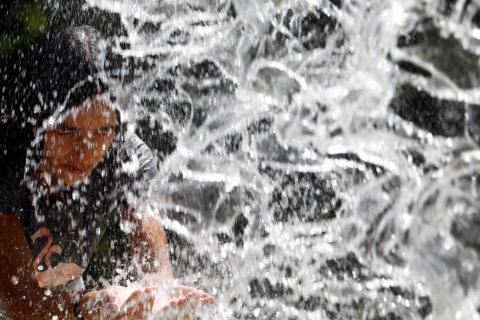
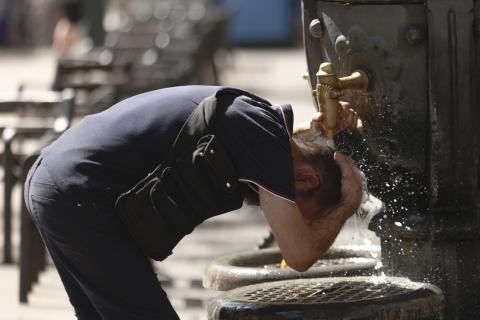
A WHO-WMO report warns that extreme heat increases the risk of neurological disorders and other illnesses among workers
The frequency and intensity of extreme heat events have increased in recent years, heightening the risks for those who work outdoors and indoors. Health risks include heatstroke, dehydration, kidney dysfunction and neurological disorders. These are some of the conclusions of a joint report by the World Health Organisation (WHO) and the World Meteorological Organisation (WMO), which estimates that worker productivity falls by between 2% and 3% for every degree above 20°C. The document proposes measures for governments, businesses and health authorities to mitigate the risks of extreme heat for these people.
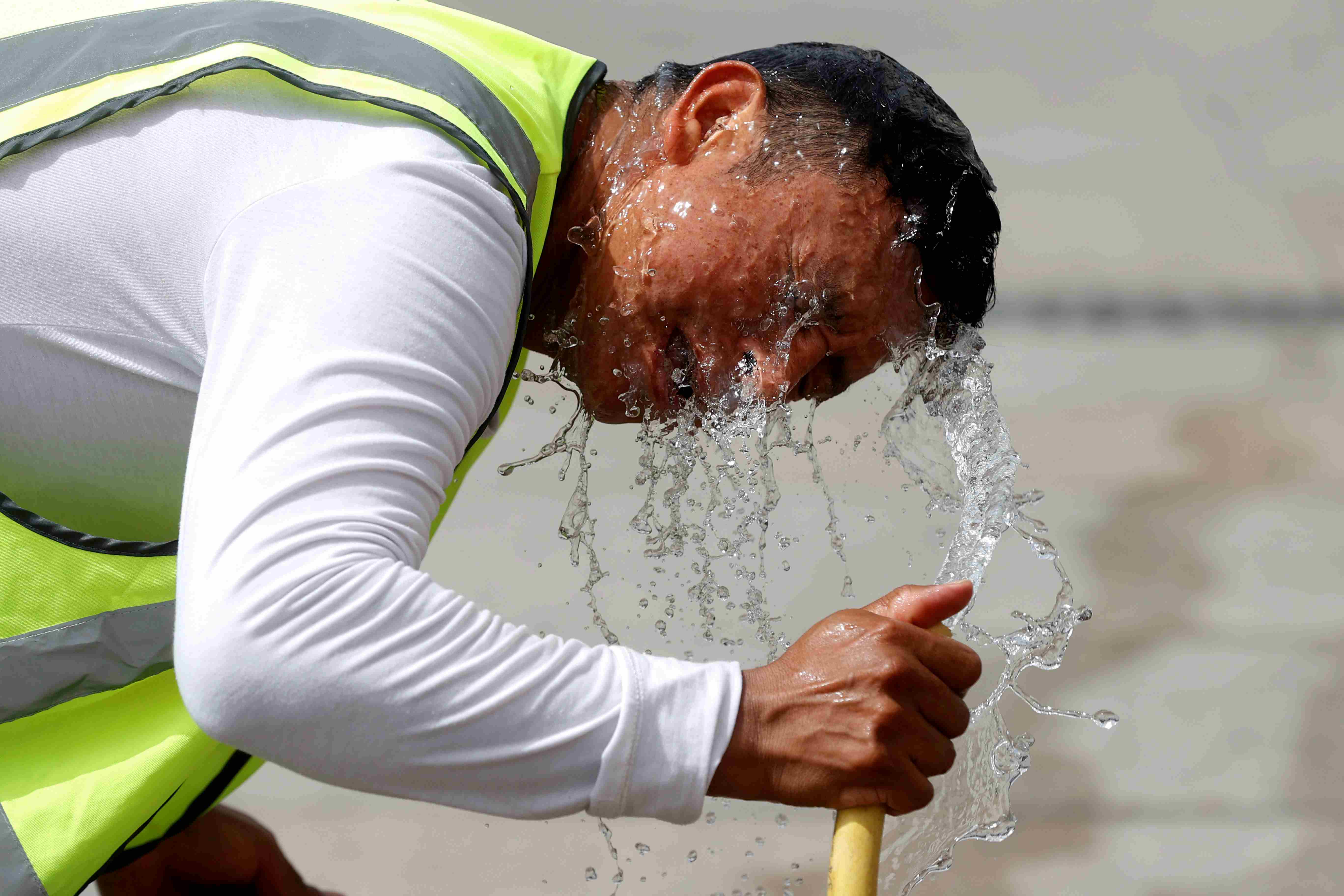
Fernando G. Benavides - informe OMS trabajadores EN
Fernando G. Benavides
Professor of Public Health in the Department of Medicine and Life Sciences (MELIS) at Pompeu Fabra University, researcher at the Centre for Occupational Health Research (CISAL) at IMIM-PSMar, and scientific director of the Ibero-American Observatory on Occupational Safety and Health
This technical report, based on scientific information, highlights the magnitude of the impact of the climate emergency on the health of working people.
According to ILO estimates, the risk of injury due to accidents at work, which is only the acute (immediate) effect of heat stress, increases by 17% during heat waves. Among the chronic effects, the ILO points out that there will be 26.2 million people with chronic kidney disease attributable to heat stress in the workplace. In addition, the economic impact of this significant disease burden is highlighted, given that it affects the working population.
However, as highlighted by the National Institute for Safety and Health at Work (INSST), Spain has the MoMo system to provide good estimates of mortality in the general population, but not to monitor this impact on the health of working people. The DELTA system for reporting fatal accidents at work only attributes 4% to extreme temperatures (including cold). It is therefore urgent to improve information systems in order to monitor the real impact of heat stress in Spain. This is essential in order to evaluate the preventive measures to be adopted in companies in accordance with current legislation, which I will discuss below.
Secondly, and this is its main contribution, this technical report focuses its recommendations on mitigating the effects and stresses the urgent need to adopt feasible preventive measures specifically aimed at protecting workers from heat stress, especially vulnerable groups such as those working outdoors in agriculture, construction, gardening, street cleaning, etc. The report does not propose adaptation measures and explicitly acknowledges this.
However, while accepting this approach, most of the mitigation measures proposed rely on:
- The responsibility of those at risk.
- Individual medical surveillance.
- Technological solutions, which, while recognising their importance, take a back seat to collective organisational (or administrative, as the report puts it) measures, which, according to the European directive on health and safety at work and the Spanish law on occupational risk prevention, must take precedence over individual measures.
In any case, collective and individual preventive measures must be regulated by rules (decrees, collective agreements, etc.) that oblige employees and companies to comply with them. This aspect is not addressed in the report and requires a flexible inspection system with executive powers in cases of non-compliance, as has been seen in various situations in Spain in recent weeks.
Sergio Salas Nicás - OMS trabajo EN
Sergio Salas Nicás
Doctor of Public Health, member of the Research Group on Psychosocial Risks, Work Organisation and Health (POWAH) at the Institute of Labour Studies at the Autonomous University of Barcelona, and member of the Trade Union Institute for Work, Environment and Health (ISTAS)
The new joint report by the WHO and WMO on work-related heat stress and climate change analyses the role of this risk in the health of the working population in a context of rising temperatures due to anthropogenic climate change. The report is particularly important because it reflects the WHO's clear commitment to the issue of work-related heat stress, an area that until now had been mainly in the hands of the ILO (together with international occupational health and safety agencies such as EU-OSHA in Europe). Prepared in collaboration with the WMO, it also constitutes an unequivocal statement of intent by highlighting the link between climate, health and work.
The WHO, like the ILO and the WMO, is a specialised UN agency responsible for these three areas, which are linked to the specific problem of heat stress at work. The publication of this report therefore marks the beginning of the WHO and WMO's public involvement in the prevention of this occupational risk, which is both necessary and urgent in order to effectively address this challenge, which will undoubtedly continue to grow in the coming years.
That said, it is a fairly comprehensive report, scientifically informed and up to date with the latest scientific evidence. Despite its global focus, the preventive and adaptive measures it proposes are valid for the Kingdom of Spain, one of the European countries most affected by climate change and where several fatal accidents at work are recorded each year due to the lack of preventive measures against high temperatures.
Specifically, the report deals with:
- The relationship between climate change and health.
- Estimating the overall burden of this risk on the population.
- Designing preventive plans and measures to reduce the impact.
- The management of heat stress in the workplace.
These last two sections make the report a practical document, a kind of guide with basic guidelines on how to adapt companies to the new climate reality, which joins other recent publications on this subject at the national and European level. It is worth highlighting the comprehensive perspective it takes in proposing collective and individual, organisational and technical solutions aimed at companies, workers and public administration.
The report emphasises the vulnerability of immigrant workers who are not acclimatised and whose occupations are generally more exposed than those of the native population, but it does not emphasise another axis of inequality, largely overlapping with the first, and equally key to describing the problem, namely social and occupational class. Nor does it reflect the role of labour relations, the limited capacity of public authorities to enforce regulations or the obstacles to implementing truly effective preventive and protective measures against heat. This is because in this type of report from specialised international bodies, the power relations present in productive activity are not clearly reflected. This is undoubtedly the main shortcoming of the document.
WHO-WMO
- Report