A high-fat diet favours metastasis of the most aggressive breast cancer in mice
A team led by the Spanish National Cancer Research Centre (CNIO) has shown in mice that a high-fat diet increases metastasis in triple-negative breast cancer, which has the worst prognosis. In addition, it has identified several of the mechanisms that would explain this, such as the activation of platelets and coagulation, which would help the tumour hide from the body's defences and prepare the so-called ‘pre-metastatic niche’. According to the researchers, who published the results in Nature Communications, ‘this mechanism could be extrapolated to other tumour types and other organs’. The results suggest that ‘dietary intervention, together with the control of platelet activity, may increase the efficiency of certain anti-tumour treatments’.
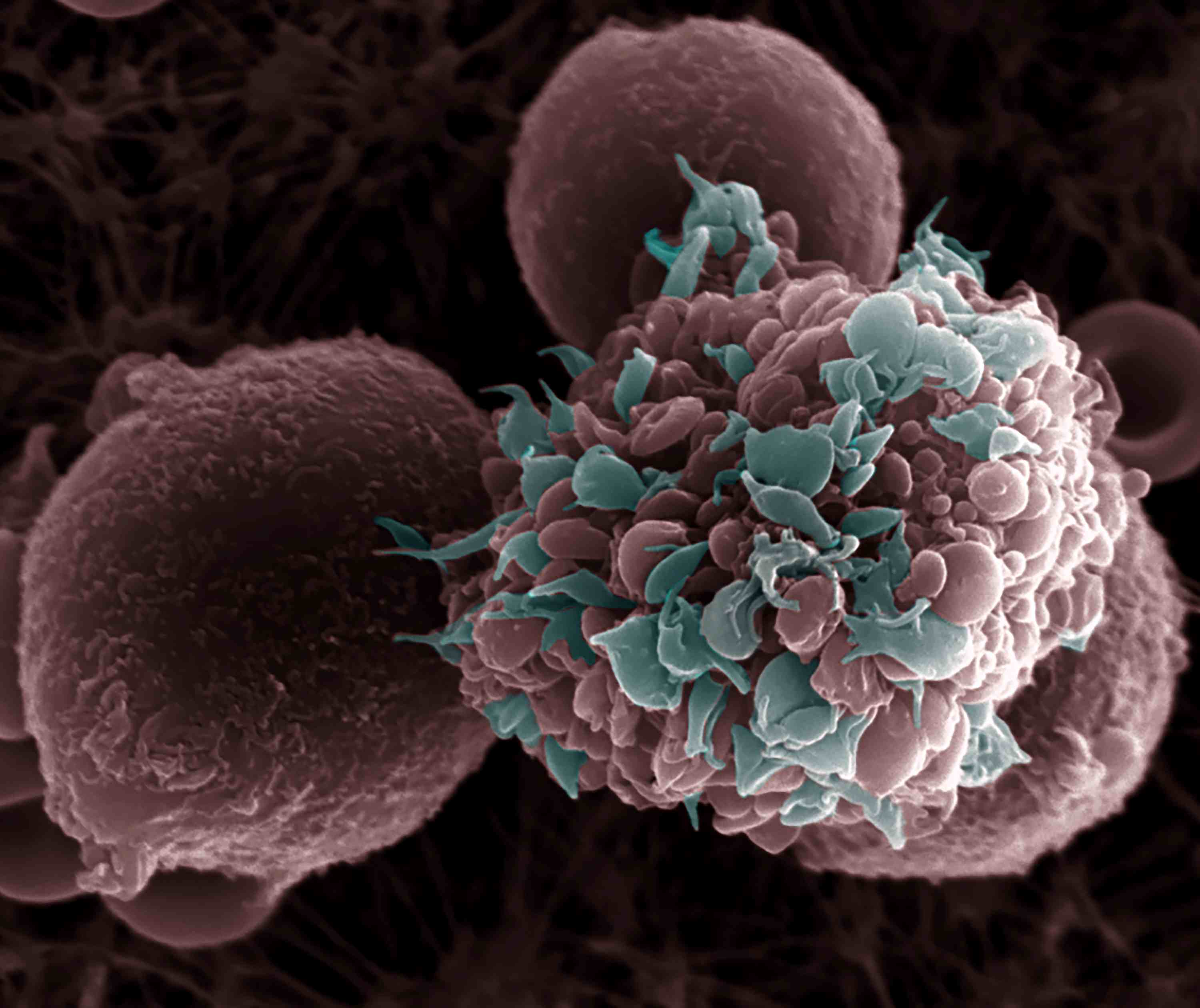
Ramón Salazar - CNIO plaquetas EN
Ramón Salazar
Head of Medical Oncology at the Catalan Institute of Oncology (ICO), head of the Colorectal Cancer Research Group, Oncobell programme (IDIBELL) and associate professor of Medicine at the University of Barcelona
It is a very high quality study that identifies a mechanism of action (in a mouse model) that could explain why obesity is a risk factor for the metastatic spread of solid tumours, in this case, triple negative subtype breast cancer.
Obesity and high-fat diets appear to play a complex and often cancer-type specific role in influencing the risk of metastasis in patients previously treated for localised cancer. Although both factors are generally associated with an increased risk of metastasis in breast, prostate and colorectal cancers, the underlying mechanisms involve intricate interactions between inflammation, hormonal changes and alterations in the tumour microenvironment.
Interestingly, the ‘obesity paradox’ observed in certain types of cancer, such as lung cancer, renal cell carcinoma and melanoma, where obesity is associated with better survival, highlights the need for a more detailed understanding of these relationships.
Given the evidence, weight control and the adoption of a healthy dietary pattern, characterised by a high consumption of fruits, vegetables and whole grains, together with a limited consumption of red and processed meats and saturated and trans fats, remain important considerations for survivors of localised cancer.
Recent research also suggests a possible role for antiplatelet and anticoagulant therapies, particularly aspirin and low molecular weight heparins, in the prevention of metastasis in certain types of cancer. However, further research is essential to fully understand their mechanisms of action, identify the patient populations that would benefit most and determine the optimal and safest ways to use these therapies.
Alberto J. Schuhmacher - CNIO plaquetas EN
Alberto J. Schuhmacher
ARAID researcher and head of the Molecular Oncology Group at the Aragón Health Research Institute (IIS Aragón)
Cancer is an organised cellular crime, it is not just about cells with mutations that grow out of control. Tumour cells establish a molecular dialogue with their environment and modify it to grow and become malignant. In order to spread and form metastases, tumour cells must leave through the bloodstream, nest and grow in other organs that are different from the one of origin and, therefore, the new environment that surrounds them is different. Sometimes, the tumour sends molecules that modify the target organ, forming a ‘pre-metastatic niche’ so that the tumour cells that have migrated can establish themselves more easily.
Obesity is associated with a higher risk of developing breast cancer and more metastasis. This research shows us some of the mechanisms that explain how obesity derived from a high-fat diet can facilitate metastasis. It is well known that obesity promotes blood clotting. In this work, Héctor Peinado's team elegantly and with much evidence shows how, in obese mice fed a very fatty diet, platelet aggregates form that can surround cells escaping from the tumour and act as an ‘invisibility suit’ so that the defences do not recognise them.
In addition, they found that with this diet special ‘pre-metastatic niches’ are formed in the lung, these ‘adipo-niches’ are enriched with a protein called fibronectin. The union of activated platelets and these ‘adipo-niches’ favours the formation of more metastases and better growth in mouse models of triple negative breast cancer.
Blood samples from 82 women with triple-negative breast cancer obtained before they were operated on and treated with chemotherapy were then analysed and it was found that coagulation was increased in obese patients, but they did not observe a higher risk of relapse and metastasis at five years associated with body mass index. We must remember that these people are receiving treatment; experimental models allow us to explore questions that sometimes cannot be asked in the clinic. Thus, this research opens the door to identifying additional risk factors and allows us to analyse forms of dietary intervention or platelet activity control, which help to improve the way we treat these patients and improve their lives.
Marta Hergueta-Redondo et al.
- Research article
- Peer reviewed
- Animals