University of Cantabria
If you are the contact person for this centre and you wish to make any changes, please contact us.
Professor of Prehistory at the University of Cantabria and director of the EvoAdapta R&D&I Group
Head of the Neurology Department at the Marqués de Valdecilla-IDIVAL University Hospital and Associate Professor of Medicine in the Department of Medicine and Psychiatry at the University of Cantabria
Professor of the Department of Physiology and Pharmacology at the University of Cantabria.
Professor of Pharmacology at the University of Cantabria and President of the Ibero-American Down21 Foundation
PhD in Physics and tenured scientist at the Institute of Physics of Cantabria (CSIC-UC)
Scientific Director of the Valdecilla Health Research Institute (IDIVAL), Head of the Immunology Department, and Professor of Immunology at the University of Cantabria-Marqués de Valdecilla University Hospital
Associate Professor in the Department of Education at the University of Cantabria

Summer holidays in Spanish schools are amongst the longest in Europe, and every year the debate resurfaces as to whether their length is appropriate or excessive. Do they affect the knowledge and skills acquired? Could they have an impact on well-being? Do they affect all children equally? How could the summer months be improved for children and teenagers?

An article published in Nature shows that the last Neanderthals in northwestern Europe exhibited greater genetic variability than previously thought, which, according to the authors, could call into question the idea that this was one of the causes of their extinction. The study included genetic data from 27 Neanderthals dating back about 52,500 years, found at ten sites in France and Belgium. The genome of a 45,000-year-old Neanderthal found in Belgium was also sequenced. According to the results, these Neanderthals lived in large, well-connected groups, as they showed no signs of inbreeding. Although they temporarily coexisted with early modern humans in that region, the study found no evidence of interbreeding with them.

The Ministry of Health has announced that Spain will receive the MV Hondius in the Canary Islands “in accordance with international law and the spirit of humanitarianism”. The government is thus responding to a request from the World Health Organisation (WHO) and the European Union for the cruise ship, which is travelling from Argentina and has an outbreak of hantavirus on board, to dock in the Canary Islands, in the port of Granadilla, Tenerife. The European Centre for Disease Prevention and Control has assessed which passengers should be evacuated from the ship to Cape Verde, where it is currently located, and which will continue on to the Canary Islands. Once there, they will be examined and transferred to their home countries in accordance with safety protocols. The cruise ship is expected to arrive in the archipelago in three or four days.

Measles cases in Europe and Central Asia fell in 2025 compared with 2024, according to preliminary data reported by 53 countries in the World Health Organization (WHO) European Region. This decline aligns with the preliminary figures published this week by the European Centre for Disease Prevention and Control (ECDC). According to the WHO, countries in Europe and Central Asia reported 33,998 measles cases in 2025, representing a decrease of nearly 75 % compared with the 127,412 cases recorded in 2024. In Spain, however, the number of cases has increased, as shown by data from the Carlos III Health Institute. A few weeks ago, the WHO announced that Spain had lost its measles-free status.

Physical inactivity is a risk factor for the onset of Alzheimer's disease. An international team has studied nearly 300 people with preclinical Alzheimer's—without symptoms but with an accumulation of tau and beta-amyloid proteins in the brain—for 14 years to find out whether physical exercise can also influence its progression. The results indicate that even very moderate activity—walking between 3,000 and 5,000 steps per day—was associated with slower deterioration, while the benefits—which appear to be related to lower tau protein deposits—were greater and tended to stabilise with activity involving between 5,000 and 7,500 steps. The results are published in the journal Nature Medicine.

Severe combined immunodeficiency due to ADA enzyme deficiency is a rare disease that, without treatment, usually causes death within the first two years of life. These "bubble children" are currently treated with a bone marrow transplant or with injections that aim to restore, to the extent possible, the function of this enzyme. Now, an international team presents the results of a gene therapy administered to 62 children with the disease between 2012 and 2019. The therapy was effective in 95% of cases and did not cause serious complications, according to the authors, whose work is published in the journal NEJM.

The Karolinska Institute has awarded the Nobel Prize in Medicine or Physiology to Mary E. Brunkow, Fred Ramsdell and Shimon Sakaguchi for describing how the immune system is regulated so as not to harm us. His groundbreaking discoveries on peripheral immune tolerance have spurred the development of new treatments for cancer and autoimmune diseases.
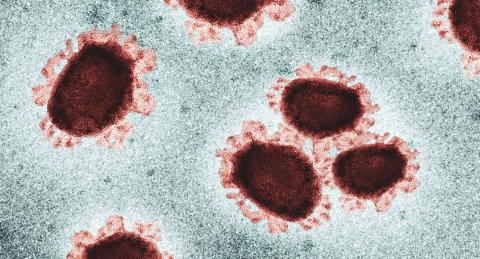
A US team has analysed the presence of beta-amyloid deposits – which are linked to Alzheimer's disease – in the post-mortem retinas of four people with covid-19 and found that they were larger than in four people without covid. In complementary experiments, the SARS-CoV-2 spike protein in retinal organoids produced an increase in deposits, while the use of a drug that blocks the virus from binding to neurons reduced their accumulation. The results are published in the journal Science Advances.

If immunisation rates continue to decline over an extended period, measles and even other eradicated diseases—such as rubella and polio—could re-emerge in the United States at endemic levels, according to a new study published today in the journal JAMA.
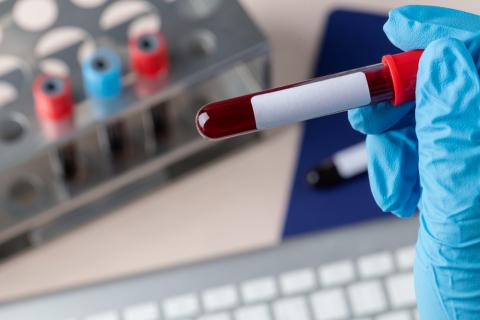
An international team with Spanish participation has analysed the usefulness of a blood biomarker - the p-tau217 protein - for detecting Alzheimer's disease in 1,767 patients. According to the authors, who publish the results in the journal Nature Medicine, the test has detected the disease with high reliability in four hospital cohorts, as well as in a primary care cohort. They add that it is an assay that can be easily implemented in clinical laboratories and is already routinely used in some centres in Spain.