Spanish Society for Neuroscience (SENC)
If you are the contact person for this centre and you wish to make any changes, please contact us.
Professor of Anatomy and Embryology at the University of the Basque Country, founding scientific director of the Achúcarro Neuroscience Centre in Bilbao and president of the Spanish Society of Neuroscience (SENC)
Head of the Experimental Neurophysiology Group at the Research Unit of the Hospital Nacional de Parapléjicos, member of the Castilla-La Mancha Health Service (SESCAM), the Castilla-La Mancha Health Research Institute (IDISCAM) and the Spanish Society of Neuroscience (SENC)
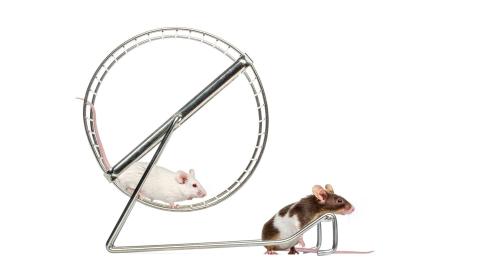
Various studies have shown that exercise benefits the brain. Now, an international team has studied in mice how physical activity affects the brain and how these changes influence the effects of exercise. The research, published in Neuron, has shown that physical activity causes brain changes in a region of the hypothalamus involved in how the body uses energy and in regulating blood sugar. If these neurons were blocked immediately after exercise, the animals showed no improvement in endurance or metabolism with training. The authors suggest that activating these neurons may help the body recover faster, allowing other parts, such as the muscles, lungs, and heart, to adapt more quickly to more intense workouts.
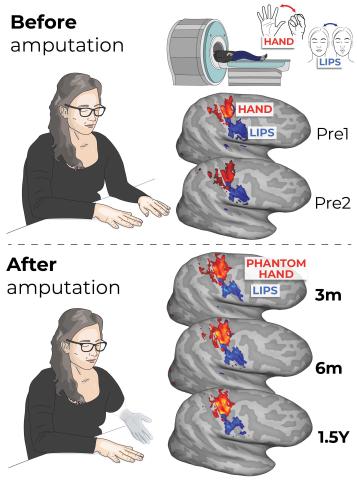
Various studies claimed that the loss of a limb caused a reorganisation of the “body map” integrated in the brain: neighbouring regions invaded and reused the brain area that previously represented the amputated limb. But a new study refutes this theory. Cortical representation remains stable even when the body suffers the loss of a limb. The team, which published its study in Nature Neuroscience, analysed three people who were about to undergo amputation of one of their hands, studying for the first time the maps of the hand and face before and after amputation, with follow-up for up to five years. Even without the hand, the corresponding brain region was activated in an almost identical way.