Spanish Fertility Society
If you are the contact person for this centre and you wish to make any changes, please contact us.
Scientific Director of the UR International Group and Coordinator of the Ethics Group of the Spanish Fertility Society

A study published in the journal Cell Host & Microbe analysed endometrial samples from 149 women aged between 20 and 45 who were undergoing treatment for infertility. The younger patients had a significantly higher abundance of a beneficial bacterium called Lactobacillus gasseri, the presence of which decreased with age. Furthermore, pregnant women had a higher abundance of these bacteria in the endometrium. In mouse models, older animals showed higher rates of embryo implantation when treated with L. gasseri derivatives. Despite these findings, the authors emphasise that further research is needed and warn women against self-medicating with over-the-counter L. gasseri products, as their effectiveness in treating infertility has not been validated.
Between 1990 and 2023 in Spain, cases of infertility among women aged between 35 and 49 rose from around 975 cases per 100,000 women in this age group to 2,226 cases per 100,000, figures that are below the European average. Overall, this age-adjusted prevalence rose in all regions of the world during the same period. The study has been published in The Lancet Obstetrics, Gynecology, & Women’s Health.
A systematic review with a meta-analysis published in The Lancet Obstetrics, Gynecology, & Women’s Health concludes that there is insufficient evidence that most complementary treatments for in vitro fertilization (IVF) improve fertility in patients undergoing this procedure. Some of these techniques involve introducing platelet-rich plasma into the uterus or ovaries, administering a lipid infusion into the bloodstream, administering corticosteroids, or performing preimplantation genetic testing to detect aneuploidies—that is, abnormalities in chromosome number. According to the study, which included 85 clinical trials, there is only evidence—albeit of low quality—suggesting a possible benefit from three treatments: EmbryoGlue—a method of embryo transfer containing hyaluronic acid—endometrial scraping, and physiological intracytoplasmic sperm injection—a technique for selecting sperm.
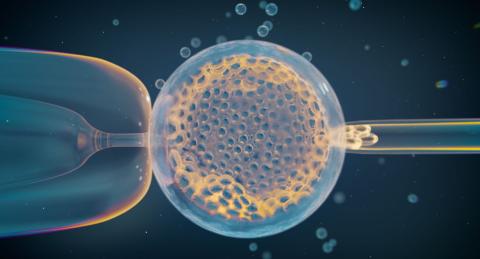
Around 15% of recognized pregnancies end in miscarriage, and it is estimated that almost half of all conceptions are lost in early stages, without people even realizing it. Now, a team from the United States and Denmark has analyzed data from more than 139,000 embryos from in vitro fertilization of nearly 23,000 couples and has found several genetic variants associated with a higher risk of miscarriage. Many of these are associated with meiosis, a key cell division process in sex cells. The authors, whose study is published in Nature, acknowledge that the new data will not allow for a precise estimation of individual risk, because the most important factors remain age and environmental elements.
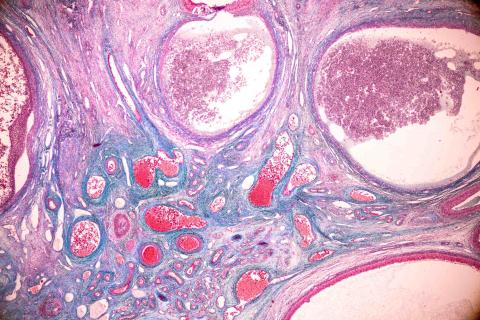
The decline in egg quality has been considered the main cause of declining fertility with age. A new study published in Science shows that the cells and tissues surrounding the oocytes within the human ovary also play a crucial role. They identified 11 types of cells in the ovaries, including nervous system cells, that influence follicle development. In addition, they have discovered that oocytes are grouped into “pockets” within the ovary and that the density within these pockets declines over the years.
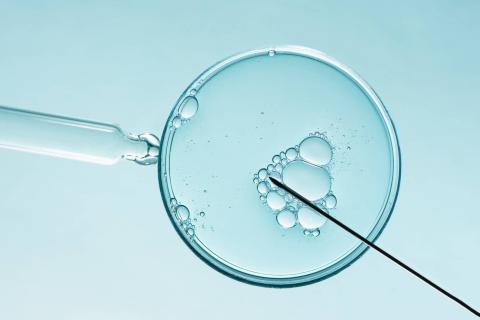
An international team has succeeded in generating fertilisable human eggs from skin cells using a novel technique. According to the authors, the study offers a way to address infertility, although they acknowledge that further research is needed to ensure efficacy and safety before future clinical applications. Of the 82 functional oocytes generated and fertilised, only 9% developed to day 6, when the experiment ended. In addition, the embryos had chromosomal abnormalities. The results are published in the journal Nature Communications.

A Canadian team analysed samples from women undergoing in vitro fertilisation and found that higher concentrations of THC metabolites—the main psychoactive substance in cannabis—were associated with a higher rate of oocyte maturation and a lower number of embryos with the correct number of chromosomes. The latter could be replicated at similar concentrations under laboratory conditions. The authors, who published their findings in the journal Nature Communications, acknowledge that the study does not have sufficient statistical power to draw conclusions, but it does warn of possible risks to women's fertility.
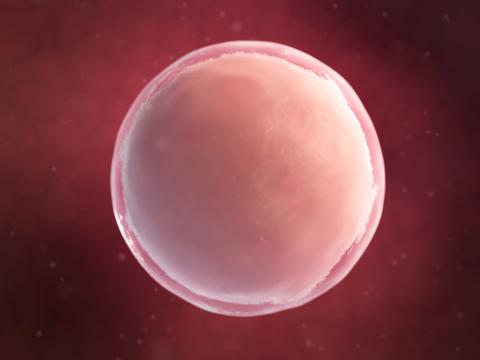
In oocytes, mitochondrial DNA mutations do not increase with age in women, says a study published in Science Advances. The study detected mutations in different cells of 22 women between the ages of 20 and 42, and found that the mutations were more numerous in blood and saliva cells of older women, but not in their oocytes.
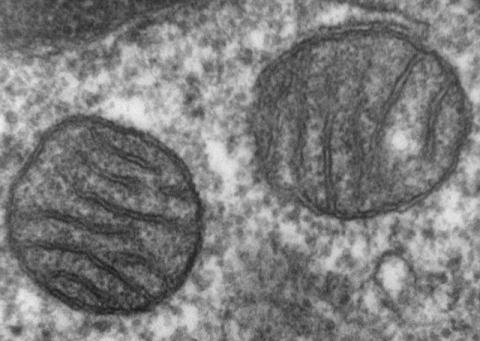
In 2015, the United Kingdom became the first country to pass legislation allowing the use of mitochondrial donation technology, pronuclear transfer. The technique is designed to limit, through in vitro fertilization, the transmission of mitochondrial DNA diseases in babies born to women who are at high risk, and for which there is no cure. Two studies published in the New England Journal of Medicine (NEJM) describe the results of the first treatments performed to date, from which eight babies have been born by mitochondrial donation, with reduced risk of disease.

A research team from Murcia has found several types of microplastics in 69% of follicular fluid samples from 29 women and 55% of seminal fluid samples from 22 men, according to a presentation at the annual meeting of the European Society of Human Reproduction and Embryology (ESHRE), being held from 29 June to 2 July in Paris, France. The most frequent polymer in both types of samples was polytetrafluoroethylene (PTFE). The abstract of the research is published in the journal Human Reproduction.