Foundation for the Promotion of Health and Biomedical Research of Valencia Region (FISABIO)
If you are the contact person for this centre and you wish to make any changes, please contact us.
Professor of Genetics at the University of Valencia and researcher of the Genomics and Health Area at the Foundation for the Promotion of Health and Biomedical Research of the Valencian Community (Fisabio)
Professor of Genetics at the University of Valencia and researcher at the mixed unit Infection and Public Health FISABIO/Universitat de Valencia
Senior Researcher at FISABIO-Dr. Peset University Hospital
Epidemiologist, researcher in the Health Services and Pharmacoepidemiology Research Area of the Foundation for the Promotion of Health and Biomedical Research of the Valencian Community (FISABIO) and Director of Gaceta Sanitaria, the scientific journal of the Spanish Society of Public Health and Health Administration (SESPAS)

An international team of researchers publishes a review of the complex environmental impacts of genetically modified crops in the journal Science. According to the study, widespread adoption by some of the world's largest agricultural countries has had mixed results for biodiversity, deforestation and human health, depending on the specific characteristics of these crops and the regions involved.

Since mid-October, northern China has reported an increase in influenza-like illness compared to the same period in the previous three years. On 21 November, the media and the ProMED system reported outbreaks of pneumonia of undiagnosed cause in children in northern China. According to the World Health Organization (WHO), it is unclear whether these are related to the overall increase in respiratory infections previously reported by the Chinese authorities or are separate episodes. In a statement, the WHO has officially requested detailed information from China on this increase in respiratory illnesses and outbreaks of childhood pneumonia.
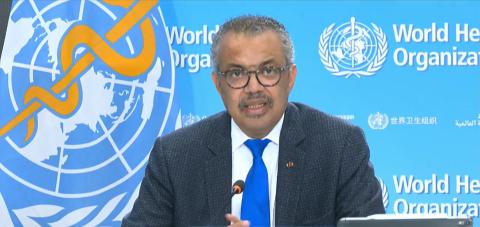
The World Health Organisation (WHO) Emergency Committee met on 4 May to assess whether covid-19 could continue to be considered a health emergency of international concern (PHEIC). The organisation's director general, Tedros Adhanom, has followed its recommendation and ended the emergency declared on 30 January 2020. "It is with great hope that I declare that covid-19 has ended as a global health emergency. However, this does not mean that covid-19 is no longer a threat to global health. Last week, it claimed one life every three minutes, and that's just the deaths we know about," he told a press conference.

Research analysing data from more than 100,000 people in the UK followed for nearly a decade concludes that a higher intake of free sugars - added sugars or those naturally present in honey and fruit juice - is associated with an increased risk of cardiovascular disease. The study is published in BMC Medicine.

The World Health Organisation's (WHO) International Health Regulations Committee on Emergencies has decided to maintain the covid-19 pandemic as a Public Health Emergency of International Concern (PHEIC) after meeting last Friday.

The Minister of Health, Carolina Darias, announced today at a press conference that in view of the increase in cases of covid-19 in China following the end of the covid zero policy, Spanish airports are going to require passengers arriving from that country to take a negative test for covid-19 or a complete vaccination schedule. The first flight affected by health control measures will arrive at Adolfo Suárez Madrid-Barajas Airport at 18:00 on 31 December.

The end of the zero covid policy in China is leading to an increase in the number of cases and has revived the question of whether the epidemiological situation in China could favour the emergence of new variants of the SARS-CoV-2 coronavirus.
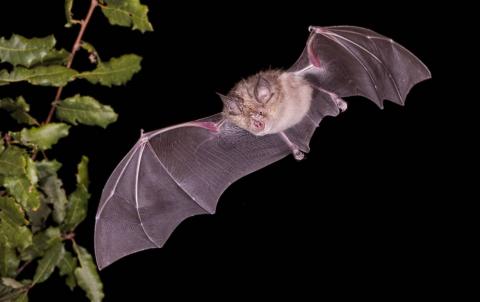
A sarbecovirus distantly related to SARS-CoV-2 and found in horseshoe bats in Russia is able to enter human cells using the ACE2 receptor, according to research published in PLOS Pathogens.
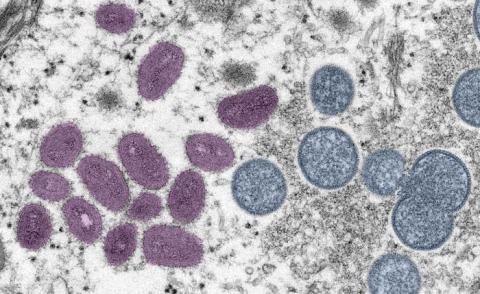
A genomic analysis of monkeypox viruses from patients in the ongoing outbreak reveals that it most likely has a single origin. This 2022 monkeypox virus diverges from those of 2018-2019 in many more genetic variations than expected for Orthopoxviruses, which may represent ongoing accelerated evolution, according to the authors. The study is published in Nature Medicine.

The Minister of Health, Carolina Darias, today announced that face masks will no longer be compulsory indoors after Easter. The measure will come into force on 20 April. It will continue to be compulsory in public transport, health centres and residences, but the final details of the new scenario are not yet known.