Foundation for the Promotion of Health and Biomedical Research of Valencia Region (FISABIO)
If you are the contact person for this centre and you wish to make any changes, please contact us.
Professor of Genetics at the University of Valencia and researcher of the Genomics and Health Area at the Foundation for the Promotion of Health and Biomedical Research of the Valencian Community (Fisabio)
Professor of Genetics at the University of Valencia and researcher at the mixed unit Infection and Public Health FISABIO/Universitat de Valencia
Senior Researcher at FISABIO-Dr. Peset University Hospital
Epidemiologist, researcher in the Health Services and Pharmacoepidemiology Research Area of the Foundation for the Promotion of Health and Biomedical Research of the Valencian Community (FISABIO) and Director of Gaceta Sanitaria, the scientific journal of the Spanish Society of Public Health and Health Administration (SESPAS)
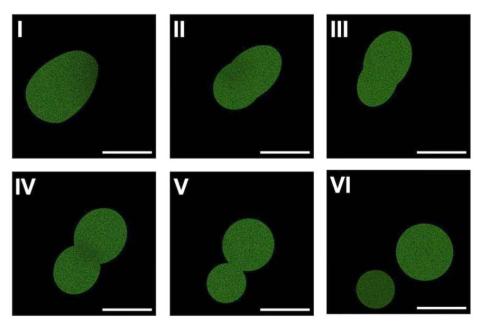
The team led by scientist Kate Adamala of the University of Minnesota has released the news—under an embargo—to several media outlets regarding the creation of a synthetic cell capable of feeding, growing, and replicating, which they have named Spudcell. Their work, which, according to Science News, was rejected by the journal Cell, is published on the team’s website, pending peer review.

Amid an unprecedented international security and coordination operation, the MV Hondius has arrived at the port of Granadilla, in Tenerife, where epidemiologists and members of the Foreign Health Service will examine the passengers and crew, who have not shown any symptoms of hantavirus so far. Once assessed, they will leave the ship, which is moored in a dock, in small boats to the port, grouped by nationality – they come from 23 different countries. From there, they will board military vehicles to reach Tenerife South Airport, from where they will be repatriated on various flights. The 14 Spaniards and a member of the WHO from Africa are bound for Gómez Ulla Hospital (Madrid) to undergo quarantine. Once the process is complete, the cruise ship will refuel and sail to the Netherlands with part of the crew on board and the body of one of the three fatalities.

The Ministry of Health has announced that Spain will receive the MV Hondius in the Canary Islands “in accordance with international law and the spirit of humanitarianism”. The government is thus responding to a request from the World Health Organisation (WHO) and the European Union for the cruise ship, which is travelling from Argentina and has an outbreak of hantavirus on board, to dock in the Canary Islands, in the port of Granadilla, Tenerife. The European Centre for Disease Prevention and Control has assessed which passengers should be evacuated from the ship to Cape Verde, where it is currently located, and which will continue on to the Canary Islands. Once there, they will be examined and transferred to their home countries in accordance with safety protocols. The cruise ship is expected to arrive in the archipelago in three or four days.

The World Health Organization (WHO) has reported a public health event involving a cruise ship sailing in the Atlantic Ocean that departed from Argentina. To date, two cases of hantavirus infection—generally acquired through exposure to the urine or feces of infected rodents—have been laboratory-confirmed, and there are five additional suspected cases. Of these seven individuals, three have died, and one is currently in intensive care in South Africa. “The risk to the general population remains low. There is no reason to panic or impose travel restrictions,” said Hans Henri P. Kluge, WHO Regional Director for Europe.
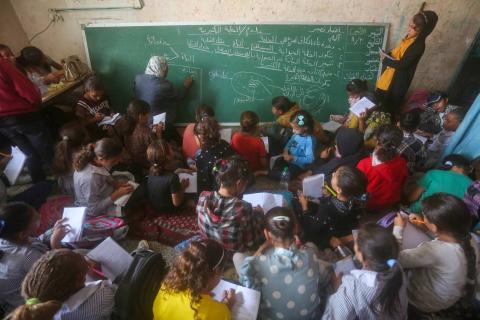
An international report led by the University of Cambridge (United Kingdom) warns that there is a serious risk of a ‘lost’ generation emerging in Gaza, due to the combination of educational, physical and psychological impacts after more than two years of the Israeli invasion. As of 1 October 2025, the UN Office for the Coordination of Humanitarian Affairs (OCHA) reported the deaths of 18,069 students and 780 education personnel in Gaza, with 26,391 students and 3,211 teachers injured. The study estimates that children in Gaza will have lost the equivalent of five years of education due to repeated school closures since 2020, first due to COVID-19 and then due to the Israeli invasion.
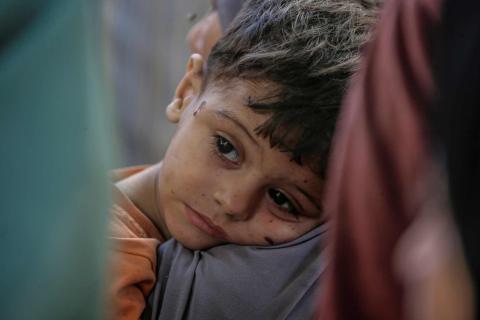
Through surveys of 78 healthcare workers in Gaza between August 2024 and February 2025, an international team has documented patterns of injuries among the civilian population during Israel's ongoing invasion. The most common traumatic injuries were burns, followed by injuries to the lower and upper limbs. Explosion damage accounted for most of the weapon-related trauma, which particularly affected the head, while gunshot wounds were mainly located in the lower limbs. The study is published in The BMJ.
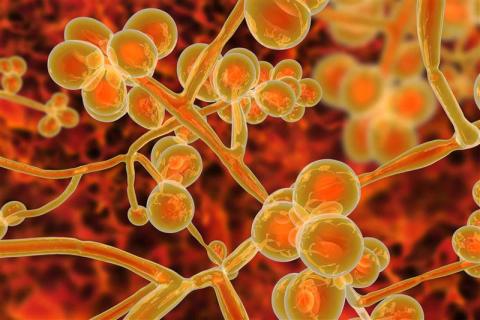
Infections caused by the fungus Candidozyma auris—formerly known as Candida auris—continue to rise, warns a report by the European Centre for Disease Prevention and Control (ECDC). Spain reported 1,807 of the 4,012 cases in 36 European countries between 2013 and 2023, the highest number ahead of Greece (852 cases) and Italy (712), according to the survey. This microorganism spreads particularly in hospitals, causing infections that are often resistant to existing drugs.

Today the Spanish Parliament rejected the creation of the State Public Health Agency, a proposal that had been envisaged since the Public Health Act of 2011 and whose idea of implementation had resurfaced after the pandemic.

The new US president, Donald Trump, announced on his first day that the country will leave the World Health Organisation (WHO) within the next twelve months. The reasons behind the decision, according to him, are the ‘mismanagement of the covid-19 pandemic and other global health crises’, as well as ‘disproportionate payments compared to other countries’ dues’.
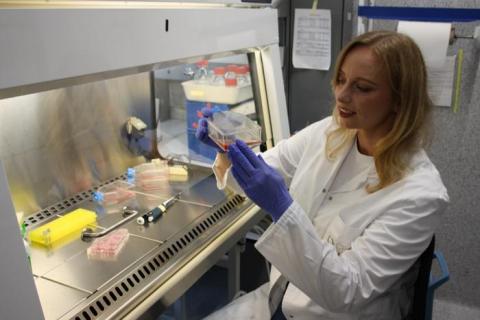
A team of researchers led by the Center for Genomic Regulation in Barcelona has mapped the human spliceosome for the first time. This complex and partially unknown cellular machinery is responsible for cutting and splicing the RNA fragments encoded by genes in different ways, making it possible to obtain a wide variety of proteins from the same sequence. Its alteration is related to processes such as cancer, neurodegenerative processes or various rare diseases. According to the researchers, who publish the results in the journal Science, “by knowing exactly what each part does, we can find completely new angles to address a broad spectrum of diseases”.