Donostia University Hospital
If you are the contact person for this centre and you wish to make any changes, please contact us.
Clinical Head of Neurology at the University Hospital of Donostia, Scientific Director of CIBERNED and Research Director of the Neurosciences area of ISS Biodonostia
Specialist in Digestive System at Donostia University Hospital, coordinator of the Liver and Gastrointestinal Diseases Area at the Biogipuzkoa Institute and professor of Medicine at the University of the Basque Country (UPV/EHU)
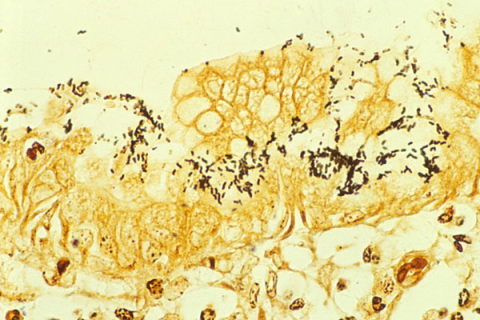
Infection with the bacterium Helicobacter pylori is a known risk factor for stomach cancer. Its link to colorectal cancer, however, remains an unconfirmed hypothesis. An international team has reviewed 43 studies on this subject and found that 22 per cent of colorectal cancer cases could potentially be linked to this infection, although when they selected the 14 most reliable studies, the figure fell to 12 per cent. According to the authors, exposure to Helicobacter pylori could be contributing significantly to the number of cases of colon cancer worldwide, but they point out that their study is only exploratory and that more robust research, such as clinical trials, is needed to establish a causal link. The results have been published in eGastroenterology.

Several recent studies had concluded that the risk of gastric cancer doubled with the use of drugs such as omeprazole – proton pump inhibitors. A new study published in The BMJ states that there is no association between prolonged use of these drugs and the risk of gastric adenocarcinoma. The research used prospective data from registries in Denmark, Finland, Iceland, Norway, and Sweden between 1994 and 2020. The study included more than 17,000 patients with gastric adenocarcinoma (other than cardia cancer) who had been exposed to these drugs for more than one year.

Researchers in the United States have used stem cells created from patients with a very rare type of ALS, more prevalent in Brazil, to target a key gene in the stress response and reverse the damage suffered by motor neurons in the laboratory. They believe it is "a promising proof-of-concept for future therapeutic strategies" and "could help lay the foundation for genetically informed clinical trials".

The New England Journal of Medicine reports the publication of data from a clinical trial studying the drug Tofersen against a form of Amyotrophic Lateral Sclerosis (ALS) caused by mutations in the SOD1 gene, which accounts for 2% of sporadic ALS. Six months after treatment, some biomarkers of neuronal damage improved, but not the clinical condition of the patients. In an extension of the study, with no placebo group, a slowing of functional loss was observed, although the researchers acknowledge that there are limitations in interpreting this result.