
CREAF
If you are the contact person for this centre and you wish to make any changes, please contact us.
Marine biologist, responsible for policy interaction and institutional relations at the Centre for Ecological Research and Forestry Applications (CREAF) presente in Belém (Brazil)
Member of the Water and Global Change Research Group at the Centre for Research in Ecology and Forestry Applications (CREAF), at the Autonomous University of Barcelona
Postdoctoral researcher at the Institut de Biologia Evolutiva (CSIC- Universitat Pompeu Fabra).
CSIC research professor at CREAF (Centre for Ecological Research and Forestry Applications)
Researcher at CREAF. Researcher associated with the CTFC.
CREAF researcher, member of MedeCC (Mediterranean Experts on Climate Change and Environment) and author of the MAR1 report
Professor of Ecology at the Autonomous University of Barcelona and CREAF researcher
CSIC research professor at CREAF
CSIC researcher at CREAF and co-coordinator of the Laboratory for Biodiversity and Landscape Ecology
CREAF researcher, scientific director of the Catalan Institute of Ornithology and president of the European Bird Census Council
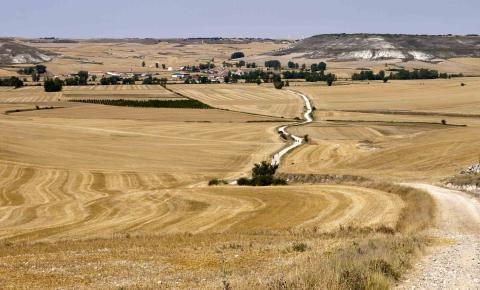
Next Monday, 17 August, COP17 on desertification gets underway in Ulaanbaatar (Mongolia). This is the first of three environmental summits to be held this year. The next event will be in Yerevan (Armenia), where the COP17 on biodiversity will be held from 19 to 30 October, and the year will conclude with the COP31 on climate change, which will take place in Antalya (Turkey) from 9 to 20 November and will be co-chaired by Australia. Why has there been no proposal for a single summit encompassing all three? Would a climate summit held every two years, like those on biodiversity and desertification, be more appropriate? With the United States out of the picture, who is leading them? To answer these and other questions, SMC Spain organised a briefing session with experts who have extensive experience of this type of summit.
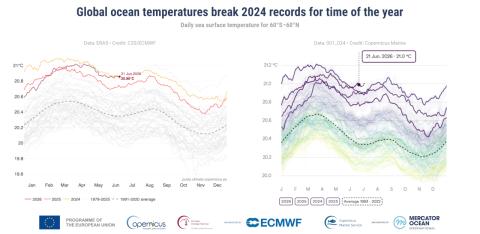
Two Copernicus services have independently confirmed that global sea surface temperatures have broken records for this time of year. Daily data from the Copernicus Climate Change Service exceeded the 2024 levels on 21 June, reaching 20.86 °C, higher than the 20.83 °C recorded in 2023 and 2024. Data from the Copernicus Marine Watch Service show temperatures of 21.0 °C on 21 June, beating the 2023 and 2024 records by 0.1 °C. This unprecedented warming is linked to the onset of El Niño (announced by the WMO and declared by NOAA on 11 June) and to record-breaking sea surface temperatures in the North Pacific; consequences are anticipated for weather patterns, the global climate and marine ecosystems.
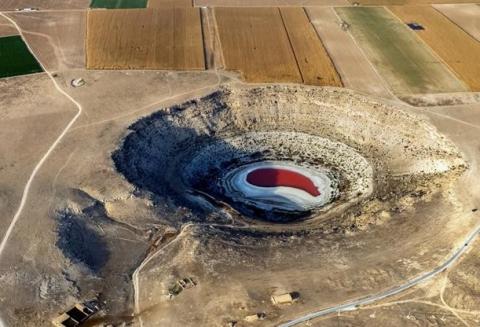
A new report from the United Nations University Institute for Water, Environment and Health (UNU-INWEH) toughens the discourse on the current water emergency by referring to an era of "global water bankruptcy". According to the report, the terms "water stress" or "water crisis" are no longer sufficient, as we find ourselves in a situation that goes beyond a temporary crisis, characterised by irreversible losses of natural water resources and the inability to return to historical levels. The report points out that, although not all basins are in water bankruptcy, "enough critical systems around the world have crossed these thresholds" and are interconnected through trade, migration, climate or geopolitics.
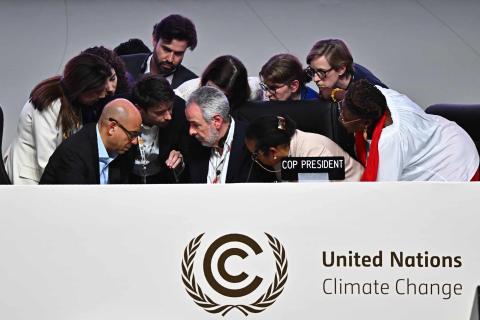
One day after the deadline, COP30 in Belém (Brazil) has finally reached a minimal agreement. The text does not mention a roadmap for abandoning fossil fuels, as requested by more than 80 states, including the European Union. The agreement states that countries agreed to accelerate climate action and triple funding for developing countries facing extreme weather events.
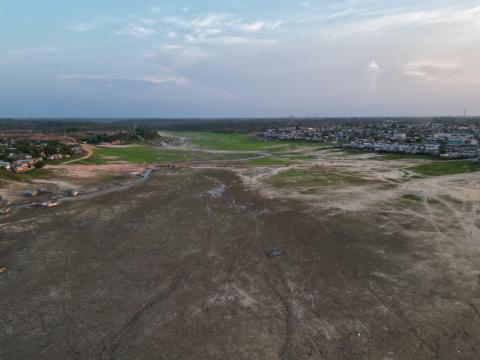
Lakes are considered sentinels of climate change, although most research has focused on temperate regions. An international team analysed 10 tropical lakes in the central Amazon during the 2023 drought, which caused high mortality among fish and river dolphins. Using satellite data and hydrodynamic models, the authors show how intense drought and a heatwave combined to raise water temperatures: five of the 10 lakes experienced very high daytime temperatures, exceeding 37°C. Specifically, temperatures in the shallow waters of Lake Tefé soared to 41°C—hotter than a thermal bath. The study is published in Science.
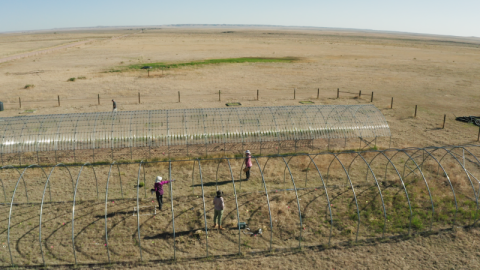
Some ecosystems are able to adapt to moderate droughts, even if they last for several years. However, in scrublands and grasslands, when the phenomenon is extreme and prolonged, their capacity to store carbon plummets. This is the main conclusion of an international study that has assessed the effects of the duration and severity of droughts on the productivity of 74 grassland and pasture ecosystems on six continents. According to the authors, the most vulnerable areas are arid and semi-arid regions, such as those in the Mediterranean region and the southwestern United States. The study, published in Science, involves CREAF, CSIC and IICG-URJC, among other centres.
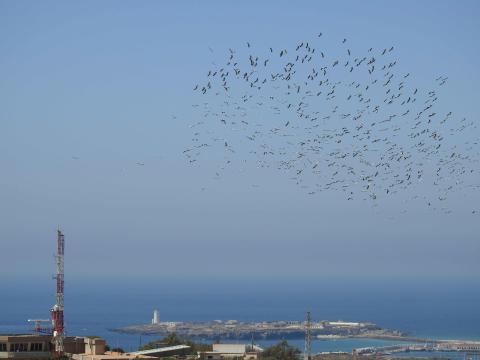
Migratory birds are particularly affected by the climatic, ecological and urban changes resulting from the constantly changing world in which we live. Their survival is at risk, as are the ecosystems in which they live. We analyse the threats they face on a cyclical basis during their migratory routes and why it is important to protect them.
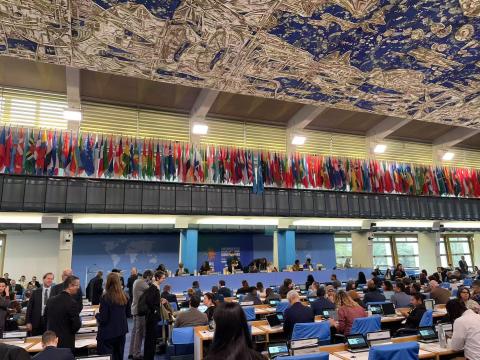
The 16th meeting of the United Nations Conference on Biodiversity (COP16) in Rome has concluded with an agreement to adopt the first global plan for financing nature conservation, after three days of meetings. This meeting meant resuming the negotiations that began last October in Cali (Colombia), where the parties failed to reach an agreement on how to finance the Kunming-Montreal Global Biodiversity Framework reached at COP15, which aims to protect a third of the land and oceans by 2030.
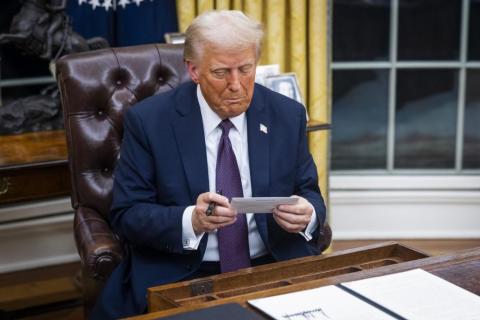
As announced, the new US president, Donald Trump, has signed on his first day in office an executive order for the United States to withdraw from the Paris Agreement. This is the second time Trump has withdrawn his country from the signatory states of the most important climate change agreement, as he did in 2020.
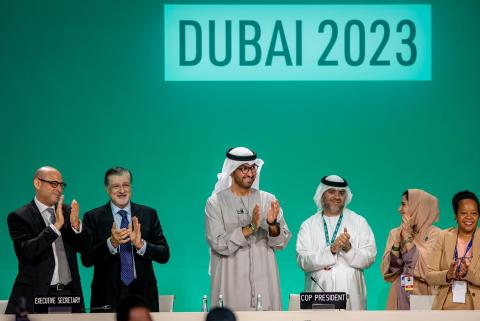
After an intense night of negotiations in Dubai (United Arab Emirates), the countries participating in COP28 reached a historic agreement by mentioning for the first time "moving away from fossil fuels" in the Global Stocktake document - the assessment of progress made towards achieving the climate goals set out in the Paris Agreement. The agreement comes after the first draft presented by the presidency did not make this mention - it referred only to "reducing consumption and production" of these fuels - which was described as "unacceptable" by countries such as Spain.