
Centre for Genomic Regulation (CRG)
If you are the contact person for this centre and you wish to make any changes, please contact us.
ICREA research professor at the Centre for Genomic Regulation (CRG) in Barcelona
Researcher specialising in mechanisms of mRNA translation regulation and cancer.
Researcher at the Center for Genomic Regulation
Head of the Biological Systems Design Group at the Center for Genomic Regulation and member of the European Molecular Biology Organization (EMBO)
Researcher at the Center for Genomic Regulation
ICREA professor, researcher at the Universitat Pompeu Fabra (UPF), director of the Transcriptomics of Vertebrate Development and Evolution group at the Center for Genomic Regulation (CRG) in Barcelona.
Neurobiologist specializing in Down syndrome, head of the Cellular and Systems Neurobiology Group at the Center for Genomic Regulation (CRG), and president of the Spanish Brain Council and the Spanish Association for the Advancement of Science
ICREA Research Professor at the Centre for Genomic Regulation and the National Centre for Genomic Analysis (CNAG)
Team Leader at the Centre de Regulació Genòmica (CRG)

Un equipo internacional en el que participa Roderic Guigó, del Centro de Regulación Genómica de Barcelona, ha elaborado el mapa más detallado hasta la fecha de los enhancers, o potenciadores, regiones del ADN que controlan los genes humanos y que funcionan como reguladores de intensidad. En el trabajo, desarrollado por el consorcio ENCODE, se han trazado más de 92 millones de posibles interacciones entre estos reguladores y los genes sobre los que actúan en distintas células y tejidos. Esta información puede ser importante para comprender las enfermedades, ya que buena parte de las variantes genéticas que se han asociado a trastornos comunes no se encuentran dentro de los propios genes, sino en regiones reguladoras. El estudio se publica en Nature.
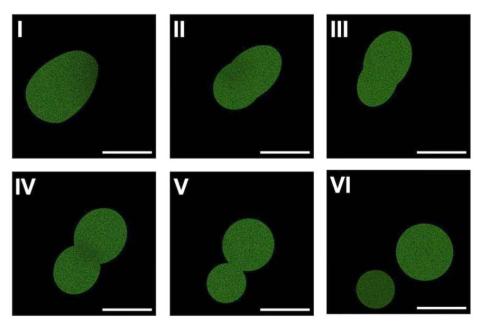
The team led by scientist Kate Adamala of the University of Minnesota has released the news—under an embargo—to several media outlets regarding the creation of a synthetic cell capable of feeding, growing, and replicating, which they have named Spudcell. Their work, which, according to Science News, was rejected by the journal Cell, is published on the team’s website, pending peer review.
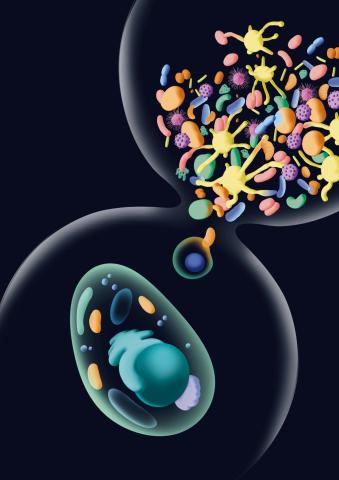
The origin and the process by which eukaryotic cells arose remains one of the great unanswered questions in biology, with Lynn Margulis’s theories regarding the incorporation of a bacterium that would later become the mitochondrion marking a major turning point. Now, Spanish research carried out by IRB Barcelona and the Barcelona Supercomputing Center challenges this view. Without denying the role of mitochondria, it suggests that the process was longer and more complex than previously thought, stretching over hundreds of thousands of years. At least two other different bacteria contributed to the development of eukaryotic cells, and giant viruses appear to have acted as vehicles for genetic transfer. The findings, published in Nature, suggest a much more protracted and gradual process of exchange between microorganisms.

A study published in Science analyzed more than 100,000 human neocortical cells from weeks 13 to 23 of gestation, when cortical neurons are generated. The samples came from 26 donors, some with and others without Down syndrome. Using single-cell genomics, they observed how trisomy 21 disrupts the developmental sequence of various types of neurons, which could explain subsequent differences in cognition. A second study in the same journal, which examines the postnatal brains of children with Down syndrome, finds that many of these changes persist into childhood. The authors note that their study will not have short-term clinical applications, but they hope it can be used to develop specific drugs or create gene therapies.
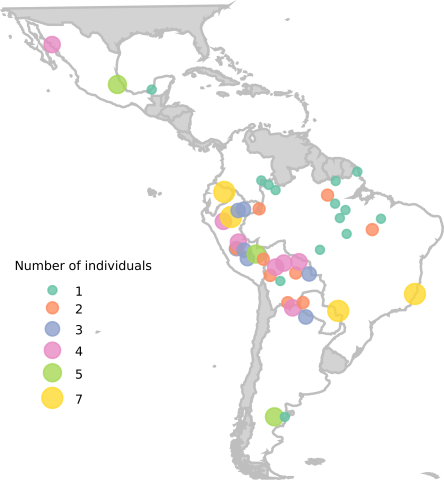
An international team led by the Institute of Evolutionary Biology (IBE), a joint center of the Spanish National Research Council (CSIC) and Pompeu Fabra University (UPF), has compiled the largest genetic database of Native American populations to date, including 128 new complete genomes. The research identified more than one million genetic variants not previously observed in other populations, revealing a unique genetic diversity. According to the authors, who published their work in Nature, “these results demonstrate the need to better represent these populations in genomics.”

The Royal Swedish Academy of Sciences has awarded the Nobel Prize in Chemistry 2024 on the one hand to David Baker for computational protein design, which makes it possible to construct proteins with functions not present in nature. On the other hand, jointly to Demis Hassabis and John M. Jumper of Google DeepMind, for the development of AlphaFold2, which allows the structure of the 200 million known proteins to be predicted at high speed.

The Karolinska Institute has awarded the Nobel Prize in Medicine or Physiology to Victor Ambros and Gary Ruvkun for the discovery of microRNAs, small RNA fragments that do not contain instructions for making proteins but instead participate in the regulation of gene expression. Their role is fundamental in processes such as cell differentiation, and their alteration can influence diseases like cancer.
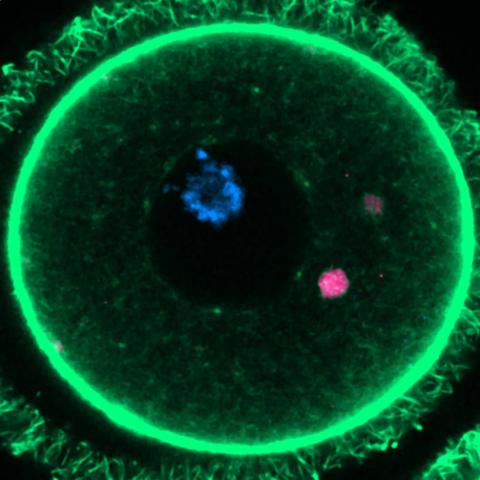
At an informative meeting organized by the Science Media Centre Spain, the coauthor of a paper published this week in the journal Cell discussed his findings with journalists. Although the study was conducted with mice, he is confident in being able to analyze human eggs to see if his conclusions could explain the loss of fertility that occurs in women with age.

In a series of three articles and a companion article - collected in Nature Biotechonology - Nature publishes the first draft of the human pangenome reference, which contains highly detailed data from 47 genetically diverse individuals. The first human genome was published more than two decades ago but, being from a single person, it does not represent human diversity, whereas the pangenome refers to the gene pool of our entire species. The ultimate goal of the Human Pangenome Reference Consortium project is to include genetic material from 350 people by 2024. It is hoped that this data will allow more clinically relevant genetic variants to be identified.

Researchers have tested a gonadotropin-releasing hormone (GnRH) therapy in mouse models and in males (in a pilot clinical trial) with Down's syndrome. The results, published in the journal Science, suggest improved cognitive function.