Castile and León Institute of Neuroscience
If you are the contact person for this centre and you wish to make any changes, please contact us.
Head of the Degenerative Disorders of the Visual System group at the Castile and León Institute of Neuroscience and professor at the University of Salamanca
Professor of Cell Biology at the University of Salamanca and principal investigator at the Institute of Neurosciences of Castile and León

A study published in Science analyzed more than 100,000 human neocortical cells from weeks 13 to 23 of gestation, when cortical neurons are generated. The samples came from 26 donors, some with and others without Down syndrome. Using single-cell genomics, they observed how trisomy 21 disrupts the developmental sequence of various types of neurons, which could explain subsequent differences in cognition. A second study in the same journal, which examines the postnatal brains of children with Down syndrome, finds that many of these changes persist into childhood. The authors note that their study will not have short-term clinical applications, but they hope it can be used to develop specific drugs or create gene therapies.
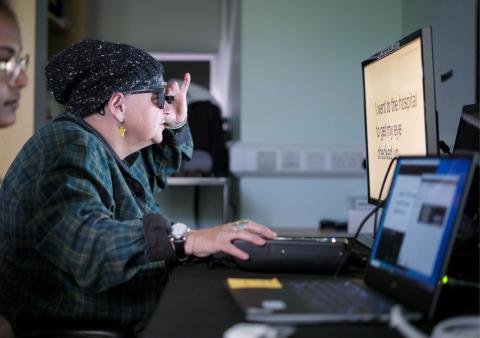
Age-related macular degeneration (AMD) is the leading cause of irreversible blindness and there is no treatment that can restore vision. Now, an international team has tested a device that combines a small wireless chip implanted in the back of the eye with high-tech glasses. The scientists have managed to partially restore vision in people with an advanced form of the disease. Specifically, 26 of the 32 people who completed the trial had clinically significant improvement and were able to read. The results are published in the journal NEJM.