Toni Gabaldón

Toni Gabaldón

Toni Gabaldón
Position

ICREA research professor and head of the Comparative Genomics group at the Institute for Research in Biomedicine (IRB Barcelona) and the Barcelona Supercomputing Center (BSC-CNS).

An opinion piece refutes studies linking gut microbiota and autism

There is no solid scientific evidence that alterations in the gut microbiota cause autism, according to an opinion piece published in the scientific journal Neuron. The research supporting this hypothesis—observational studies and clinical trials in humans, as well as mouse models—has both conceptual and methodological shortcomings, the authors write.

0

A study in mice suggests that faecal microbiota transplantation could have unexpected effects on other areas of the digestive system

An international study has warned of the potential risks of widespread use of faecal microbiota transplantation without taking into account the region of the intestine where the transferred microbes arrive. The experiment, conducted on mice and human tissue samples, showed that the microbes from the transplant—mostly anaerobic microbes from the colon—colonised the small intestine, persisted there for months and modified that new environment, causing changes in the host's metabolism. According to the authors, whose study is published in the journal Cell, this may have long-lasting and unforeseen consequences, as well as imbalances in the intestinal ecosystem of patients.


0

Specific species of microbiota associated with severity of multiple sclerosis

A team from the University of Iowa (USA) has found a relationship between specific species of microbiota bacteria and the severity of multiple sclerosis. Specifically, a lower ratio between the quantities of Bifidobacterium and Akkermansia was related to the disease and to a worse course of the disease, both in mice and in two cohorts of patients and people without the disease. According to the authors, who publish the results in the journal PNAS, the finding could be used to improve the diagnosis and treatment of multiple sclerosis.

0

Synthetic microbiome therapy eliminates intestinal infection in mice without using antibiotics

A synthetic microbiome therapy, tested on mice, protects against the severe symptoms of a difficult-to-treat and potentially fatal intestinal infection in humans: Clostridioides difficile. Although inspired by the idea of human faecal transplants, the new approach does not require faecal matter. Instead, it uses fewer, but more precise, bacterial strains. The study is published in the journal Cell Host & Microbe.

0
Genital microbiome could help identify sexual offenders

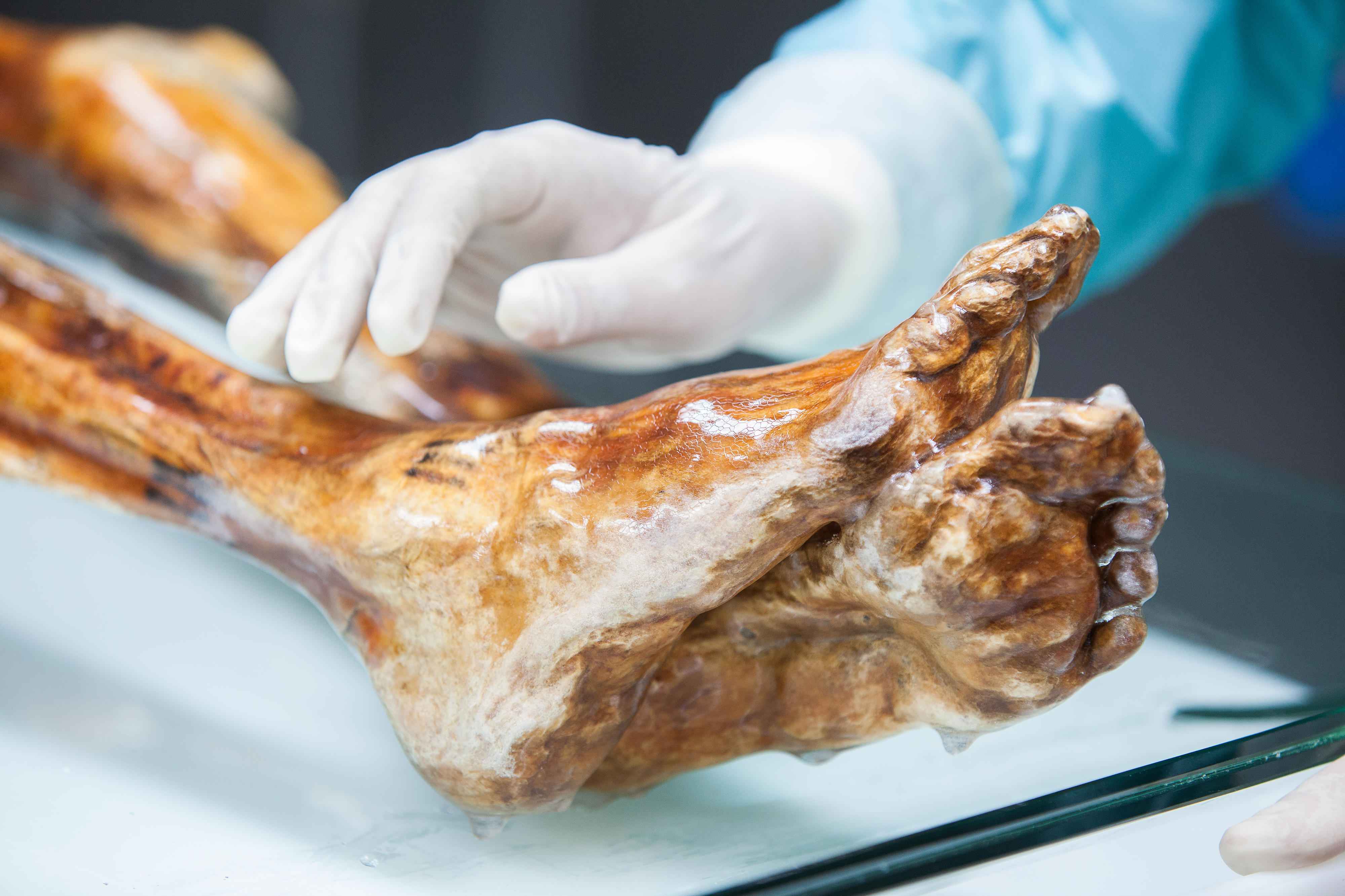
‘Bacterial signatures’ from genital areas could serve as a forensic tool to identify perpetrators of sexual assault, even if there is no trace of sperm, according to a study published in the journal iScience, by the Cell group. After sequencing the DNA of bacteria from genital samples from 12 stable couples, the authors show that a transfer of bacterial species occurs during intercourse, allowing the identification of each person’s own genital microbiome or ‘sexome’.

0

The relationship between gut bacteria and diseases could be overestimated

Many diseases related to bacteria, such as inflammatory bowel disease or colorectal cancer, are associated with an overgrowth of gut bacteria considered 'bad'. However, a study published in the journal Cell suggests that changes in microbial load, rather than the disease itself, could be the driving factor behind the presence of these harmful species associated with pathologies.

0

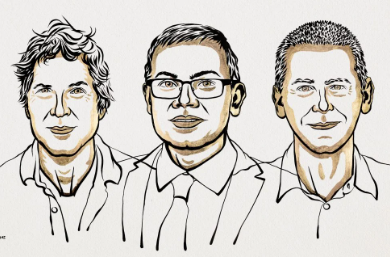
Nobel Prize in Chemistry for Baker, Hassabis and Jumper for computational protein design and structure prediction

The Royal Swedish Academy of Sciences has awarded the Nobel Prize in Chemistry 2024 on the one hand to David Baker for computational protein design, which makes it possible to construct proteins with functions not present in nature. On the other hand, jointly to Demis Hassabis and John M. Jumper of Google DeepMind, for the development of AlphaFold2, which allows the structure of the 200 million known proteins to be predicted at high speed. 

0

Gut microbiota markers associated with autism spectrum disorder identified

Research has identified 31 biomarkers in the gut microbiota of children that are associated with autism spectrum disorder (ASD) and could have diagnostic value. The gut microbiota includes bacteria, viruses, fungi and archaea. The team replicated the results, published in Nature Microbiology, in three cohorts and analysed faecal samples from more than 1,600 children and children in total, with and without ASD, in China.

0

The father contributes to the baby's microbiota as much as the mother after one year of life

After the first year of life, the father's contribution to his baby's microbiota is comparable to the mother's contribution, whether born vaginally or by caesarean section, says a study published in Cell Host & Microbe. In addition, faecal microbiome transplants from the mother to her baby can restore the microbiome in the case of caesarean birth, says the study, which included 74 babies and involved Spanish participants. 

0

Reaction: Phase 1 trial tests fecal transplantation to reduce antibiotic-resistant bacteria in susceptible individuals

The risk of developing resistant bacteria is higher in some people, such as those who have to take long-term antibiotics after organ transplantation. To try to reduce them, a phase 1 clinical trial has performed a fecal transplant on 10 people who had previously received a kidney transplant and had resistant bacteria. The fecal transplants accelerated decolonization, shortened the time it took to test negative for multidrug-resistant organisms, and, according to the authors, may also "reduce the recurrence of infections." The results are published in the journal Science Translational Medicine.

0