Ernesto Rodríguez Camino

Ernesto Rodríguez Camino

Ernesto Rodríguez Camino
Position

Senior State Meteorologist and president of Spanish Meteorological Association

Reactions to the accuracy of Exxon's climate change predictions since the 1970s

Research published in Science assesses for the first time quantitatively the climate projections made by scientists at oil company Exxon and ExxonMobil Corp between 1977 and 2003. According to the study, most of their projections accurately predicted warming consistent with subsequent observations. However, the authors point out that the company's public statements contradicted its own scientific data.

0

Reactions to methane growth in the atmosphere in 2020 despite pandemic containment

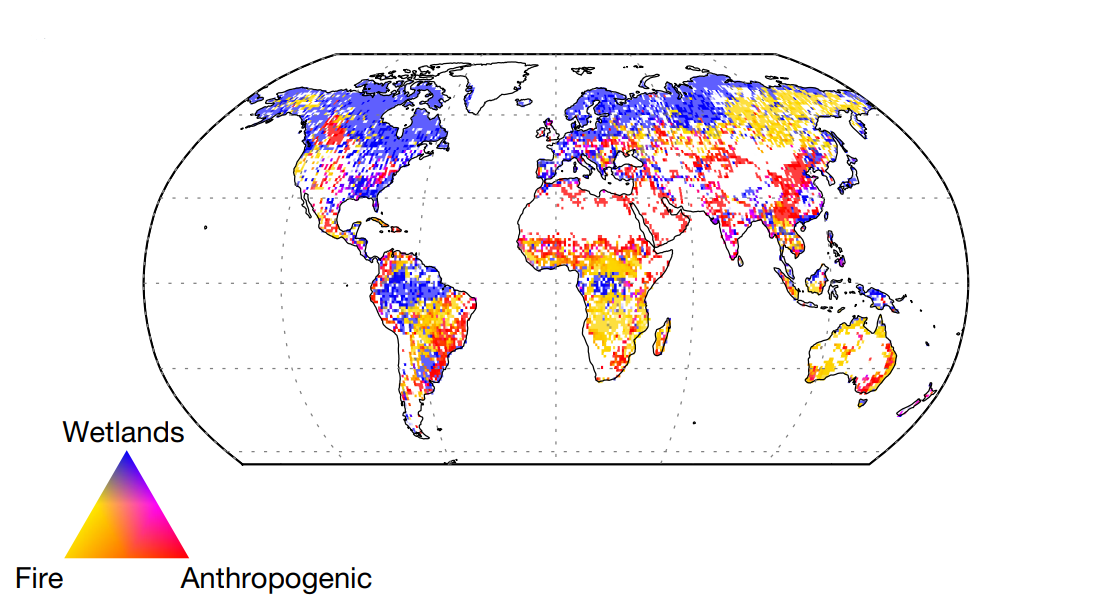
Although in 2020 the covid-19 pandemic caused confinement and economic paralysis in many countries, the rate of methane growth in the atmosphere peaked, reaching the highest level since 1984. Research published in Nature claims that the main source would be the warmer, wetter wetlands of the northern hemisphere.

0

Reactions to the loss and damage fund and other agreements reached at COP27

After two long weeks of negotiations and outside the official deadline, COP27 has reached an agreement to create a loss and damage fund to help the most vulnerable countries face the impacts of the climate crisis. However, other issues such as greater ambition in mitigation strategies to avoid exceeding 1.5ºC of warming and less dependence on fossil fuels have not achieved the commitment of all parties. 

0

Reaction to study claiming that the frequency of heatwaves will increase this century

Research estimates that the rise in global average temperatures could approach 2 ˚C by 2050. The study, published in Communications Earth and Environment, estimates that by 2100 many people living in tropical regions will be exposed to dangerously high levels of heat on most days of the year. In addition, deadly heatwaves, which are currently rare in mid-latitudes, could occur every year in these areas.

Reactions to the study revealing that the Azores anticyclone expands due to climate change and reduces rainfall on the Iberian Peninsula

A study published in Nature Geoscience shows how climate change is interfering with processes affecting atmospheric circulation and significantly altering the climate in Spain and Portugal. The anomalous expansion of the Azores anticyclone is drying out the Iberian Peninsula and making it increasingly resemble North Africa.