social media

social media

social media

Adults who use Instagram a lot overestimate its “addictive” nature, making self-control difficult dificulta el autocontrol

A study published in Scientific Reports concludes that adults who use Instagram very frequently overestimate their ‘addictive’ use, which complicates self-control and increases feelings of guilt. According to the research, excessive use, in most cases, is not an addiction but a habit. The study was conducted on more than 1,000 Americans and suggests that the fact that many think they have an ‘addiction’ may be related to the media's frequent use of this term when talking about social media. 

0

A week without social media can reduce mental health symptoms in young people, according to a study

Avoiding social media for a week can reduce symptoms of anxiety, depression, and insomnia, according to a study published in JAMA Network Open. The study measured the mental health of a group of 373 people aged 18 to 24 in the US before and after a week without using Facebook, Instagram, Snapchat, TikTok, or X. The authors caution that the durability of these results and their associations with behaviour require further research.

0

A review identifies what most influences polarization on health issues

A study by the University of Cádiz has identified six factors that drive polarization around health-related issues, for example during crises such as the COVID-19 pandemic: political ideology, misinformation, social media dynamics, trust in institutions and professionals, risk perception, and socioeconomic factors. This review, published in Science Advances, brings together the conclusions of 90 previous studies and analyzes how these determinants exacerbate health inequalities and influence compliance with public health measures.

0

Teenagers with mental health problems spend more time on social media, UK study finds

A team has analysed data from a survey of more than 3,000 teenagers aged 11-19 in the UK. Their findings show that those with mental health problems spend an average of 50 minutes more per day on social media than those who do not suffer from them. According to the authors, who publish the results in the journal Nature Human Behaviour, further research is needed to know if this is a causal relationship.

0

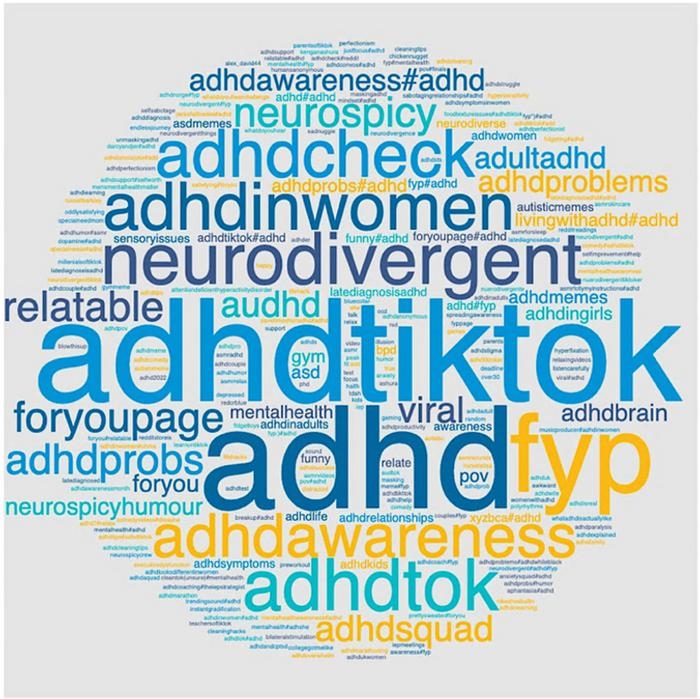
Half of the most viewed TikTok videos about ADHD are not in line with scientific literature

Around half of the 100 most popular videos on TikTok about Attention Deficit Hyperactivity Disorder (ADHD) contain statements that diverge from the scientific literature of reference, according to a study published in PLOS ONE. In addition, the research shows that there are discrepancies between young people and mental health professionals about the educational value of the content about ADHD on this social network.

0

Outrage facilitates the spread of misinformation on social networks

According to a study published in Science, social media content containing misinformation provokes more moral outrage than content containing accurate information, and this outrage facilitates the spread of misinformation. In addition, the results also showed that people are more likely to share this outrage-provoking misinformation without reading it first. 

0

Reaction: Study questions whether digital leisure reading improves reading comprehension in younger students

A meta-analysis by the University of Valencia has studied the links between leisure reading habits on digital devices and the reading comprehension of students of different ages. The research - which is based on 25 studies published between 2000 and 2022 involving some 470,000 students from different countries - concludes that in the early stages (primary and 1st and 2nd ESO in the Spanish case) there were small negative relationships between digital leisure reading and reading comprehension, while in later stages (3rd and 4th ESO, baccalaureate and university) the relationship became slightly positive. The research is published in Review of Educational Research.

0

Reaction: Social media use in young people is associated with increased risk behaviour, says review of studies

A review including 126 studies shows an association between the use of social networking sites by 10-19 year olds and increased risk behaviours, including alcohol, tobacco and other drug use, risky sexual behaviour, gambling and antisocial behaviour. According to the authors, who acknowledge that their research does not establish causality, "precautions may need to be taken in academia, government, health and education before the risks of adolescent use of social networking sites are fully understood". The findings are published in The BMJ.

0

Reaction: The risks and benefits of screens for children and young people are small, according to a large review of studies

A review of more than 100 meta-analyses and nearly 2500 studies has analysed the use of screens by children and young people and the consequences for their learning and health. Their conclusions are that, in general, the effects are small and vary according to the type of use and context. The results are published in the journal Nature Human Behaviour.

0