astrophysics

astrophysics

astrophysics

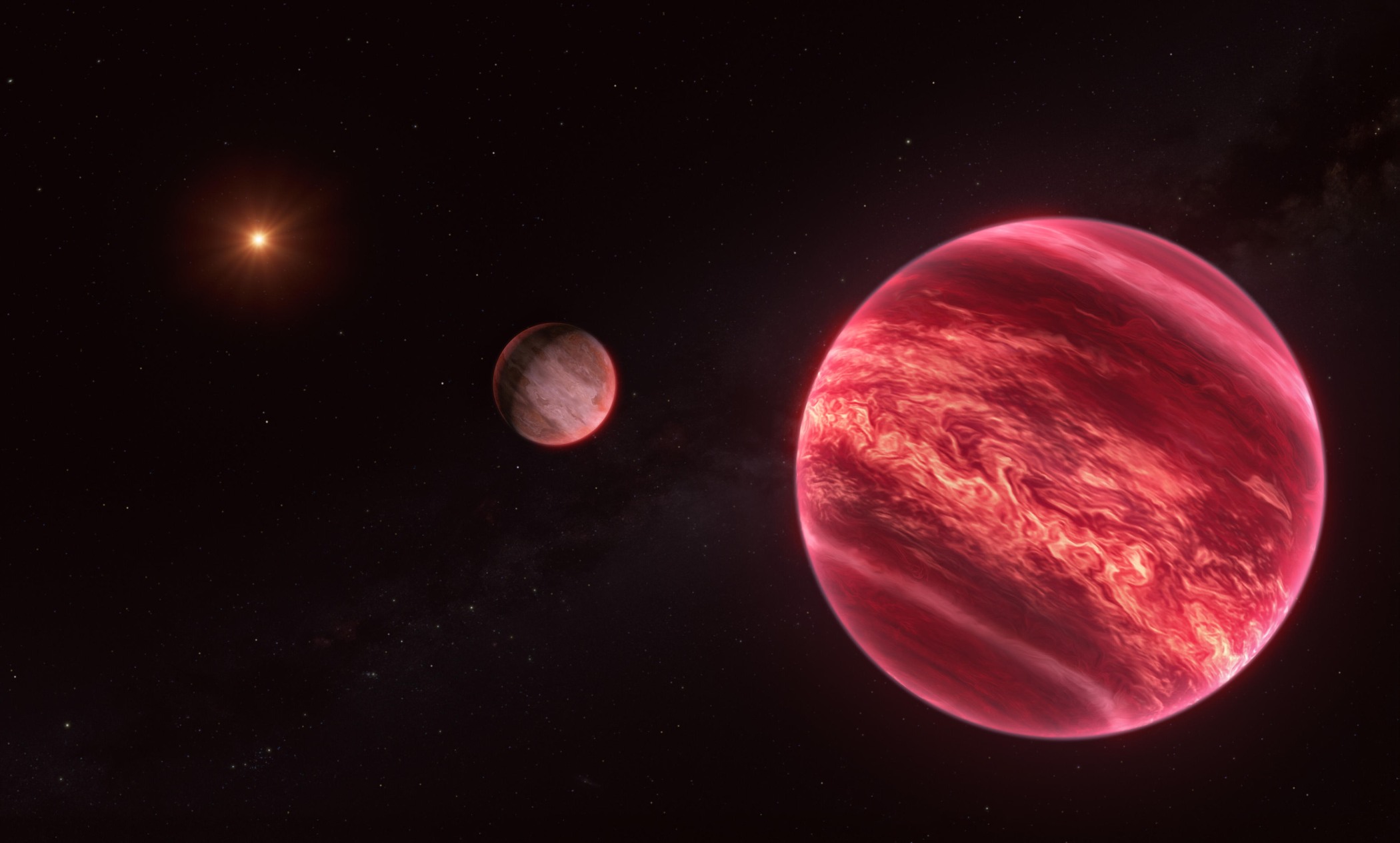
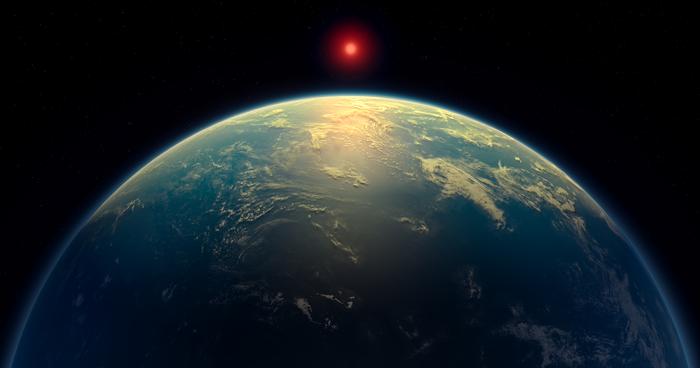
What could be the first exomoon orbiting a brown dwarf has been discovered

To date, more than 6,000 exoplanets — planets orbiting a star other than the Sun — have been discovered, but no moon outside the Solar System — known as an exomoon — has ever been definitively identified. Now, a study published in Nature presents evidence of what could be an exomoon orbiting a brown dwarf — an object halfway between a star and a planet. By analysing radial velocity data from observations made by the European Southern Observatory’s (ESO) Very Large Telescope, a team has identified a signal indicating the presence of a satellite with a minimum mass of 0.9 times that of Jupiter and an orbital period of around 170 days. “Although it is unclear whether this exosatellite will meet the criteria—yet to be defined—for being considered an exomoon, it represents an important step towards that first indisputable detection,” the authors state.

0

Sugar has been detected in interstellar space by the radio telescopes at Yebes in Guadalajara and Pico Veleta in the Sierra Nevada

A team led by a Spanish researcher has identified, near the centre of the Milky Way, a type of sugar composed of four carbon atoms, known as erythrulose, which on Earth is found in raspberries and self-tanning products. This would suggest that complex and biologically relevant molecules can form in space. Ribose and glucose had previously been discovered in samples from meteorites and asteroids, but until now no sugar had been directly detected in the interstellar medium. The finding is published in Nature Astronomy.

0

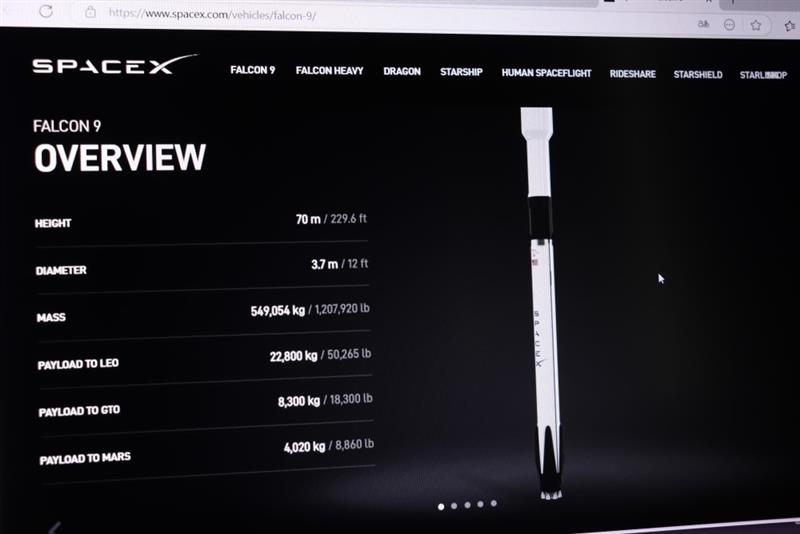
Lithium pollution from Falcon 9 re-entry into the atmosphere measured for the first time

In February 2025, lithium concentrations suddenly increased around 96 km above sea level some 20 hours after a SpaceX Falcon 9 launch vehicle re-entered the atmosphere. This is the first direct detection of pollution in the upper atmosphere due to the re-entry of a spacecraft, according to a study published in Communications Earth & Environment. Lithium is used in spacecraft components, but it is only found naturally at these altitudes in trace amounts, and its accumulation could have consequences on the climate.

0

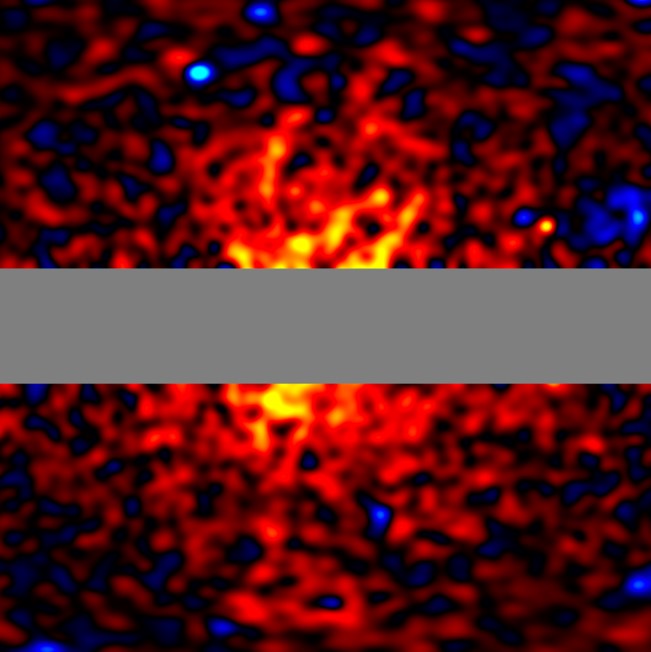
The Fermi space telescope detects gamma rays that could come from the decay of dark matter particles

A century ago, astronomer Fritz Zwicky observed that galaxies were moving faster than their mass should allow, leading him to infer the presence of an invisible structure, dark matter. Since the particles that make up dark matter do not interact with electromagnetic force, they cannot be observed directly, as they do not absorb, reflect, or emit light. Now, NASA's Fermi space telescope has found specific gamma rays in the center of the Milky Way that are consistent with the decay of theoretical dark matter particles, although they could also come from other sources. “If this is correct, to my knowledge, it would be the first time that humanity has ‘seen’ dark matter,” said study author Tomonori Totani in a press release. The article is published in the Journal of Cosmology and Astroparticle Physics.

0

Study finds three sigma probability of biological activity outside our solar system

Using data from the James Webb Space Telescope (JWST), a group of astronomers has detected the chemical fingerprints of dimethyl sulfide (DMS) and dimethyl disulfide (DMDS) in the atmosphere of exoplanet K2-18b, which orbits its star in the habitable zone. The detection has been published in The Astrophysical Journal Letters

0

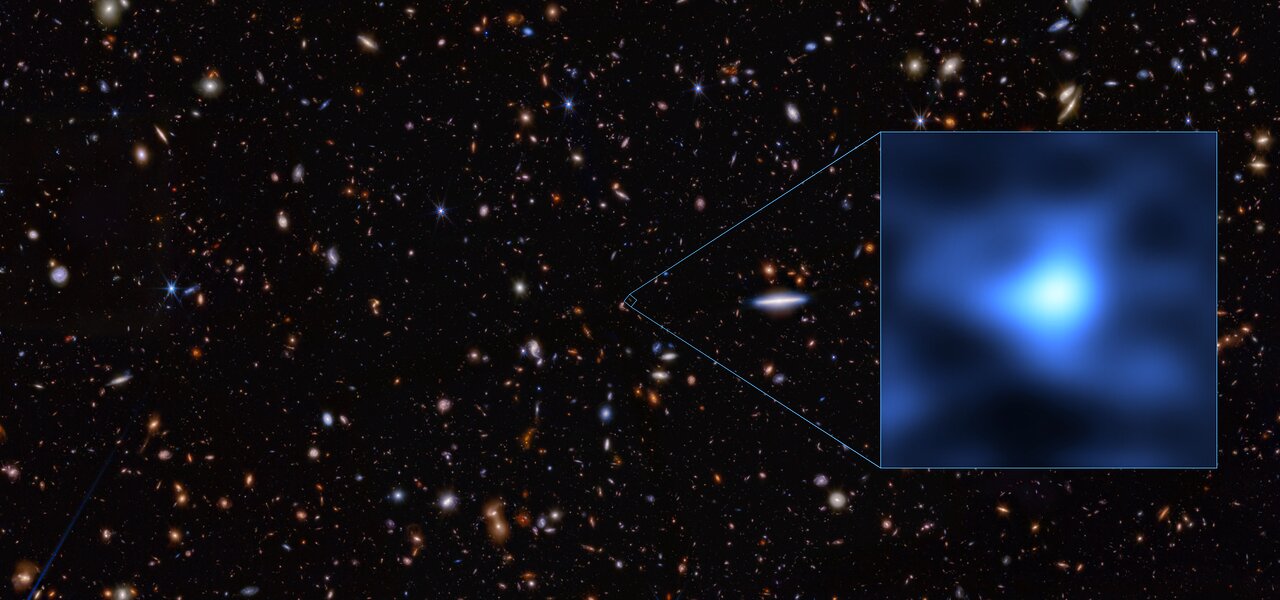
The presence of oxygen is discovered in the most distant galaxy known

Two international teams have independently discovered the presence of oxygen in the galaxy JADES-GS-z14-0, the most distant known. The finding, which has been made using the ALMA telescope at the European Southern Observatory (ESO), could mean that galaxies evolved much earlier than previously thought. The results are published in the journals Astronomy & Astrophysics and The Astrophysical Journal.

0

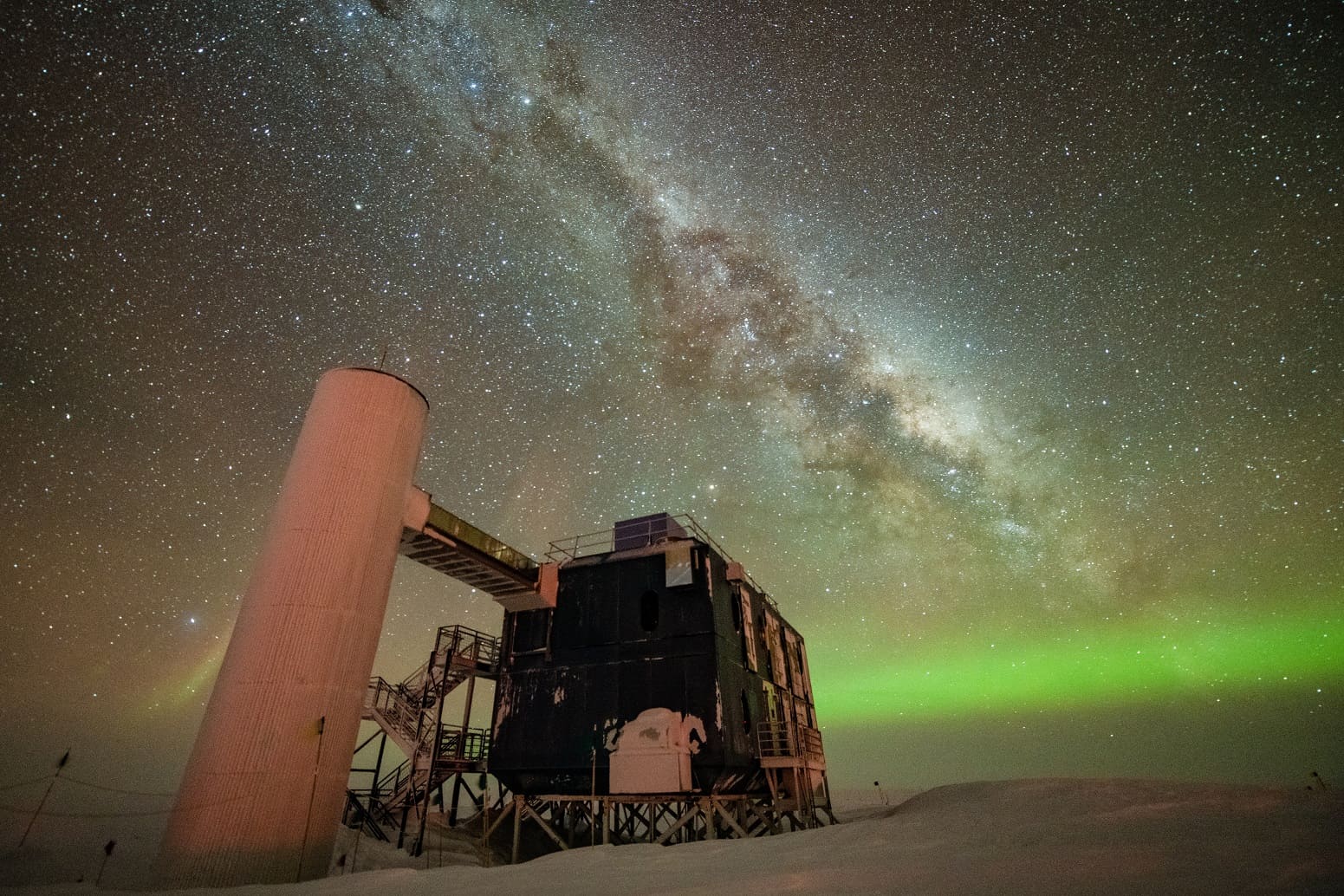
Reaction: IceCube detects for the first time the emission of high-energy neutrinos from inside the Milky Way galaxy

The IceCube neutrino observatory, built deep under Antarctic ice, has detected the emission of high-energy neutrinos from within the Milky Way. According to the research, published in the journal Science, this is the first time scientists have obtained solid evidence for the emission of these particles within our galaxy, as they had previously identified high-energy neutrino emission from extragalactic sources.

0

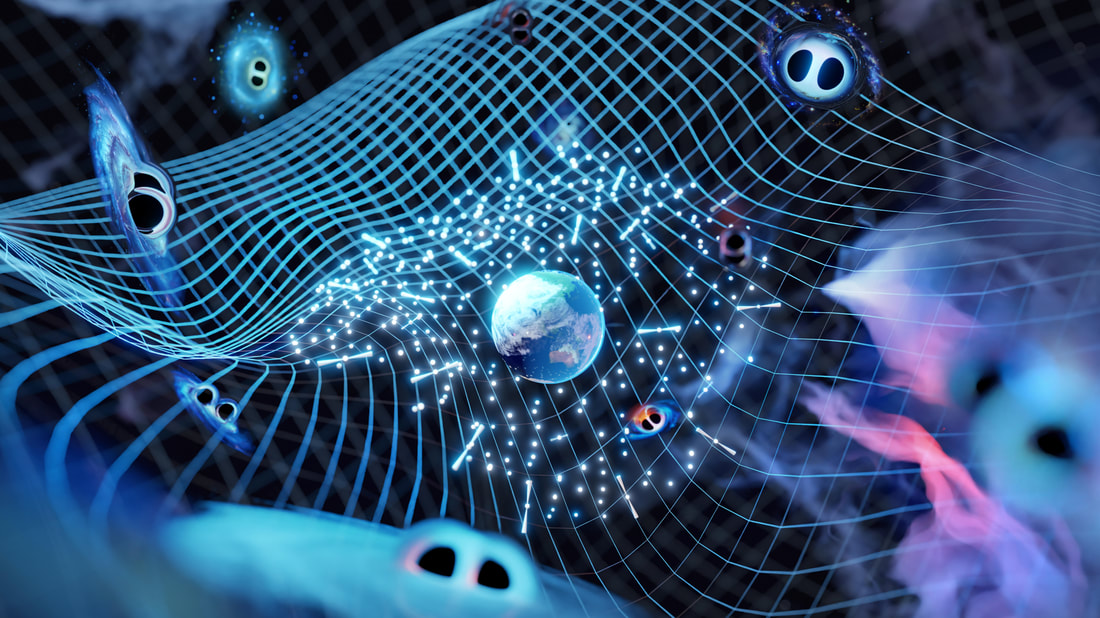
Reactions: evidence found of a cosmic background of gravitational waves possibly produced by supermassive black hole collisions

The International Pulsar Timing Array (IPTA) consortium has discovered evidence for the existence of a cosmic background of gravitational waves. The results, published by different IPTA consortia in several scientific journals, would show that this cosmic background would be the result of collisions of supermassive black holes. In 2015, researchers from the LIGO and Virgo collaborations made the first direct observation of gravitational waves caused by the collision of two stellar-mass black holes. These waves oscillate several times per second. What the consortia have now found are gravitational waves emitted by supermassive binary black holes at the centre of galaxies, waves that oscillate on timescales of many years.

0

Reactions: James Webb Space Telescope named 'Science' Science Breakthrough of 2022

Two decades of work with numerous setbacks, a budget of more than 10 billion dollars and a journey of 1.5 million kilometres to provide us with images of the universe in unprecedented detail have led Science magazine to choose the James Webb Space Telescope (JWST) as the science breakthrough of 2022.

0

Back to the Moon!

After almost three months of delays caused by various technical problems and two hurricanes, the Artemis I mission was successfully launched this morning, the first of a programme that will take the first woman astronaut to the moon. It has 42 days ahead of it, during which the spacecraft will orbit our satellite and test the stability of this lunar orbit, because in the future a space station will be located there to receive the astronauts on their journey from Earth.

1