An experiment assesses the effect of microplastics on atmospheric warming
Colored microplastics and nanoplastics suspended in the atmosphere could contribute to global warming at a level equivalent to 16% of that caused by soot. The findings, published today in the journal Nature Climate Change, suggest that these particles may be previously unrecognized contributors to climate change, and that their role should be taken into account in future climate assessments. The authors note that laboratory experiments are a simplified version of atmospheric processes and that the global distribution of microplastic and nanoplastic particles must be determined more precisely through observations.
Roberto Rosal - microplásticos atmósfera
Roberto Rosal
Professor of Chemical Engineering in the Department of Analytical Chemistry, Physical Chemistry and Chemical Engineering at the University of Alcalá
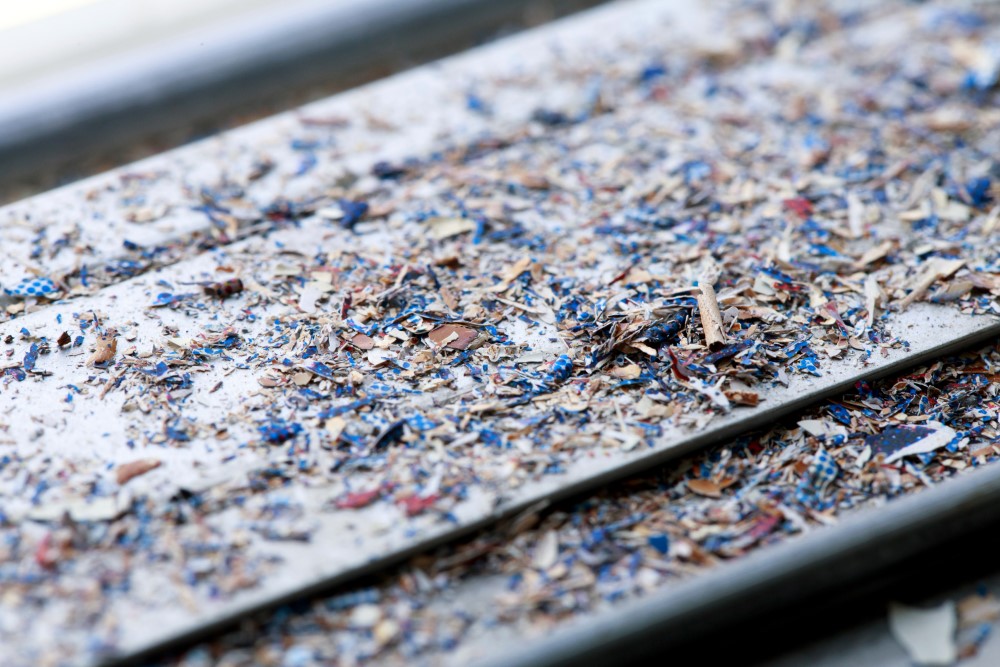
In this article, the researchers conducted a predictive physics study. Rather than obtaining actual samples of plastic particles captured from the atmosphere, they prepared laboratory samples by grinding materials purchased from a commercial supplier. Using an advanced electron microscopy technique called AC-TEM-EELS, they individually measured how each color of plastic absorbs energy and repeated the process with the same materials artificially aged in the laboratory.
The research demonstrated that colored plastics absorb more energy than colorless ones, as expected, and linked this to their mass within the experimental set of particles they analyzed. Finally, they calculated the potential impact on global warming based on the total mass of plastic suspended per square meter of air, calculated using a dispersion model fed by global plastic emissions inventories and assumptions about the residence time of the particles in the atmosphere.
The problem with this type of estimate, as has already been highlighted in this same media outlet, is that they may be overestimated by many orders of magnitude. It is, therefore, a model of models where the total mass of plastics does not come from actual sampling, but from simulations based on previous inventories that are quite debatable. Although such models are not entirely without merit, their limitations are numerous, and the results regarding their contribution to atmospheric warming must be interpreted with great caution.
Sam Harrison - microplásticos atmósfera
Sam Harrison
Environmental Modeller, UK Centre for Ecology & Hydrology (UKCEH).
There is growing evidence that plastic pollution can exacerbate the impact of many planetary boundaries, including climate change, ocean acidification, altered biogeochemical flows and biosphere integrity. We know that plastic pollution causes microplastic and nanoplastic particles to be transported in our atmosphere, however there is still a lot of uncertainty around the distribution of these particles in the atmosphere and their impacts on atmospheric warming. This new publication offers supporting evidence that plastic particles present in the atmosphere can absorb light and so may lead to increased atmospheric warming, though we need more evidence before we can confidently conclude the impacts of plastics on climate change.
Conflicts of interest: “I have received funding from the industry, including from the European Chemical Industry Council (Cefic) and BASF.”
Eiko Nemitz - microplásticos atmósfera
Eiko Nemitz
Environmental physicist at the UK Centre for Ecology & Hydrology (UKCEH).
The paper highlights the interesting potential of micro- and nanoplastics exerting a warming effect in the atmosphere. However, the uncertainties of this effect are substantial, not only due to the variability of their optical properties, but also due to our limited understanding of their emissions and a lack of measurements to assess model predictions. This means that we need further research before we can confidently discuss the magnitude of the impact of micro- and nanoplastics on atmospheric warming.
If substantiated by further work, micro- and nanoplastics should then be considered short-lived climate forcers like black carbon itself. This means their contribution to global warming could be reduced much more quickly through emission reductions than is the case for changes in emissions of carbon dioxide and nitrous oxide, for example, which persist in the atmosphere for many, many years. Nevertheless, the benefit would be fast but limited and should not distract from the need to control emissions of the primary greenhouse gases.
Jim Walker - microplásticos atmósfera
Jim Walker
Research Fellow in Aerosol Science at the University of Bristol.
In this study, the researchers used laboratory measurements of the optical properties of microplastic particles (MPs) to estimate their potential impact on the global climate. Their findings suggest that this previously overlooked factor could contribute towards warming, though to a much lower extent than greenhouse gas emissions, with MP colour - rather than plastic type - emerging as an important factor.
It is important to acknowledge the substantial uncertainties associated with these estimates, as is the case for aerosol impacts more broadly. However, these uncertainties underscore the importance of continued research in this area to better understand how human activities are influencing the Earth’s climate system.
Liu et al.
- Research article
- Peer reviewed