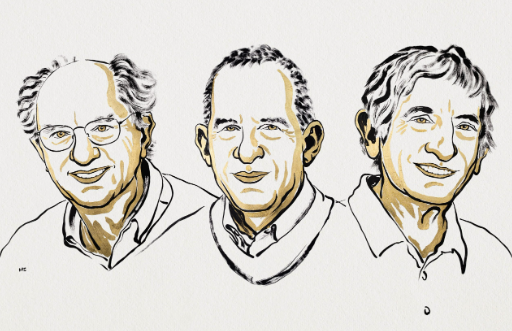
Nobel Prize in Physics awarded to John Clarke, Michel H. Devoret and John M. Martinis for their experiments with a chip that revealed quantum physics in action
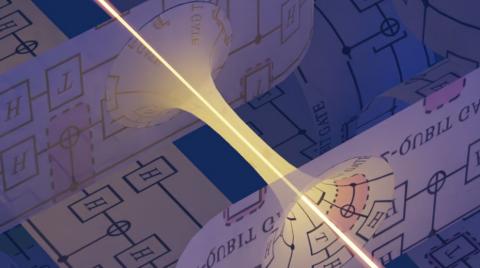
The Royal Swedish Academy of Sciences has awarded the 2025 Nobel Prize in Physics to John Clarke, Michel H. Devoret, and John M. Martinis, who demonstrated both the quantum tunnelling effect and quantised energy levels in a system small enough to fit in the palm of your hand. These advances have served to develop the next generation of quantum technology, including quantum cryptography, quantum computers and quantum sensors.
Ignacio Cirac - Nobel Física 2025
Ignacio Cirac
Director of the Theory Division of the Max-Planck-Institute for Quantum Optics in Garching (Germany)
I think it is well deserved. His experiments have been crucial to advances in superconducting technologies, which are now used in many fields, particularly in quantum computers.
Alba Cervera - Nobel Física 2025
Alba Cervera Lierta
Expert researcher in quantum computing at the Barcelona Supercomputing Center and coordinator of Quantum Spain
This Nobel Prize follows in the footsteps of the 2022 Nobel Prize in Physics awarded to the pioneers of quantum information. In this case, the prize recognises the development of the physics necessary to exploit quantum information for the manufacture of technology. Many current quantum computers are made with superconducting qubits, i.e., using the principles developed by this year's winners. For someone who works in quantum computing like me, I consider this to be a Nobel Prize that recognises, among other things, the great advances that are being made in this field.
Enrique Solano - Nobel Física 2025 EN
Enrique Solano
Doctor in Physics, honorary professor at the Ikerbasque Foundation and founder of the quantum technology companies Kipu Quantum and Quanvia
I worked with John M. Martinis, one of the scientists who won the Nobel Prize. We published two articles in Nature magazine with them about five or six years ago, and in the quantum technologies group I led at the University of the Basque Country, we had a very successful collaboration with him.
At that time, John Martinis was still a professor at the University of Santa Barbara, but he was fully dedicated to Google. His team achieved world records in quantum supremacy and showed that quantum computers could go very far. The Nobel Prize is shared with Michel H. Devoret, a French colleague who moved to Yale University and with whom I have been friends for many years; and John Clarke, who is the “patriarch” of superconducting qubits, which are the basis of quantum computing. These three colleagues achieved pioneering work in the laboratory—not theoretical work—with qubits encoded in superconducting circuits at extremely low temperatures, lower than outer space.
They deserve the Nobel Prize by far because their work is the basis for many things in quantum computing, quantum communication, quantum sensing... It is a celebration for the entire community in 2025, which UNESCO has declared the year of quantum science and technology.
Conflictos de interés: como dice en su cita, tiene relación profesional con varios de los premiados.
Gemma Rius - Nobel Física 2025 EN
Gemma Rius
Tenured Scientist at the Barcelona Institute of Microelectronics (IMB-CNM) of the CSIC and member of the Power Devices and Systems research group
It is perhaps no surprise that the 2025 Nobel Prize in Physics has been awarded for an achievement related to quantum physics, given that 2025 has been declared the International Year of Quantum Science and Technology by UNESCO. It is great news to recognise researchers John Clarke, Michel H. Devoret and John M. Martinis for their work on ‘the discovery of macroscopic quantum tunnelling and energy quantisation in an electrical circuit’.
Their experiments are crucial in demonstrating how these quantum phenomena can be observed in devices that are “large” enough to enable practical manipulation. Specifically, they used superconducting circuits cleverly manufactured on chips, using conventional semiconductor techniques, and measured them under conditions suitable for ensuring that the electrical signals manifested these states in the quantum regime. Many of these challenges have already seen major conceptual and technological advances, as well as alternative implementations.
Pol Forn-Díaz - Nobel Física 2025
Pol Forn-Díaz
Group Leader, Quantum Computing Technology Group, Institut de Física d'Altes Energies (IFAE)
John Clarke, Michel Devoret and John Martinis are three of the researchers who have contributed most to the field of quantum physics in superconducting electrical circuits. Their work in the 1980s demonstrated that a superconductor behaves like a single, macroscopic quantum system, meaning that even though it has a huge number of electrons, they all act in unison; in fact, it is considered to be a condensate with an electric charge. Their results showed that the circuits do indeed exhibit macroscopic quantum behaviour observable as voltages and currents, and that they display quantised energy levels, as if they were artificial atoms designed in a laboratory.
All the experiments they carried out took advantage of the physics of the Josephson effect, in which two superconductors are placed almost in contact, with a small barrier between them of microscopic dimensions, but which still allows the superconducting current to cross from one side to the other due to the tunnel effect. This element, now called the Josephson junction, is the equivalent of the transistor in modern processors for the construction of superconducting quantum computers. In fact, the experiments for which this Nobel Prize was awarded represented a primitive version of what we now call a quantum bit, or qubit, which is the basic element that makes up quantum computers.
Carlos Sabín - Nobel Física 2025 EN
Carlos Sabín
Senior Lecturer Department of Theoretical Physics UAM Madrid
This year's Nobel Prize in Physics was awarded to researchers who demonstrated the quantum behaviour of superconducting electrical circuits. From a theoretical point of view, this was a very important result because these circuits are larger than what we normally associate with quantum physics (they are called macroscopic, although they are not in the usual sense of the term). Furthermore, over time, these circuits have proven to be fundamental to the development of new quantum technologies. For example, they can be used to build the quantum bits that form some of the best quantum computers, such as those made by IBM and Google.