US health authorities will warn of a link between paracetamol use during pregnancy and the risk of autism in children, according to 'The Washington Post'
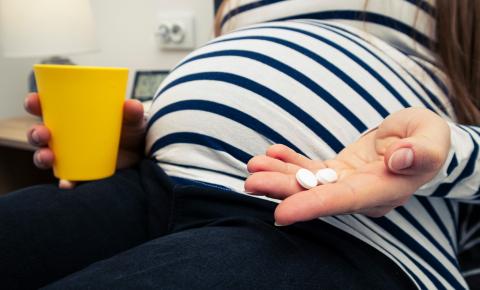
On Monday, US federal health authorities will advise pregnant women against taking paracetamol in the early stages of pregnancy, unless they have a fever, as reported yesterday by The Washington Post. The announcement will be accompanied by a recommendation for a drug called leucovorin as a treatment for autism, the article adds. Donald Trump said yesterday: ‘Tomorrow we are going to have one of the most important announcements... from a medical standpoint, I think, in the history of our country. I think we have found an answer to autism.’

Monique Botha - paracetamol autismo USA EN
Monique Botha
Associate Professor in Social and Developmental Psychology at Durham University
'There are many studies which refute a link, but the most important was a Swedish study of 2.4 million births (1995–2019) published in 2024 which used actual sibling data and found no relationship between exposure to paracetamol in utero and subsequent autism, ADHD or intellectual disability. This suggests no causal effect of paracetamol in autism. This is further strengthened by there being an absence of a dose dependent relationship. There is no robust evidence or convincing studies to suggest there is any causal relationship and any conclusions being drawn to the contrary are often motivated, under-evidenced, and unsupported by the most robust methods to answering this question. I am exceptionally confident in saying that no relationship exists.
Similarly, pain relief for pregnant women is woefully lacking and paracetamol is a much safer pain relief option during pregnancy than basically any other alternative and we need to take pain seriously for women including whilst pregnant. The fear mongering will prevent women from accessing the appropriate care during pregnancy. Further, it risks stigmatising families who have autistic children as having brought it on themselves and reinvigorates the long pattern of maternal shame and blame as we've seen re-emerge repeatedly over the last 70 years where we try to pay the fault of autism at the mother's door one way or another'.
On Leucovorin as a treatment
“More evidence is needed with regards to the effect of Leucovorin and core autistic traits before any inferences can be drawn in any meaningful way. Any evidence available at this point is exceptionally tentative and would not be considered to be robust. Similarly whilst medications may help with very specific aspects, there is no medication or treatment that actively cures or erases autism, though it might adjust behaviour, or reduce co-occuring symptoms which contribute towards distress for autistic people. Autism is a lifelong heritable disability whose primary cause is exceedingly likely to be genetic, expressed through a wide array of genes. Similarly, autistic people are exceptionally heterogenous so any treatment or medication for specific traits is likely to work for very specific presentations of autistic traits, in very particular contexts. Sweeping statements about cures or treatments do not tend be accurate, helpful, or ethical.”
Dimitrios Siassakos - paracetamol embarazo USA EN
Dimitrios Siassakos
Professor in Obstetrics and Gynaecology at University College London and Honorary Consultant in Obstetrics at University College London Hospital
Autism results from several factors, often combined, particularly genetic predisposition, and sometimes low oxygen at the time of birth as a result of complications. Research has shown that any apparent marginal increase as a result of paracetamol/acetaminophen use in pregnancy tends to disappear when the analyses take into account the factors that matter most. For example, in studies looking at siblings, any association disappeared - it was the family history that mattered and not the use of paracetamol. Undue focus on paracetamol would risk preventing families from using one of the safest medications to use in pregnancy when needed.