Hominids used fire more than 700,000 years earlier than previously estimated, according to a study involving Spanish researchers
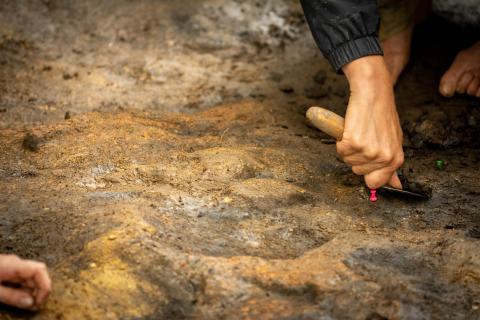
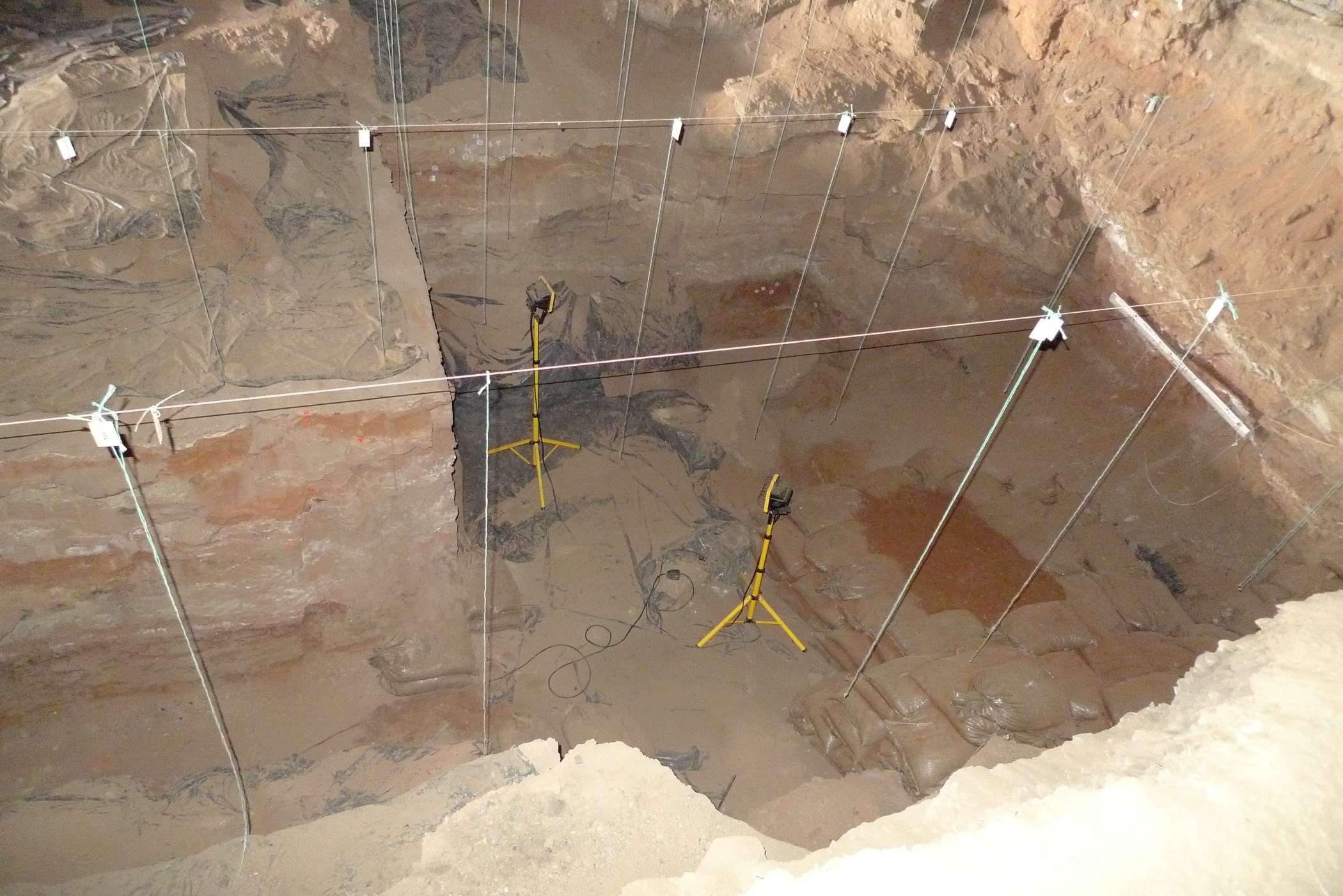
An international team led by the National Museum of Natural Sciences (MNCN-CSIC) and the University of Toronto (Canada) has discovered that Homo erectus were already using fire on a regular basis 1.07 million years ago and 1.79 million years ago at the Wonderwerk Cave (South Africa). Previous evidence had placed more regular and controlled use of fire one million years ago in Africa at that same site. The team, whose study is published in PLoS ONE, used a novel non-invasive technique based on luminescence.
Juan Manuel Jiménez Arenas - fuego pleistoceno mayo
Juan Manuel Jiménez Arenas
Full Professor in the Department of Prehistory and Archaeology
Head of ProyectORCE
This is a study of great interest to global prehistory, as it addresses one of the most significant topics for humanity: fire. María Dolores Marín-Monfort and her collaborators propose a significant shift in the current paradigm regarding its use, pushing its origins back by some 800,000 years and situating it 1.8 million years ago in a South African cave, Wonderwerk, which, notably, already housed the previous candidates for humanity’s oldest anthropogenic fires.
In my opinion, the most interesting aspect of this study is the introduction of a new rapid and non-destructive protocol, based on stimulating the bone remains with an external energy source. This technique is known as luminescence. It is important to note that one of the worst “enemies” of bone is heat, which significantly alters its composition. These changes are reflected in how the bones respond to exposure to a special, very powerful blue light: burned bones glow differently than unburned ones, which is key to distinguishing them.
The authors have applied this new methodology to the bones of small animals that were part of pellets—that is, the undigested and regurgitated remains of the prey of nocturnal birds of prey. The results show that, in the Wonderwerk Cave (1.8 million years old), many of the bones comprising these pellets are burned. Thus, the proposal by the research team, led by the National Museum of Natural Sciences in Madrid, is that humans were responsible for using these natural pellets as fuel inside this South African cave.
A key point to discuss is the likelihood that the Wonderwerk fires were of natural origin. This is something that occurs more frequently outdoors, where there is a greater amount of plant fuel and ignition sources are present, such as lightning, just as happens today with unprovoked wildfires.
The methodological impact of the article is unquestionable, as the authors make a crucial contribution to the characterization of burned bones in extremely ancient contexts. However, what raises more doubts is the anthropogenic origin of these fires, since there is no direct evidence that humans were involved in their genesis within the cave.
Traditionally, it has been argued that the oldest documented fires were the result of exploiting natural fires. Marín-Monfort and colleagues’ interpretation fits within this framework, though they go a step further: they suggest that our ancestors did not make a completely passive use of the fires, but rather would have brought lit torches from outside into the cave, up to 30 meters deep, to ignite the clusters of pellets.
The researchers have several factors in their favor. First, the location of the remains 30 meters from the current entrance makes it unlikely that the burning material traveled accidentally from the outside. Second, the fact that these fires recur throughout the stratigraphic sequence.
However, to propose a change of such magnitude—with such significant interpretive consequences for global prehistory—I believe more compelling direct evidence related to its functionality (for example, food cooking) would be required. Furthermore, it would have been advisable for the authors to include an experimental section, using hairballs, to assess the total combustion time, the need for refueling, the type of smoke, or toxicity, given that generating a fire in an enclosed, unventilated space can quickly render the air unbreathable.
In conclusion, if the dating (1.8 million years) and, above all, the intentionality of introducing fire into the cave are confirmed, we would be facing a milestone that would change the course of prehistory. Prior to this article, no fires involving human activity of such antiquity had been recognized.
Thus, the origins of one of humanity’s most revolutionary technologies would be rooted deep in time, occurring very close to another major transition that would give rise to the Acheulean technological complex. This not only represented a significant change in the typology and method of carving stone tools but also in the capabilities.
Joaquín Panera - fuego Sudáfrica EN
Joaquín Panera
Permanent tenured professor in the Prehistory Area of the Department of Prehistory, Ancient History and Archaeology at the Complutense University of Madrid
The control of fire marked a crucial turning point in human evolution, enabling transformations that spanned from biology to complex social organisation. The use of fire in food processing was fundamental to hominin adaptation, facilitating greater energy extraction, improved digestibility and an increase in the nutritional value of the diet, all of which have been correlated with evolutionary changes in body mass and brain size. Furthermore, the controlled use of fire has been linked to increased cohesion and the geographical dispersal of the genus Homo. Therefore, determining the onset of the controlled use of fire by hominins is a central issue for understanding human evolution, yet identifying the earliest evidence of this is extraordinarily complex.
The article by Marín-Monfort et al. points out that the individual use of the techniques employed to date to detect thermal alterations in sediments, lithics and bones is insufficient. In particular, FTIR, despite being widely used, does not allow for the unequivocal identification of combustion events below approximately 537 °C.
The authors therefore propose a protocol based on the luminescent properties of bones, which offers significant advantages as it is rapid, non-destructive, independent and suitable for analysing large samples. They have verified the validity of the method through systematic comparison with FTIR analyses applied to the same fossils.
The text concludes that the combination of luminescence and FTIR constitutes a robust method for identifying burnt bones, as it allows combustion to be confirmed and distinguished from natural alterations. At Wonderwerk Cave, the results confirm the presence of fire in stratum 10, previously documented, and provide new evidence in stratum 11, where signs of thermal alteration in various materials are observed. Furthermore, the bones showing evidence of thermal alteration at this level are concentrated in specific areas, suggesting localised episodes of combustion.
Although some proposals suggest an association between hominins and fire dating back to around 1.5 million years ago, the most robust evidence of controlled and recurrent use of fire currently dates to around 0.8 million years ago. From a chronological perspective, the lack of precision regarding Stratum 11 at Wonderwerk Cave—which falls within a broad timeframe of between 1.79 and 1.07 million years—prevents these findings from being definitively linked to the onset of controlled fire use or aligned with the earliest stages of the Acheulean (around 2 million years ago). Therefore, if the chronology of stratum 11 were to be refined and it could be linked to the early phases of the Acheulean, the finding would constitute a highly significant contribution to our understanding of human evolution.
In my opinion, the main contribution of the article lies not so much in definitively pushing back the start of controlled fire use, but in the methodological approach it proposes through the use of luminescence as a complementary technique to FTIR for identifying thermally altered bones.
The proposed methodology represents a significant advance, as it could become a very useful tool for identifying the use of fire during the Pleistocene, including at European sites, where there are various proposals regarding the controlled use of fire that have not yet been sufficiently verified through robust analytical protocols.
Aitor Burguet-Coca - fuego pleistoceno mayo EN
Aitor Burguet-Coca
Beatriu de Pinós, a postdoctoral researcher at the Catalan Institute of Human Paleoecology and Social Evolution (IPHES-CERCA) in Tarragona, specializing in the archaeology of fire
Is the study based on sound data and methods?
“The study presents an innovative complementary methodological approach and provides interesting evidence of opportunistic fire use. Methodologically, it helps to complement the identification of burnt faunal remains that has been carried out using FTIR [Fourier transform infrared spectroscopy]. This is a complementary technique which, moreover, is non-destructive, making it very interesting.
Evidence of fire older than that previously found at Wonderwerk provides a starting point for identifying this early stage of fire in an opportunistic manner, a stage characterised by being archaeologically very subtle.
Until now, some of the oldest published evidence of fire had in common the fact that it came from open-air sites, in environments where recurrent natural fires would occur naturally. This made it difficult to identify the anthropogenic origin of the fire. In other words, elements produced by combustion could be identified, but they could not be clearly linked to an event of fire use by hominins. In studies of the pyroarchaeological record (the record of fire at archaeological sites), controversy and debate over what this actually signifies are ever-present, and I do not believe these results are an exception.
Wanderwerk Cave and these results are somewhat different, as they concern the interior of a cave within an archaeological sequence that is stratigraphically consistent with the evidence documented 80 metres further in. However, we will have to wait and see if there are further results that can also identify this use of fire from a more direct approach, using ash and thermally altered sediments as was done for stratum 10 and published in PNAS in 2021 by Berna”.
How does this fit in with previous work? What new insights does it provide?
“Wonderwerk Cave and its Stratum 10 was already one of the sites with the oldest evidence of anthropogenic fire in Africa, dating back a million years, with the clearest documented evidence in the form of ash and thermally altered sediments. It was clear evidence in terms of both archaeological context and evidence of fire. The fact that it is a cave provides much greater certainty than the evidence identified at open-air sites.”
Are there any significant limitations to bear in mind?
“Opportunistic fire use implies a very sporadic occurrence over time and is short-lived. In the archaeological record, it is always a major challenge to identify evidence of this behaviour. This type of evidence, especially when it is indirect, always generates controversy within the research community. But I believe the publication of this evidence is important, because it prompts the research community to work on this hypothesis of fire use in chronologies much older than previously thought. This is the part I find most interesting; the hypothesis that hominins from 1.8 million years ago used fire will lead researchers of these time periods to focus on this specific issue regarding the use of fire, generating lines of research and methodological improvements that may (or may not) establish new paradigms on the use of fire in human evolution.
For those of us dedicated to the study of fire, this mobilisation of research, resources and methodologies is what pleases us most, as it brings the spotlight back onto fire—a highly significant technology that has often been relegated to the background in favour of stone tool industries or human remains. Tool-making has been shown not to be exclusive to our species. Could it be the use of fire that makes us human?”
What is the practical relevance of this study in Spain?
“Everything seems to indicate that the evolution of fire use took place across various different spaces and times. Understanding the dynamics of fire use and its evolution in Africa is important for seeing how this mechanism—which is technological but has significant social implications—might have developed through different dynamics in other parts of the world.
In Western Europe, there are also various debates surrounding the use and production of fire, and methodological improvements could be of great use to us in our archaeological contexts.
The Iberian Peninsula is a context where intensive work is being carried out on issues linked to the use of fire throughout prehistory, and this is evident because there are a large number of sites with well-identified and characterised evidence.”
M. Dolores Marin-Monfort et al.
- Research article
- Peer reviewed