Spanish Metrology Center
If you are the contact person for this centre and you wish to make any changes, please contact us.
Director of the Mechanical Magnitudes and Engineering Division at the Spanish Metrology Center (CEM)
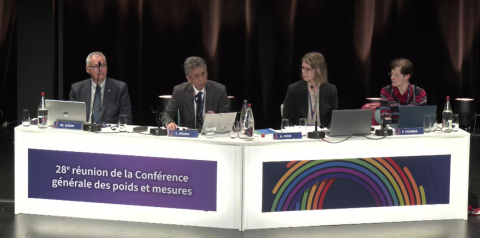
Since the 1970s, so-called leap seconds have been periodically added to clocks—a measure designed to keep traditional astronomical time aligned with high-precision atomic time. However, adding an extra second can disrupt global technological infrastructure, leading to website outages and network failures. In 2022, a decision was made to abandon this practice starting in 2035. This week, during the 28th General Conference on Weights and Measures—which begins today in Versailles, France—a vote will be held on a proposal by timekeeping experts to stop adding leap seconds as early as 2027.
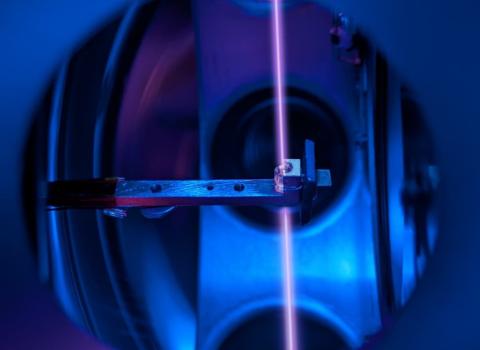
Two independent studies published simultaneously in Nature claim to have developed the first functional nuclear clocks, both based on thorium-229 isotopes. Although their current stability is lower than that of the best atomic clocks, the authors maintain that future research could increase it by around four orders of magnitude, which would facilitate research in the field of fundamental physics.

A team of researchers has performed the most comprehensive coordinated comparison of optical clocks - a type of high-precision atomic clock - to date, running them simultaneously in six different countries. According to the authors, who publish the results in the journal Optica, the work “supports progress toward a redefinition of the second” and could serve to “develop entirely new applications and advance scientific projects that depend on time and frequency.”