Spanish Astrobiology Center (CAB)
If you are the contact person for this centre and you wish to make any changes, please contact us.
Planetary geologist specialising in Mars in the Department of Planetology and Habitability at the Centre for Astrobiology (CAB)
PhD in Biochemistry and Molecular Biology, CSIC research scientist at the Center for Astrobiology (CSIC-INTA), where he leads a group researching the origin of life and the development of biosensors, and science communicator.
CSIC staff scientist, specialised in the chemistry of prebiotic molecules in the interstellar medium
Research Scientist at the Department of Planetology and Habitability of CAB-INTA-CSIC
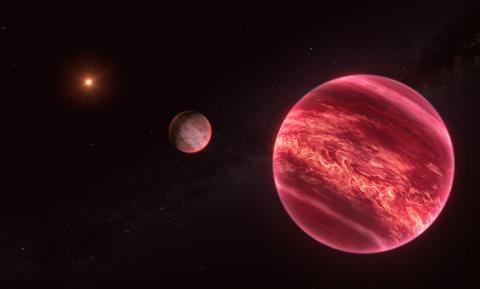
To date, more than 6,000 exoplanets — planets orbiting a star other than the Sun — have been discovered, but no moon outside the Solar System — known as an exomoon — has ever been definitively identified. Now, a study published in Nature presents evidence of what could be an exomoon orbiting a brown dwarf — an object halfway between a star and a planet. By analysing radial velocity data from observations made by the European Southern Observatory’s (ESO) Very Large Telescope, a team has identified a signal indicating the presence of a satellite with a minimum mass of 0.9 times that of Jupiter and an orbital period of around 170 days. “Although it is unclear whether this exosatellite will meet the criteria—yet to be defined—for being considered an exomoon, it represents an important step towards that first indisputable detection,” the authors state.
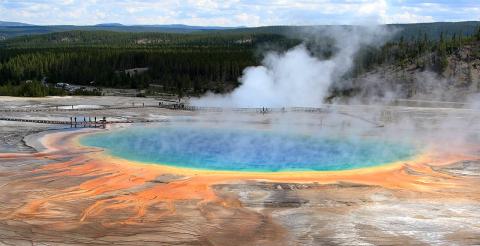
Amino acids are the building blocks of proteins. These are known as the building blocks of life, but they cannot replicate themselves. To do so, they need the instructions provided by RNA. How this relationship began is still a mystery. Now, a British team has shown how it could have started from relatively simple conditions. According to the researchers, who published their findings in the journal Nature, ‘understanding the origin of protein synthesis is fundamental to understanding where life comes from.’
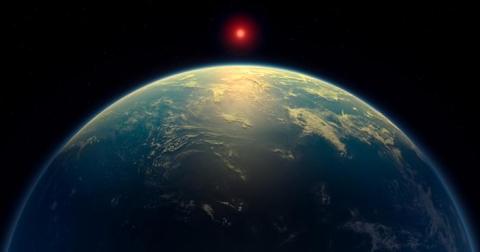
Using data from the James Webb Space Telescope (JWST), a group of astronomers has detected the chemical fingerprints of dimethyl sulfide (DMS) and dimethyl disulfide (DMDS) in the atmosphere of exoplanet K2-18b, which orbits its star in the habitable zone. The detection has been published in The Astrophysical Journal Letters.
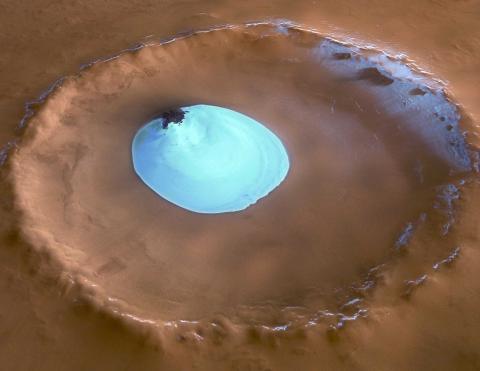
US researchers have published a model showing that ice in the mid-latitudes of Mars could allow photosynthetic life to develop. Its thickness and composition would attenuate harmful ultraviolet radiation, but allow sufficient visible light to pass through. The work is published in the journal Communications Earth & Environment.

The Karolinska Institute has awarded the Nobel Prize in Medicine or Physiology to Katalin Karikó and Drew Weissman for their groundbreaking discoveries, which have radically changed our understanding of how mRNA interacts with our immune system, and made it possible to develop vaccines at unprecedented speed during the covid-19 pandemic.
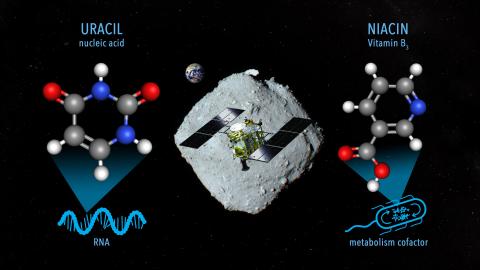
A Japanese research team has announced in Nature Communications that it found uracil, a component necessary to form RNA, in a small sample collected from the asteroid Ryugu. According to the authors, these results indicate that these molecules of prebiotic interest were commonly formed on asteroids like Ryugu, and reached the early Earth with the impact of these bodies. The sample was collected by the Japan Aerospace Exploration Agency's Hayabusa2 robotic spacecraft, which returned to Earth in December 2020.
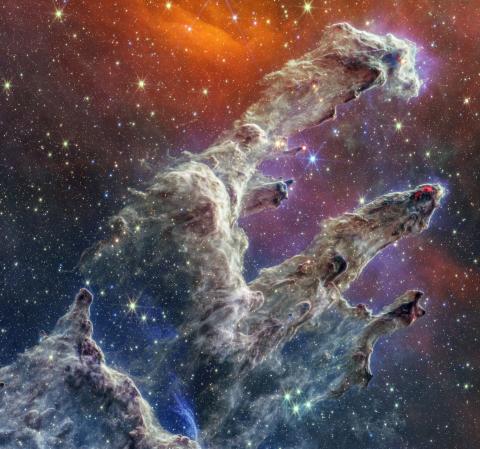
Two decades of work with numerous setbacks, a budget of more than 10 billion dollars and a journey of 1.5 million kilometres to provide us with images of the universe in unprecedented detail have led Science magazine to choose the James Webb Space Telescope (JWST) as the science breakthrough of 2022.
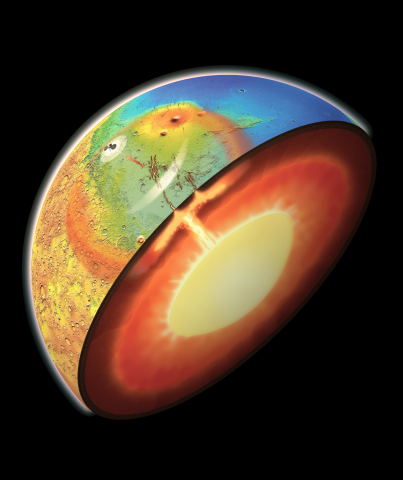
A study published in the journal Nature Astronomy suggests the existence of an active mantle plume on Mars - a column of material from the mantle that generates hot spots - with a diameter of about 4,000 kilometres, which would explain its geological activity. The planet was traditionally considered to be geologically inert at present.
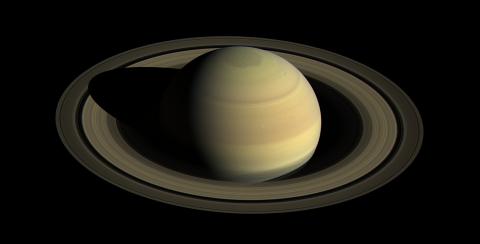
Research published in Science proposes that an ancient moon of Saturn, which they have named Chrysalis (Chrysalis), may be responsible for Saturn's distinctive rings. According to the authors, the moon orbited around the gas giant for billions of years, but about 160 million years ago, it became unstable and moved too close to the planet, breaking apart under Saturn's tidal forces and forming the planet's rings. According to the research, Saturn's current tilt may also be related to the destruction of this moon.
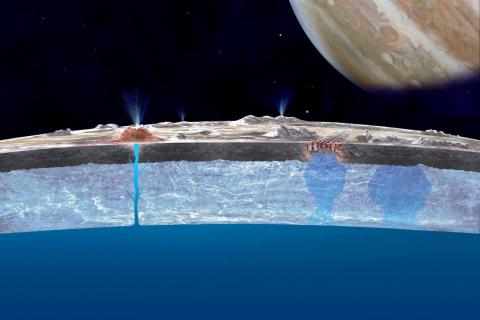
A study based on observations of the Greenland ice sheet, published in Nature Communications, suggests that there may be shallow liquid water on Jupiter's moon Europa. The finding could provide insights into the geophysical processes that formed the moon.