Ramón y Cajal Institute for Health Research
If you are the contact person for this centre and you wish to make any changes, please contact us.
Neurologist at the CSUR Multiple Sclerosis Unit of the Ramón y Cajal University Hospital and member of the Ramón y Cajal Institute for Health Research
Head of the Microbiology Department at the Ramón y Cajal University Hospital, member of the Ramón y Cajal Institute for Health Research (IRYCIS) and ESCMID Fellow.

Most countries overuse antibiotics, particularly those with the greatest potential to cause resistance, according to a new study published in the journal The Lancet Public Health using data from 186 countries, including Spain. The study estimated optimal national levels of antibiotic use based on the World Health Organisation’s (WHO) AWaRe guidelines, which classify antibiotics into the ‘access’ group – first-line drugs, such as amoxicillin – the ‘caution’ group – more potent drugs with more restricted use – and the ‘reserve’ group – drugs of last resort, for resistant infections. Of the 67 regions with data on antibiotic use, 72 per cent used quantities exceeding those considered optimal, and 99 per cent overused antibiotics in the ‘caution’ group – those that contribute most to the development of resistance. High-income regions used fewer antibiotics than low- and middle-income regions.

A team from Canada and the United States has found a candidate to form part of a new class of antibiotics, lariocidin. This could be effective against multi-resistant bacteria. The finding is published in the journal Nature.

Rituximab and ocrelizumab are two antibodies with a similar mechanism of action that are used in the treatment of multiple sclerosis. Although the former had not shown benefits in primary progressive multiple sclerosis — which affects between 10% and 15% of patients — the latter is approved for this form of the disease. Now, a study conducted in France with more than 1,000 patients has found no benefits with either treatment, as they did not slow the progression of disability in these individuals. The results are published in the journal Neurology.
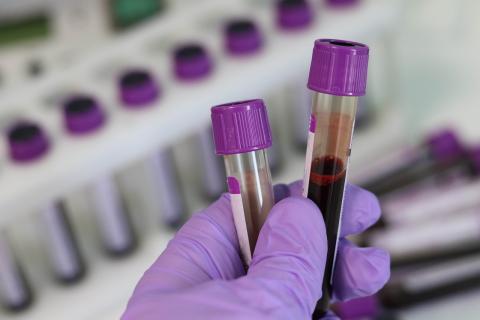
Researchers have found specific antibodies in the blood of patients years before they showed symptoms of multiple sclerosis. This group of antibodies was present in 10% of the 250 people who later developed the disease, and were part of a sample of over 10 million US military personnel. The finding could have potential for early detection of multiple sclerosis, says the research team in a paper published in Nature Medicine.